
Table of Contents
- Control Paddles Are Dead. Here's What Replaced Them.
- Why All-Court Rewards Good Mechanics
- The Cut: How These Paddles Made the List
- No Shape Preference? Start Here.
- Best Beginner Widebody: Six Zero Coral Pro Widebody
- Best Beginner Hybrid: Luzz Glider 2026
- Best Beginner Elongated: Selkirk Omni Elongated
- Final Thoughts
- FAQs
- What is the best pickleball paddle for beginners in 2026?
- Should beginners buy a control paddle?
- What makes an all-court paddle good for beginners?
- Is the Selkirk Omni Elongated good for beginners despite the higher price?
- What shape of paddle should a beginner choose?
- Do beginners need to spend a lot on their first paddle?
- FAQs
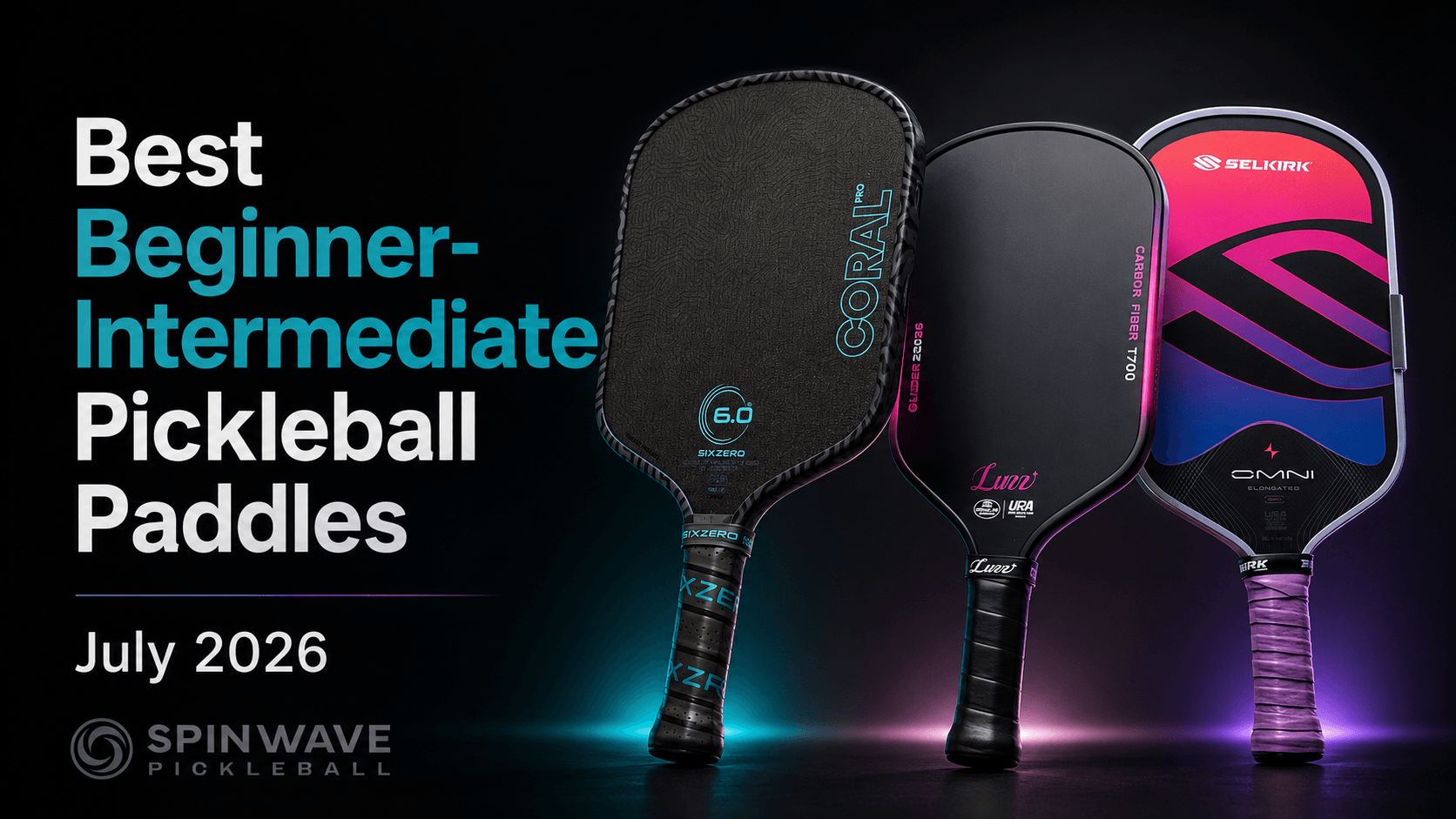
If you're shopping for beginner-intermediate paddles in 2026, here's the uncomfortable truth: the old "start on a control paddle" advice is dead. Below, I explain why all-court paddles have become the best beginner-intermediate paddles, plus my top picks by shape — widebody, hybrid, and elongated.
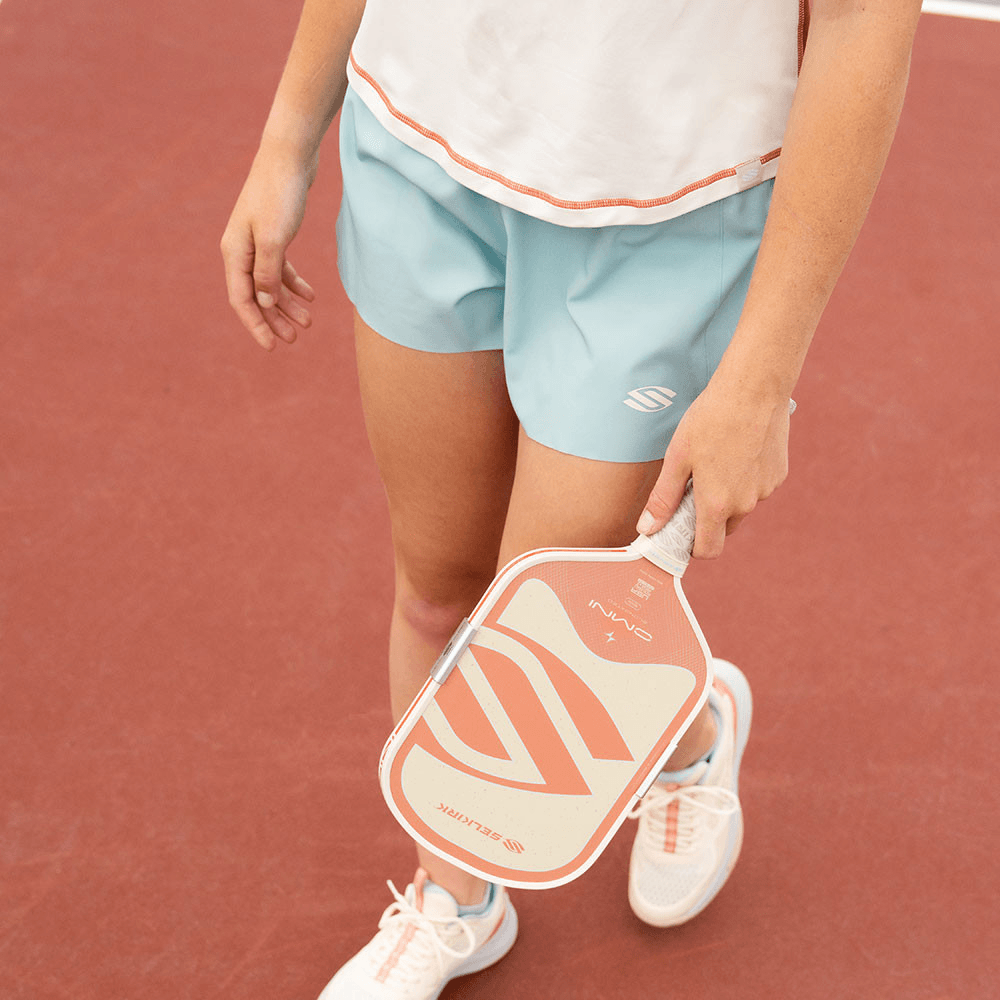
Control Paddles Are Dead. Here's What Replaced Them.
I want to open with something that might ruffle a few feathers: in 2026, the control paddle category for beginners is officially dead.
For years, the conventional wisdom was simple. New players need a control paddle to learn touch, develop feel, and avoid the chaos of a paddle they can't handle. That logic isn't wrong on its own terms. It's just outdated.
Here's the problem. Beginners who learn on a true control paddle inevitably improve. They become intermediate players, then advanced players. And when that happens, they find themselves completely out-gunned by the modern paddle landscape. The rest of the field has moved to power and all-court paddles with sweet spots and pop levels that a control paddle from a few years ago simply can't compete with. The player has to relearn their equipment right as their game is finally coming together.
The fix isn't complicated. Skip the control paddle entirely and start on one of the best beginner-intermediate paddles on the market today: a great all-court paddle.
Why All-Court Rewards Good Mechanics
Here's the part that matters most, and it's the reason this list exists.
The best beginner-intermediate paddles in 2026 still reward good pickleball mechanics. Ball contact out front. No big backswing, regardless of the shot. These fundamentals matter just as much on an all-court paddle as they would on any control paddle — you're not skipping the learning process by starting here.
What makes these paddles beginner-friendly is the pop profile. All three paddles on this list have real, usable power on full swings — serves and drives don't feel like a compromise. But it's the pop on short swings and blocks that makes the real difference. Middle-of-the-road pop means resets, blocks, and dinks stay manageable instead of fighting you at every touch. That's what actually lets a beginner-intermediate player transition to the kitchen and start playing proper pickleball, instead of getting stuck at the baseline overpowering everything.
You get a paddle that grows with you. Learn on it, compete on it, and never feel like you need to relearn your equipment as your game develops.
The Cut: How These Paddles Made the List
Before we get to the picks, here's exactly what I was screening for. Three requirements, no exceptions — the same bar I'd hold any beginner-intermediate paddles to.
Firmly all-court, mainly in the pop department. These paddles needed to sit clearly in all-court territory — not power, not control — with the pop profile specifically doing the work described above. That middle-of-the-road pop is the entire reason this list exists, so it wasn't negotiable.
Playable out of the box. No paddle made this list if it needed additional weighting to actually perform. A beginner shouldn't have to buy lead tape and learn placement theory just to get a paddle playing the way it's supposed to. Stock performance had to stand on its own.
Available at Spinwave. Last but obviously not least — every paddle on this list is something you can actually go buy right now.
Three boxes, all checked, on all three paddles. That's the list.
No Shape Preference? Start Here.
If you're brand new and don't know what shape you prefer yet, start with a widebody.
Most rec players end up in doubles, and the widebody shape is simply the more forgiving, faster-handed option for that format. Between the larger sweet spot and the quicker hand speed at the net, it's the shape I'd point almost any true beginner toward if they have no other basis for a decision.
That said — if you already know you love the extra reach of an elongated, or the balanced in-between feel of a hybrid, go with your preference. Each pick on this list is the top all-court option in its shape. None of them is objectively better than the others. This is a "know your shape, go get that paddle" list.
Whichever shape you choose, all three of these beginner-intermediate paddles will serve you well while you find your game.
Best Beginner Widebody: Six Zero Coral Pro Widebody
Six Zero Coral Pickleball Paddle 16mm - Lightweight
$200.00
Six Zero Coral Lightweight Pickleball Paddle Built on the award-winning Next Gem™ platform, the Six Zero Coral Lightweight delivers the same balanced all-court performance players love with a quicker, more responsive feel. With a lighter base weight of 7.6–7.9 oz,… read more

- Price: $220 (use code JDPB to save 10%)
- Core: 16mm Tectonic Core with Pro Pulsion Foam (Gen-4 Full Foam)
- Surface: Double Diamond Tough Raw Carbon Fiber
- Swing Weight: 108.75 (below average for a widebody — typical is 110–112)
- Static Weight: 8.22 oz (above average — typical is 7.9–8.0 oz)
- Twist Weight: 7.25 (above average)
The Coral Pro Widebody had the highest spin generation of the three paddles on this list, and in a beginner-intermediate's hands that's a real advantage. The Double Diamond Tough surface makes aggressive dinking and roll drops noticeably easier to execute — shots that are typically difficult for newer players become genuinely learnable earlier in their development.
The below-average swing weight for a widebody keeps it fast in hand, and the above-average twist weight adds real forgiveness on off-center contact. That combination is exactly what a beginner needs: fast enough to react at the net, forgiving enough that mishits don't punish you.
It's easily one of the best beginner-intermediate paddles for players who want extra spin without sacrificing forgiveness.
Who it's for: Anyone starting on a widebody, or anyone with no shape preference who wants the most forgiving option on this list heading into doubles play.
Shop the Six Zero Coral Pro Widebody at Spinwave Pickleball.
Best Beginner Hybrid: Luzz Glider 2026
Luzz Glider 2026 16mm Hybrid Pickleball Paddle
$119.00
Luzz Glider 2026 Hybrid Paddle Introducing the Luzz Glider 2026 Hybrid Paddle, the upgraded Gen 3 successor to the popular Glider 2024. Built around a soft 16mm polypropylene honeycomb core and finished with an aerospace-grade 984-Aero™ carbon face, the Glider… read more

- Price: $119 (use code JDPB to save 10%)
- Core: 16mm Gen-3 Honeycomb
- Surface: Carbon Fiber T700 with 984-Aero Durable Grit
- Swing Weight: 107.95 (below average for a hybrid — typical is ~114)
- Static Weight: 7.83 oz (slightly below average)
- Twist Weight: 6.4 (near average)
As a widebody player myself, the Glider 2026 was purely the easiest paddle on this list to pick up and play coming from my main, the Gherkin Draco Widebody. The unusually light swing weight for a hybrid made it feel like home territory immediately — no adjustment period, no re-learning my hands.
That light swing weight also opened up more creativity on shots than I expected. The shot-shaping ability is excellent, and the mid-level pop gave me room to actually work the ball instead of just reacting to it. For a beginner, that combination of light, fast hands and manageable pop is about as gentle a learning curve as you'll find in a hybrid shape right now.
At $119 before code, it's also the most accessible price point on this list — a real consideration if you're just getting into the sport and don't want to commit big money before you know your preferences. It's an easy pick among beginner-intermediate paddles on a budget.
Who it's for: Beginners who want a hybrid shape, or widebody players looking for the smoothest possible transition into a hybrid.
Shop the Luzz Glider 2026 at Spinwave Pickleball.
Best Beginner Elongated: Selkirk Omni Elongated
Selkirk OMNI Elongated Pickleball Paddle
$300.00
At the heart of the OMNI is the innovative ReactCore™ — a PureFoam™ floating center with a new PureFoam™ Ring surrounded by an EVA Power Ring for a dynamic core with adaptive flexibility. This double-ring technology takes the EVA… read more

- Price: $300 (use code JDPB to save 10%)
- Core: 16mm ReactCore (PureFoam) — Gen-3 double-ring foam
- Surface: Multistrata T700 Carbon + InfiniGrit
- Swing Weight: 122.3 (above average for recent elongated releases — typical is ~118)
- Static Weight: 8.27 oz (above average)
- Twist Weight: 6.9 (above average for an elongated — typical is 6.1–6.3)
As a widebody guy, this one genuinely surprised me. Elongated paddles don't usually win me over, but the Omni's adjustable MOI Tuning System changes the equation entirely.
I moved the perimeter weights down to the throat, and the paddle became noticeably more maneuverable for an elongated shape — while still retaining most of the forgiveness that came with the stock weight placement. That's a rare combination. Usually you trade maneuverability for forgiveness on an elongated paddle. The Omni lets you tune toward one without giving up much of the other.
For a beginner-intermediate player, this is a huge deal. The adjustable weights plus the all-court power profile give you a great out-of-the-box playing experience, and they also introduce you to paddle customization without needing to buy separate lead tape or learn placement theory. You can start experimenting with weight distribution using the tools that came in the box.
Among beginner-intermediate paddles, the Omni's adjustability is hard to match for an elongated shape.
Who it's for: Beginners who want the reach of an elongated shape without sacrificing the forgiveness typically reserved for widebodies, and anyone curious about paddle customization who wants a built-in way to experiment.
Selkirk OMNI Elongated Pickleball Paddle
$300.00
At the heart of the OMNI is the innovative ReactCore™ — a PureFoam™ floating center with a new PureFoam™ Ring surrounded by an EVA Power Ring for a dynamic core with adaptive flexibility. This double-ring technology takes the EVA… read more
Final Thoughts
The old advice to start beginners on a control paddle made sense for a market that no longer exists. Today's all-court paddles reward the same fundamentals — contact out front, controlled swings, proper mechanics — while giving you enough pop to actually compete as your game develops. You're not choosing between learning properly and staying competitive. These paddles let you do both, which is exactly what the best beginner-intermediate paddles are supposed to do.
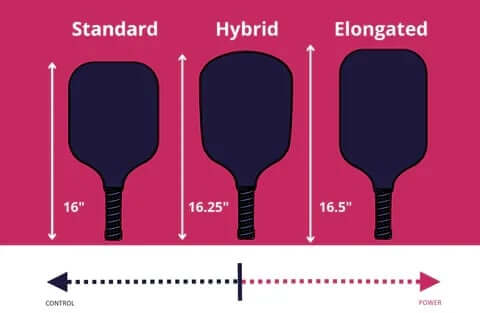
Know your shape? Go get the pick above. Don't know yet? Start with the Coral Pro Widebody — the forgiveness and hand speed make it the easiest entry point into doubles, which is where most of you will end up playing anyway.
Shop all three beginner-intermediate paddles at Spinwave Pickleball and use code JDPB at checkout to save 10%.
Questions? Find me at @threefiveforever on Instagram or drop a comment below. See you on the courts.
FAQs
What is the best pickleball paddle for beginners in 2026?
It depends on your shape preference. The Six Zero Coral Pro Widebody is the top beginner pick for widebody, the Luzz Glider 2026 for hybrid, and the Selkirk Omni Elongated for elongated. If you have no shape preference, start with the Coral Pro Widebody — it offers the most forgiveness and hand speed, which suits most rec players heading into doubles. Each of these beginner-intermediate paddles is the top pick in its shape category as of mid-2026.
Should beginners buy a control paddle?
Not in 2026. Control paddles still teach good mechanics, but players who learn on them eventually get out-gunned by the modern power and all-court paddle landscape as they improve. Starting on a well-chosen all-court paddle lets you learn proper mechanics while staying competitive as your game develops — no relearning required down the line. That's the whole argument for beginner-intermediate paddles over traditional control paddles.
What makes an all-court paddle good for beginners?
The pop profile. All-court paddles maintain real power on full swings for serves and drives, but the middle-of-the-road pop on short swings and blocks makes resets, dinks, and kitchen play far more manageable than a high-pop power paddle. That balance lets beginners develop a proper soft game instead of getting stuck overpowering everything from the baseline. It's exactly why all-court paddles have become the best beginner-intermediate paddles.
Is the Selkirk Omni Elongated good for beginners despite the higher price?
Yes — the adjustable MOI Tuning System is a major advantage for newer players. It lets you customize weight placement using the paddle's built-in weights rather than purchasing separate lead tape, giving beginners an easy entry point into paddle customization alongside a genuinely forgiving all-court elongated platform. It's proof that beginner-intermediate paddles don't have to be the cheapest option to be the right one.
What shape of paddle should a beginner choose?
If you have no established preference, widebody is the recommended starting point due to its forgiveness and hand speed, especially for players heading into doubles — the most common format for recreational players. If you already know you prefer the reach of an elongated or the balance of a hybrid, go with that shape instead. Whatever you choose, all three beginner-intermediate paddles on this list are built to grow with you.
Do beginners need to spend a lot on their first paddle?
No. This list includes options across a range of prices, from the Luzz Glider 2026 at $119 to the Selkirk Omni Elongated at $300. Price isn't the deciding factor here — shape preference is. Each of these beginner-intermediate paddles is the top all-court option in its shape category regardless of price point.
FAQs
Spinwave
spinwave