
Table of Contents
- How We Ranked These Pickleball Paddles for Seniors
- The Three Specs That Matter Most After 50
- The 5 Best Pickleball Paddles for Seniors in 2026
- 1. RONBUS Quanta R2.16 — Best Overall for Arm Comfort
- 2. Six Zero Coral 16mm Lightweight — Best Overall Paddle
- 3. Custom Six Zero Coral Lightweight with Hesacore Tour Grip — Best for Existing Elbow Pain
- 4. JOOLA Andre Agassi Pro IV 16mm — Best for Tennis Converts
- 5. Spinwave Tyro 16mm Kevlar/Carbon — Best Entry Point
- Side-by-Side Comparison
- Beyond the Paddle: Three Things That Finish the Setup
- Try Before You Buy
- The Bottom Line
- FAQs
Best Pickleball Paddles for Seniors (50+): Arm-Friendly Picks for 2026
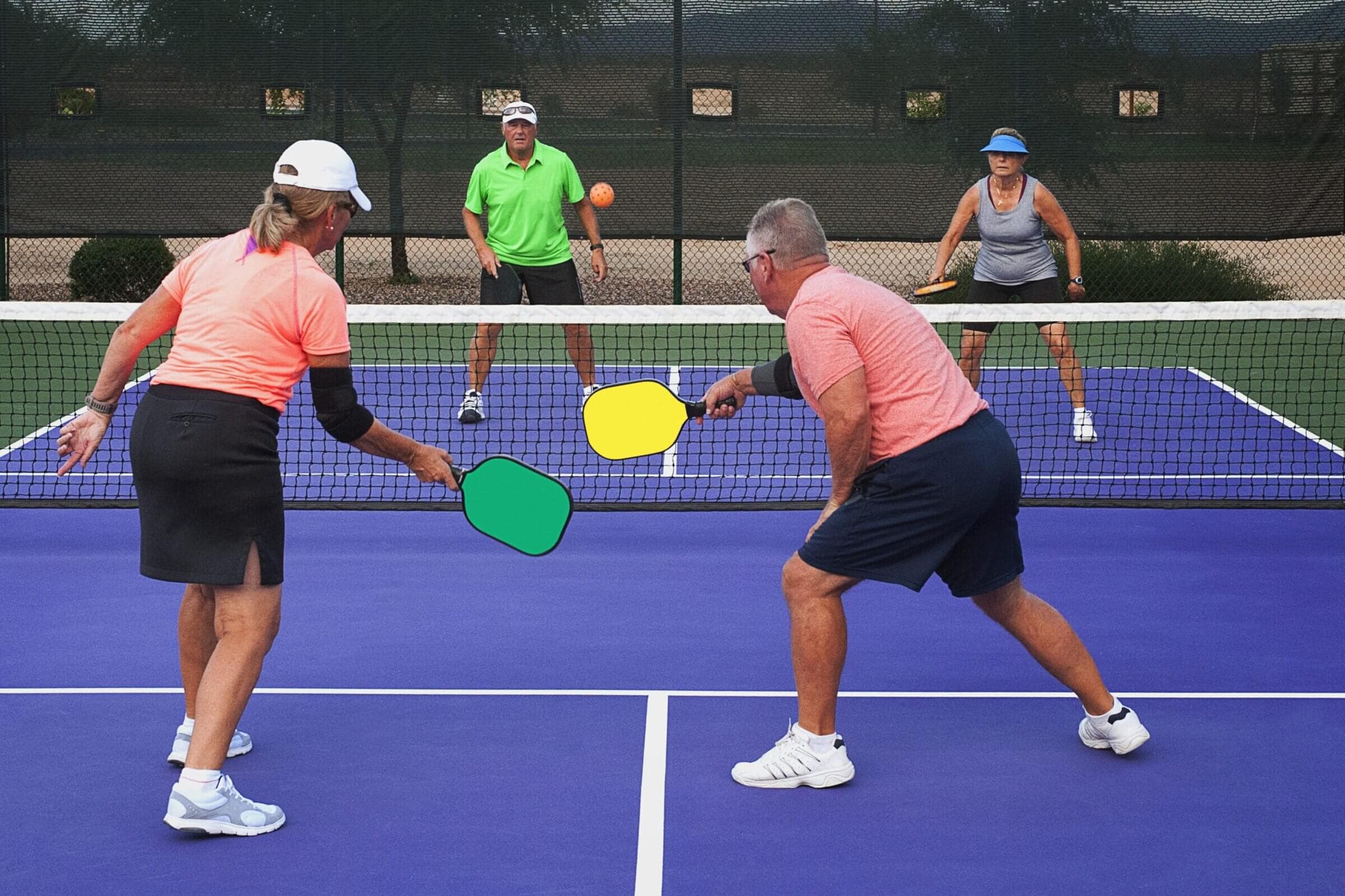
Shopping for pickleball paddles for seniors is harder than it should be. Most buying guides rank paddles by power or spin, which tells you nothing about whether your elbow will still work on Wednesday. Pickleball participation in the U.S. hit 24.3 million players in 2025 — a 22.8% jump in a single year (SFIA) — and a lot of those new players are buying whatever paddle is on sale, then wondering why their arm aches after two sessions.
For players 50 and up, paddle choice is closer to a health decision than a preference. The wrong swingweight, core thickness, or grip size puts repeated stress on joints that simply don't bounce back the way they did at 35. Get the specs right and pickleball stays a low-impact sport you can play three times a week for years.
Below are the five best pickleball paddles for seniors we currently stock, ranked by how much work they take off your arm — using published swingweight and twistweight numbers rather than marketing language. Every spec here comes from the manufacturer or from third-party equipment testing, and every paddle is one we actually have on the shelf.
The short version: Core thickness gets all the attention, but swingweight and twistweight matter more for joint comfort. Swingweight is how heavy the paddle feels through the swing — lower means less shoulder load per shot. Twistweight is how much the paddle resists rotating when you hit off-center — higher means fewer jarring mishits. A 16mm core plus low swingweight plus high twistweight is the combination worth paying for.
How We Ranked These Pickleball Paddles for Seniors
Four criteria, applied in this order:
- Core thickness of 16mm or more. The core is the shock absorber between the ball and your hand. Thinner cores return energy faster, which players call "poppy" and joints call "harsh."
- Low swingweight. This is the number most guides skip. Two paddles can weigh the same on a scale and feel completely different through a swing depending on where that weight sits.
- High twistweight. Off-center contact is where the sting comes from. A paddle that resists twisting transmits far less of that shock into your wrist.
- Grip circumference and handle comfort. An undersized grip makes your forearm work harder on every single shot.
We don't rank on power. Every paddle here has enough of it, and chasing power is how most players over 50 end up in a brace.
The Three Specs That Matter Most After 50
If you only remember three numbers when comparing pickleball paddles for seniors, make them these.
Core thickness: 16mm is the floor
A 13mm or 14mm core sends energy back at you quickly. That feels lively, and for a 30-year-old chasing put-aways it's the right trade. A 16mm core slows the ball's dwell time on the face, softening contact and cutting the vibration that travels up the handle. For seniors, we treat 16mm as the practical minimum, and every one of the pickleball paddles for seniors on this list clears it.
Swingweight: the number nobody advertises
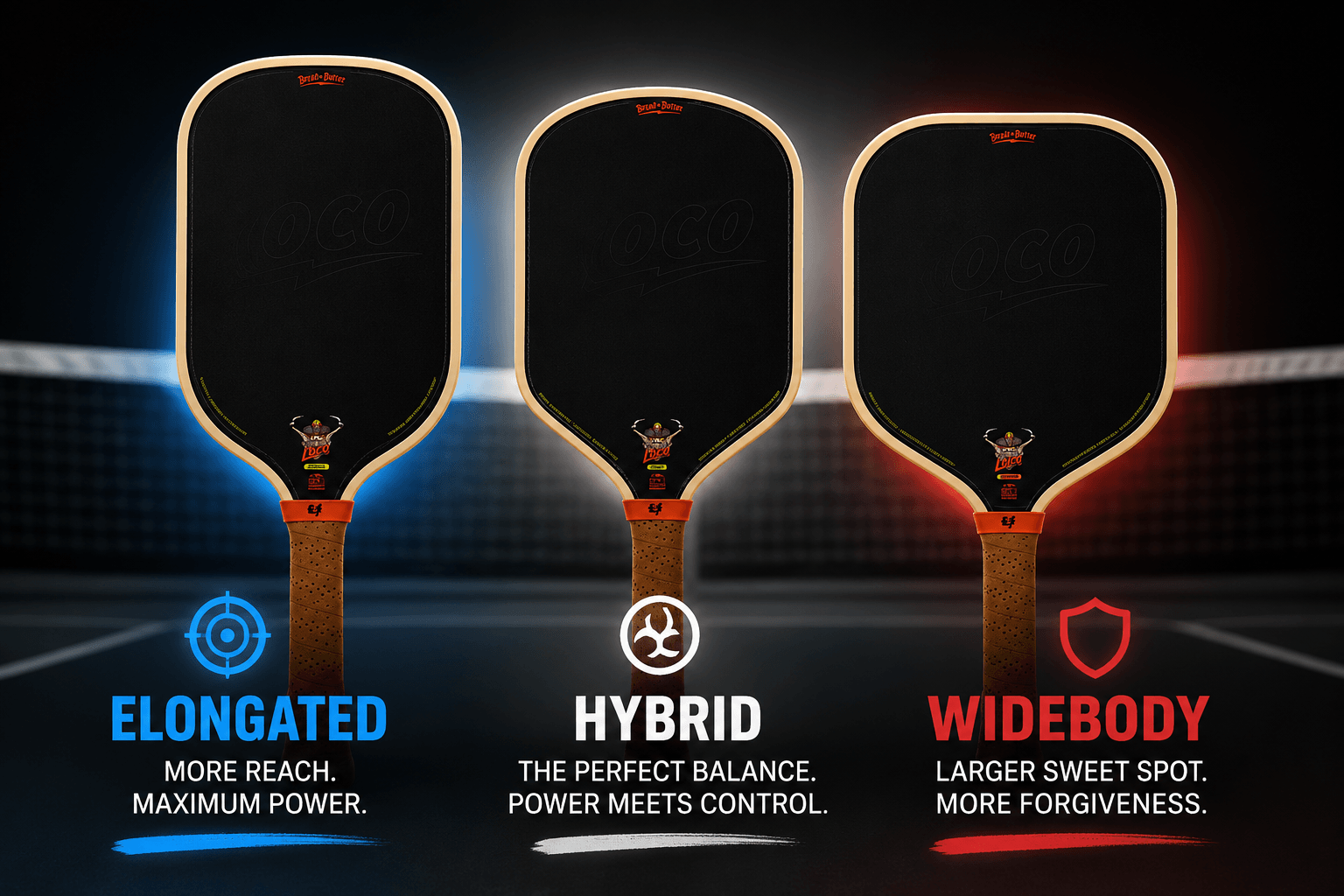
Swingweight measures how heavy a paddle feels while you're actually swinging it, not while it's sitting on a scale. A paddle with a swingweight of 102 asks noticeably less of your shoulder and elbow over two hours of doubles than one at 115 — even if both weigh 7.9 oz. Elongated paddles almost always carry higher swingweight because the mass sits farther from your hand. That extra reach is a real benefit, but it isn't free — which is why the best pickleball paddles for seniors tend to be widebody or hybrid shapes.
Grip circumference: the cheapest fix available
A grip that's too small forces your forearm flexors to squeeze harder on every shot, and that sustained tension is one of the common contributors to lateral epicondylitis — what players call pickleball elbow. The standard sizing check: measure from the middle crease of your palm to the tip of your ring finger. Most adults land near 4¼". If you're between sizes, size up or add an overgrip; a grip slightly too large is far more forgiving than one slightly too small. This is equipment guidance, not medical advice — if you already have persistent elbow pain, get it looked at.
The 5 Best Pickleball Paddles for Seniors in 2026
1. RONBUS Quanta R2.16 — Best Overall for Arm Comfort
RONBUS Quanta R2.16 Pickleball Paddle
$119.00
RONBUS Quanta Widebody Standard 16mm Pickleball Paddle The RONBUS Quanta Widebody Standard 16mm is built for players who want maximum forgiveness, a large sweet spot, easy control, and stable contact in a widebody shape. With its 16" length, 8" face… read more

Verified specs: 7.8 oz ±0.2 | 16mm EPP foam core with EVA + TPE elastomer ring | Raw Toray T700 carbon face | 4.20" octagon grip, 5.5" handle | Widebody, 16" × 8" | Swingweight 102 | Twistweight 6.34 | $119
This wins on the numbers, not the price tag. A swingweight of 102 is the lowest on this list by a clear margin, which means less shoulder load on every drive, every reset, every put-away over a two-hour session. Pair that with a twistweight of 6.34 and an 8" widebody face and you get a paddle that stays stable when you catch the ball off-center — exactly the contact that stings the most.
The core construction is the other reason it's here. Instead of traditional plastic honeycomb, RONBUS uses an EPP foam core wrapped in an EVA and TPE elastomer ring, which is specifically designed to dampen vibration rather than just resist crushing. There's no honeycomb to break down over a season either.
The tradeoff: at 16" long, you give up about half an inch of reach compared to an elongated paddle. If you play a lot of singles or like to poach wide, that matters. In doubles it rarely does.
Who it's for: Anyone shopping pickleball paddles for seniors who wants the most arm protection per dollar. This is the paddle we hand people who describe elbow or shoulder trouble.
2. Six Zero Coral 16mm Lightweight — Best Overall Paddle
Six Zero Coral Pickleball Paddle 16mm - Lightweight
$200.00
Six Zero Coral Lightweight Pickleball Paddle Built on the award-winning Next Gem™ platform, the Six Zero Coral Lightweight delivers the same balanced all-court performance players love with a quicker, more responsive feel. With a lighter base weight of 7.6–7.9 oz,… read more

Verified specs: 7.6–7.9 oz | 16mm Floating Propulsion Core with Tectonic Suspension | Diamond Tough textured face | Hybrid or Widebody | Hybrid: swingweight 111, twistweight 6.30 · Widebody: swingweight 107, twistweight 6.70 | USA Pickleball approved | Includes neoprene cover | $200
The lightest paddle here at 7.6–7.9 oz, and the Widebody version carries the highest twistweight on this list at 6.70. That combination — genuinely light in hand, and very hard to twist on a mishit — is the ideal profile for a player protecting a joint. Six Zero also thinned the handle profile on this version, which sounds minor until you realize it leaves room to add an overgrip and land at your correct grip size without ending up with a fat handle.
Hybrid or Widebody? For most players over 50, take the Widebody. Lower swingweight, higher twistweight, bigger sweet spot. Choose the Hybrid only if you want a bit more reach and you're confident in your contact point.
The tradeoff: lightweight paddles give up some plow-through on drives. If you're a banger who likes to feel the paddle push through the ball, the standard Coral at 8.0–8.3 oz will suit you better — at the cost of more load on your shoulder.
Who it's for: The best all-around pick among pickleball paddles for seniors if you want a premium build and don't need the lowest price. Ideal for players 50+ who want a premium paddle and don't need the absolute lowest price. Swingweight and twistweight figures come from third-party equipment testing (Briffidi / Matt's Pickleball), not from our own lab.
3. Custom Six Zero Coral Lightweight with Hesacore Tour Grip — Best for Existing Elbow Pain
Custom Six Zero Coral Lightweight 16mm Pickleball Paddle - Blackout
$210.00
Custom Six Zero Coral Lightweight Paddle Built on the same award-winning Next Gem™ platform as the standard Coral, the Six Zero Coral Lightweight delivers the plush all-court feel players love in a faster, more maneuverable package. With a lighter starting… read more

Verified specs: Same 16mm Coral Lightweight platform as above, built with a Hesacore Tour grip in your choice of size | Hybrid or Widebody | $235
If you've already got a cranky elbow, this is the most targeted option we sell. The Hesacore Tour grip replaces the standard round handle wrap with a hexagonal, contoured surface that spreads pressure across a wider area of the palm. The practical effect is that you can hold the paddle securely without squeezing as hard — and grip force is one of the main drivers of forearm strain in racquet sports.
You're getting the same low-swingweight, high-twistweight Coral Lightweight platform underneath, so the arm-friendly fundamentals are unchanged. This is a build we assemble in-house rather than a stock paddle off a shelf.
The tradeoff: $35 over the standard Coral Lightweight, and the hexagonal feel takes a few sessions to get used to. Some players never warm to it. If you're not sure, this is a strong candidate to try in-store first.
Who it's for: Seniors already managing elbow discomfort, or anyone who catches themselves death-gripping the handle during long rallies. Of all the pickleball paddles for seniors on this list, this is the one built specifically around grip comfort.
4. JOOLA Andre Agassi Pro IV 16mm — Best for Tennis Converts
Verified specs: 8.1 oz average (7.9–8.3 range) | 16mm Honeycomb Propulsion core with Hyper-Foam Edge Wall and Tech Flex | Textured carbon fiber face | 4¼" perforated cushioned grip, 5.5" handle | Elongated, 16.5" × 7.5" | USAP and UPA-A approved | Includes cover | $179.99
Built with a tennis player's instincts in mind, and it shows. The 16.5" elongated shape and 5.5" handle give you reach and room for a two-handed backhand, which is why players coming over from tennis tend to feel at home with it immediately. The Hyper-Foam Edge Wall runs foam around the frame to widen the sweet spot, and JOOLA's Tech Flex adds more foam outside the frame to extend it further toward the edges.
Be honest with yourself on this one. Elongated paddles concentrate mass farther from your hand, which raises swingweight. At 8.1 oz average it's also the heaviest paddle on this list. The reach and the familiar tennis feel are real, but they cost you something on the shoulder over a long session. If you're managing an existing injury, pick #1 or #2 instead.
Who it's for: The pick among these pickleball paddles for seniors for former tennis players with healthy shoulders who want reach and a familiar swing path, and who value feel over the lowest possible swingweight.
5. Spinwave Tyro 16mm Kevlar/Carbon — Best Entry Point
Spinwave Pickleball Tyro 16mm Kevlar/Carbon Paddle
$40.00
Introducing the Spinwave Tyro Paddle, a precision-engineered Thermoformed 16mm control paddle crafted from a Kevlar and carbon fiber weave. Designed for both beginners and seasoned players, the Tyro offers a perfect balance of power, finesse, and durability. Its advanced materials… read more

Verified specs: 7.8–8.1 oz | 16mm polypropylene honeycomb core | Thermoformed Kevlar + 3K carbon fiber weave face | 4.25" grip, 5.5" handle | Hybrid, 16.25" | Includes neoprene cover | $40
Our own paddle, and the answer for anyone who isn't ready to spend $120+ before they know whether they'll stick with the sport. It hits the specs that matter: a full 16mm core, a hybrid shape that's forgiving without being unwieldy, and a 4.25" grip that fits most adult hands out of the box.
The Kevlar and carbon fiber weave is the interesting part at this price. Kevlar is softer on contact than pure carbon, which takes some of the edge off the initial impact — a small but real difference across a couple hundred dinks.
The tradeoff: a polypropylene honeycomb core doesn't dampen vibration the way the foam-based cores in #1 and #2 do, and you won't get the same spin ceiling. This is a very good $40 paddle, not a $200 paddle in disguise.
Who it's for: The lowest-risk entry point in this roundup of pickleball paddles for seniors — newer players, anyone buying a second paddle to keep in the car, or a low-risk gift for a family member just starting out.
Side-by-Side Comparison
The quickest way to narrow down the pickleball paddles for seniors above — lower swingweight and higher twistweight both favor your arm.
| Paddle | Weight | Swing / Twist Wt | Price |
|---|---|---|---|
| RONBUS Quanta R2.16 | 7.8 oz | 102 / 6.34 | $119 |
| Six Zero Coral LW (Widebody) | 7.6–7.9 oz | 107 / 6.70 | $200 |
| Six Zero Coral LW (Hybrid) | 7.6–7.9 oz | 111 / 6.30 | $200 |
| Coral LW + Hesacore | 7.6–7.9 oz | Same as above | $235 |
| JOOLA Agassi Pro IV 16mm | 8.1 oz avg | Not published | $179.99 |
| Spinwave Tyro 16mm | 7.8–8.1 oz | Not published | $40 |
All six options run a 16mm core. Where swingweight and twistweight aren't published by the manufacturer, we've said so rather than estimating.
Beyond the Paddle: Three Things That Finish the Setup
Even the best pickleball paddles for seniors only cover part of the job. These three additions finish the setup.
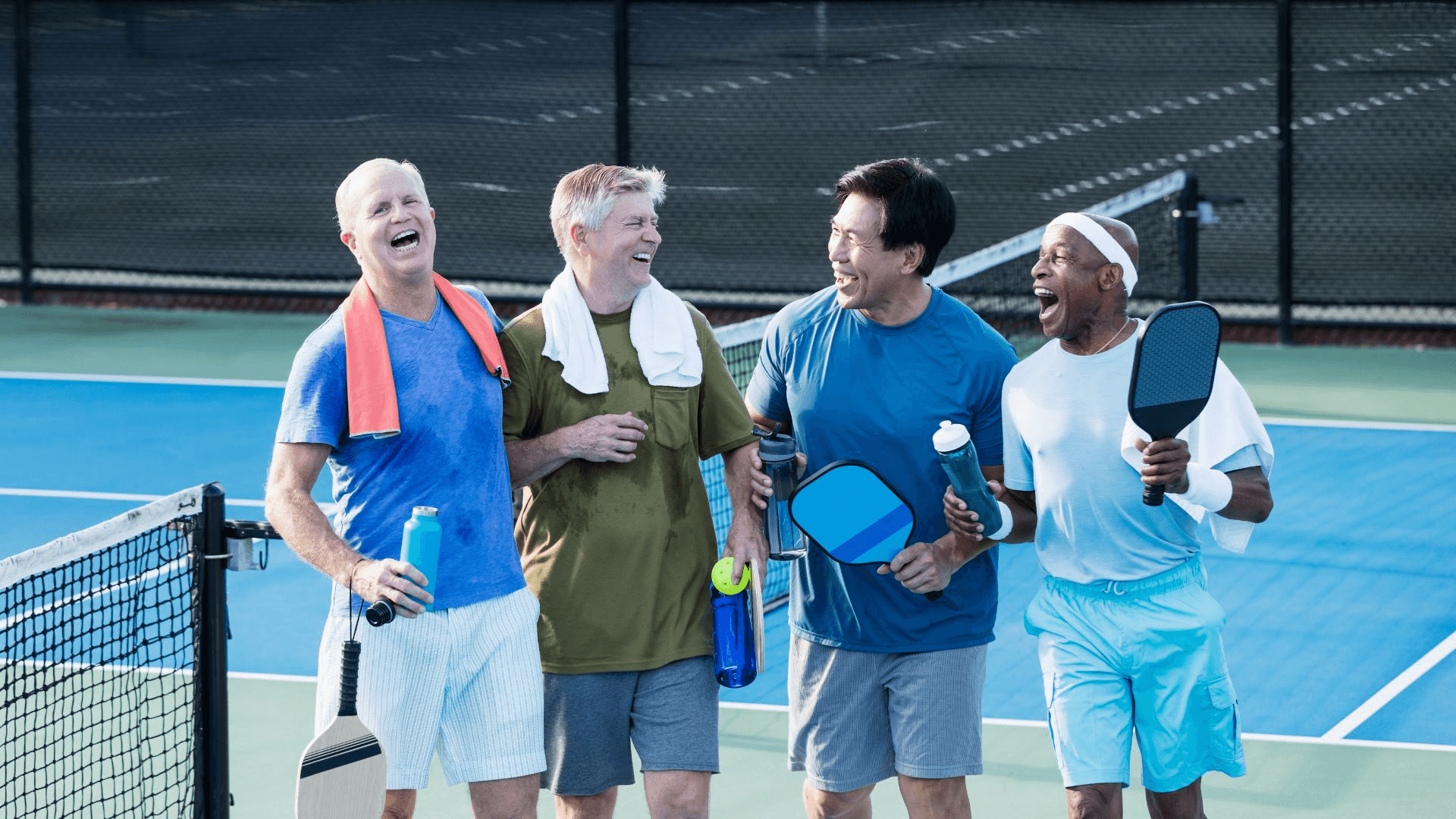
An overgrip in the right size. One overgrip adds roughly 1/16" of circumference and a layer of cushioning. If your current grip feels a touch small, this is the cheapest joint-protection upgrade in the sport — a few dollars, swapped out every 8–12 hours of play.
Court shoes, not running shoes. Running soles are built to move you forward, not sideways. Every lateral shuffle on a running shoe loads your ankle and knee in a way a proper court shoe is designed to absorb. This is the single most underrated injury-prevention purchase for players over 50.
Softer balls for practice. Outdoor balls are stiffer and harsher on impact than indoor balls. If your elbow flares up, some players find that drilling with a softer indoor ball takes the edge off the repetition — with the tradeoff of a different bounce than you'll see in a game.
Try Before You Buy
Swingweight and twistweight get you close, but nothing replaces holding a paddle. Specs narrow the field of pickleball paddles for seniors down to two or three candidates — your hand picks the winner. If you're anywhere near Long Island, our Long Beach Tennis Center pro shop is set up as a demo hub — you can hit with these paddles before you commit. Great Neck carries the full lineup as well.
We also keep a rotating selection of gently used demo paddles at a discount, which is a low-risk way to test a shape or weight class before buying new.
The Bottom Line
Pickleball stays low-impact only when your equipment matches how your body actually works today. That is the whole case for shopping pickleball paddles for seniors by the numbers rather than by the marketing copy. Every option above clears a 16mm core, and the top picks back it up with published swingweight and twistweight numbers rather than adjectives.
If arm comfort is the priority and budget matters, the RONBUS Quanta R2.16 at $119 is the most protection per dollar we sell. If you want the best paddle outright, the Six Zero Coral 16mm Lightweight in Widebody is the pick. If your elbow is already talking to you, go with the Coral Lightweight built with a Hesacore Tour grip. Tennis converts who want reach will be happiest with the JOOLA Agassi Pro IV 16mm. And if you're just getting started, the Spinwave Tyro at $40 covers the fundamentals without a real commitment.
Still not sure which of these pickleball paddles for seniors fits your game? Send us a note or stop into either shop — describing how your arm feels after a typical session tells us more than any spec sheet.
FAQs
What paddle weight is best for seniors with shoulder problems?
Look at swingweight, not just scale weight. Two paddles can both read 7.9 oz and feel completely different through a swing depending on where the mass sits. The RONBUS Quanta R2.16 has the lowest swingweight in our senior lineup at 102, and the Six Zero Coral Lightweight Widebody is close behind at 107. If you have a diagnosed rotator cuff issue, talk to your physician or PT before returning to play.
Is a thicker core actually better for joint protection?
Yes, up to a point. A 16mm core slows the ball's dwell time on the face and softens contact compared to a 13mm or 14mm core, which cuts the vibration reaching your wrist and elbow. We treat 16mm as the practical minimum for players over 50. Past 16mm the returns get smaller, and swingweight starts mattering more than thickness.
What is twistweight and why should seniors care?
Twistweight measures how much a paddle resists rotating in your hand when you hit the ball off-center. Higher is better. Off-center contact is where most of the sting comes from, so a high-twistweight paddle absorbs mishits instead of passing them into your wrist. The Six Zero Coral Lightweight Widebody leads our lineup at 6.70.
Can switching paddles fix pickleball elbow?
Sometimes, especially when an undersized grip is the culprit. A grip that's too small forces your forearm to squeeze harder on every shot, and that sustained tension strains the outer elbow. Sizing up, adding an overgrip, or switching to a contoured grip like the Hesacore Tour can reduce that load. If pain persists past two or three weeks after an equipment change, see a sports medicine provider.
How do I know my correct grip size?
Measure from the middle crease of your palm to the tip of your ring finger. Most adults land near 4¼". If you're between sizes, size up — a grip slightly too large is much more forgiving than one slightly too small, since you can always build it up but you can't shrink it.
Should seniors choose an elongated or widebody paddle?
Widebody, in most cases. Elongated paddles put mass farther from your hand, which raises swingweight and asks more of your shoulder over a long session. They give you real reach in return, which matters more in singles than doubles. If you're managing any joint discomfort, start widebody.
How often should seniors replace their paddle?
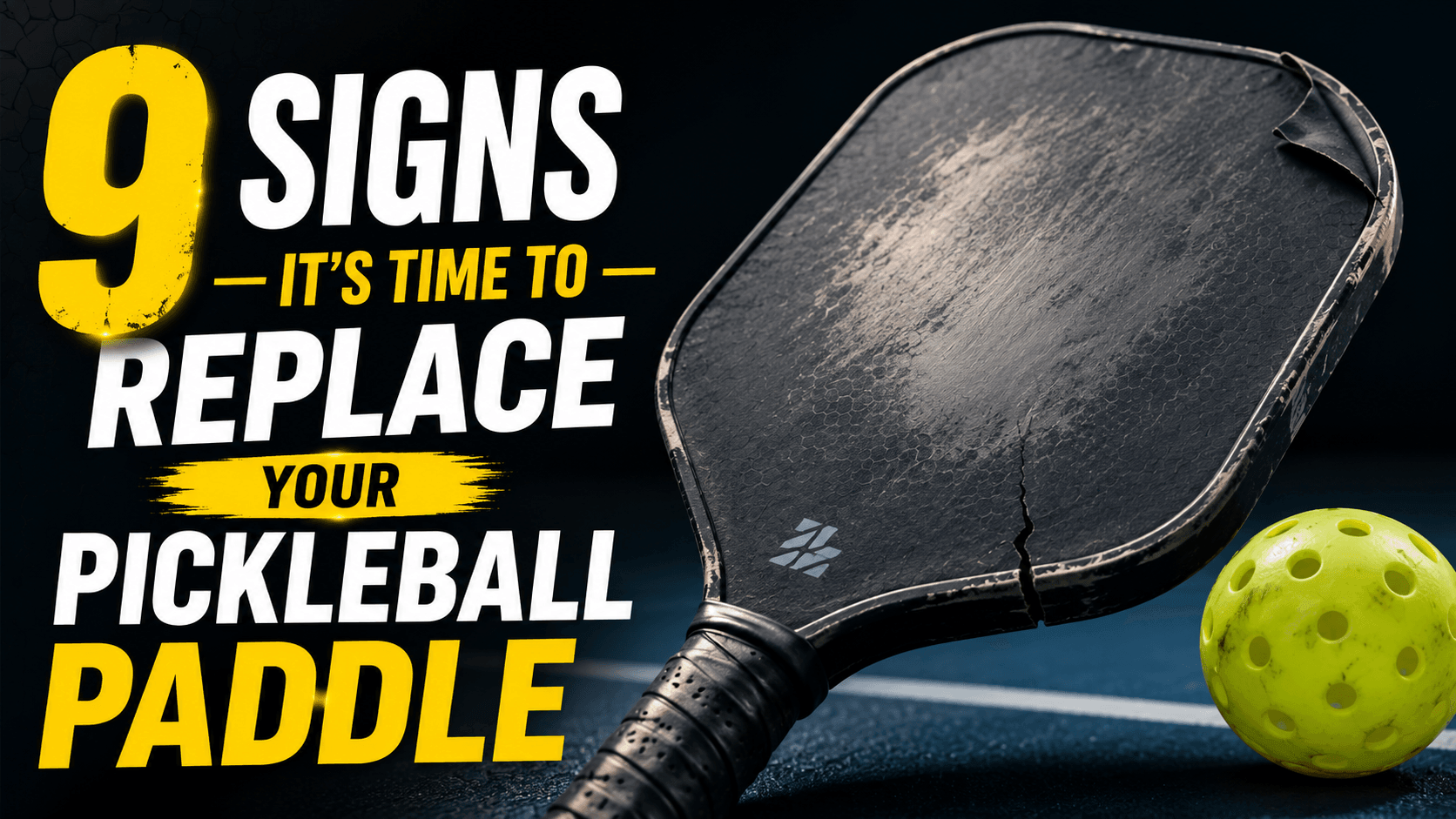
Carbon and Kevlar faces typically hold their texture for 12–18 months of regular play. The practical test: if the face feels slick and you're swinging harder for the same result, it's done. Playing on a dead face makes you generate more of the pace yourself, which is exactly the extra arm effort you're trying to avoid.