
Table of Contents
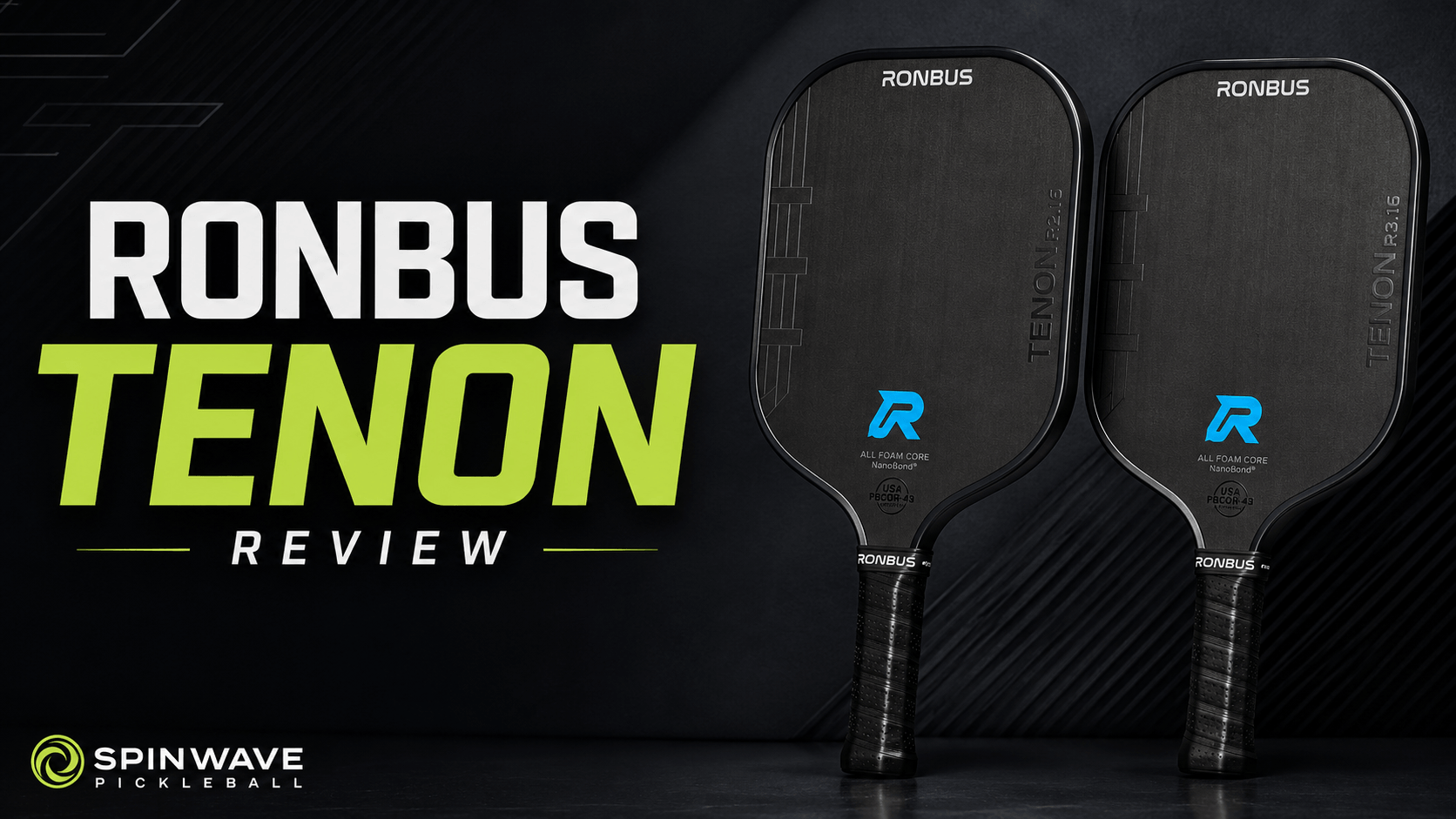
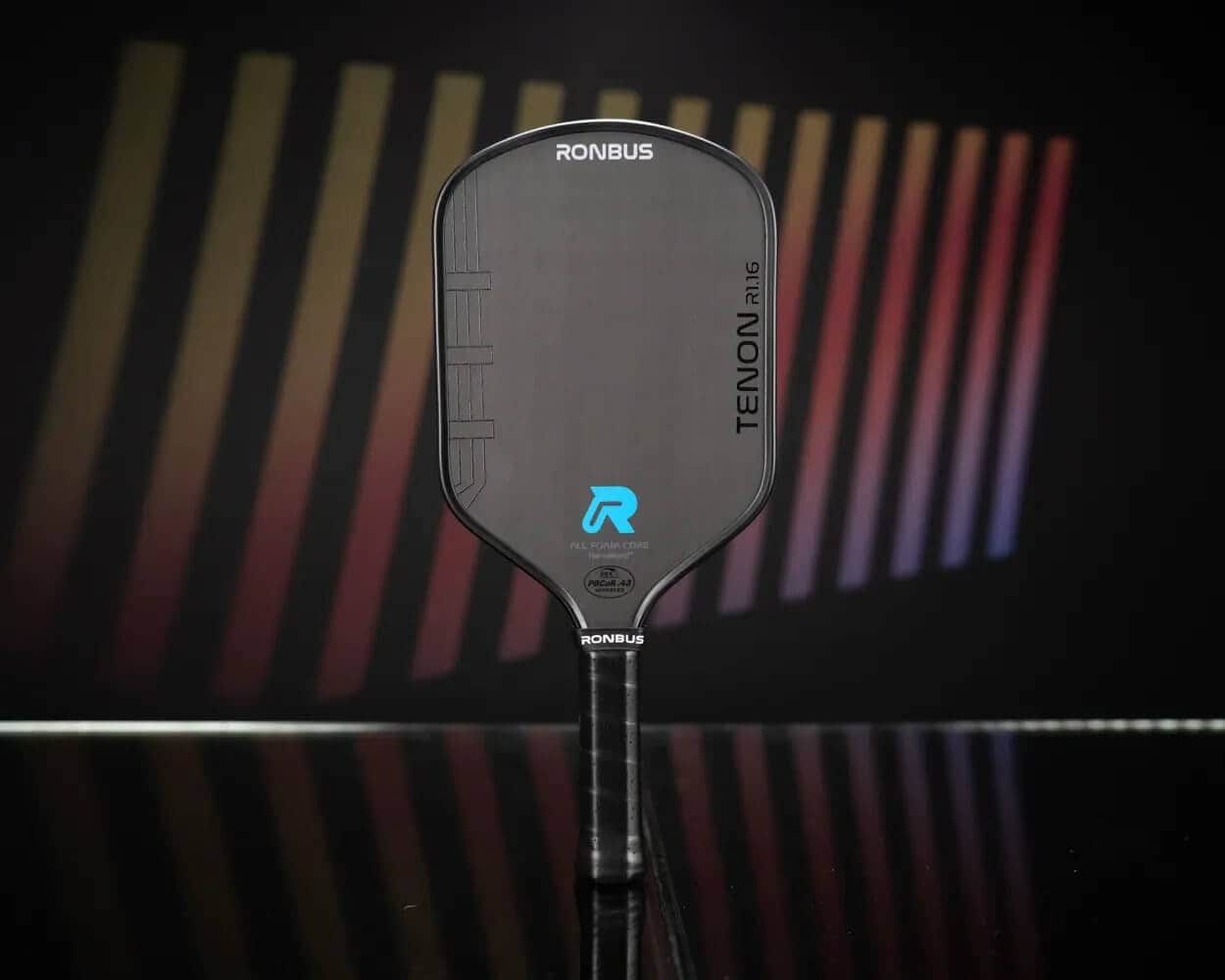
The Ronbus Tenon R2 and R3 are marketed as the all-court iteration of the popular Quanta lineup, built around a mortise-and-tenon EPP/EVA joint core that's supposed to dampen response and deliver a true all-court experience.
That's not what I found on the court.
The Ronbus Tenon lineup plays with more pop than the all-court label suggests — closer to low-power or high-all-court territory, depending on the shape. But here's the thing: that doesn't make it a bad paddle. It makes it a different recommendation than the marketing implies, and once you understand where it actually sits, the Tenon has a real place in the market.
Play Profile: Soft and dense feel, low power category, maybe high all-court category
Best For: Players who enjoy the soft and dense feel profile, all-court players who want a touch more juice, or power players who want better touch
Price: $169.99
Ronbus Tenon Technical Specifications
Ronbus Tenon R3.16 (Elongated / Perseus Style)
RONBUS Tenon R3.16 Pickleball Paddle
$169.99
Ronbus Tenon R3.16 The power elongated. Most plow-through in the line, still tournament-legal. The Tenon series is Ronbus’ 4th-generation build, and the name is the whole story: a mortise-and-tenon EPP/EVA joint core — an interlocking foam joint borrowed from woodworking… read more

| Shape | Elongated |
| Length | 16.5" |
| Face Width | 7.5" |
| Weight | 7.9 oz (±0.2) |
| Swing Weight | 117 |
| Twist Weight | 6.16 |
| Handle Length | 5.5" |
| Grip Circumference | 4.125" octagon |
| Surface | NanoBond raw carbon fiber (textured) |
| Core | EPP + EVA mortise-and-tenon joint, 16mm |
| Certification | USAP PBCoR .43 approved |
| Price | $169.99 |
Ronbus Tenon R2.16 (Widebody Standard / Scorpeus Style)
RONBUS Quanta R2.16 Pickleball Paddle
$119.00
RONBUS Quanta Widebody Standard 16mm Pickleball Paddle The RONBUS Quanta Widebody Standard 16mm is built for players who want maximum forgiveness, a large sweet spot, easy control, and stable contact in a widebody shape. With its 16" length, 8" face… read more

| Shape | Widebody |
| Length | 16" |
| Face Width | 8" |
| Weight | 7.9 oz (±0.2) |
| Swing Weight | 109 |
| Twist Weight | 6.59 |
| Handle Length | 5.5" |
| Grip Circumference | 4.125" octagon |
| Surface | NanoBond raw carbon fiber (textured) |
| Core | EPP + EVA mortise-and-tenon joint, 16mm |
| Certification | USAP approved |
| Price | $169.99 |
The All-Court Claim (And Why It Doesn't Hold Up)
Ronbus positions the Tenon lineup as the all-court sibling to their popular Quanta series, using the same R2 and R3 shapes. The idea behind the mortise-and-tenon EPP/EVA joint core is that it should stay stable and powerful on full swings while turning plush and quiet on blocks and dinks — giving you an all-court response that adapts to the shot.
That's the pitch. It's not what I experienced on the court, and I tested both shapes extensively with no perimeter weighting added, using the RPM Q2 16mm Widebody and the Six Zero Coral Pro Widebody as direct comparisons in the same sessions.
The Ronbus Tenon lineup plays hotter than an all-court label suggests. We'll get into exactly where in the next section, but the short version: this is a paddle that reads as all-court by feel and marketing, and plays closer to power by actual performance.
Ronbus Tenon Power & Pop
Power on full swings landed at the low end of the power category for both shapes, with the R3 Elongated edging into the middle of the power category. For reference, my baseline for this comparison was the RPM Q2 16mm Widebody, which sits firmly in the middle-to-upper tier of power paddles.
Pop is really where this becomes clear. Pop is the metric I personally lean on most to determine whether a paddle is genuinely all-court or power, and on the Ronbus Tenon it came in higher than the all-court claim would suggest. The soft and dense feel profile gives you the perception of more control and dwell — but similar to what I found testing the Engage X2, the actual pop falls more into low-power territory, maybe stretching into high-all-court at best. This was more pronounced on the R2 Widebody than the R3 Elongated.
To put it in context with paddles I had in rotation during testing: hitting the Tenon side by side with the Coral Pro Widebody and the RPM Q2, the Tenon has noticeably more pop than the Coral Pro, but it's much closer to the Coral Pro than it is to the Q2. If you're trying to picture where this sits, that's your anchor point.
Control & Soft Game
Despite the pop running hotter than the marketing suggests, the Ronbus Tenon lineup is still much more approachable than a true power paddle like the Q2 for players who aren't used to high-pop equipment. That's the silver lining here — it's not accessible in the way a true all-court paddle is, but it's far more forgiving than jumping straight into hyper-power territory.
The soft and dense feel does deliver on shot-shaping, even if it's not delivering the full restraint of a genuine all-court pop profile. You can still work the ball and execute touch shots — you just need to be aware you're working with a bit more built-in energy than an all-court label would have you expect.
Sweet Spot & Forgiveness
The sweet spots on both Ronbus Tenon shapes are slightly above average relative to their respective shapes — solid, dependable, though not chasing elite territory the way some of the top lineups on the market currently are.
Practical tip: There's room on both shapes to add perimeter weighting if you want to boost stability and broaden the sweet spot further. Neither shape needs it to play well out of the box, but it's a viable upgrade path if you want to push the forgiveness higher.
Feel & Sound
Both Tenon shapes sit in the soft and dense feel category — the same general family as paddles like the Six Zero Coral line. That feel profile is a big part of why the Ronbus Tenon reads as more controlled than it actually plays; soft and dense paddles tend to give that impression regardless of their actual pop output.
Spin & Surface Durability
The NanoBond surface spins well right out of the box — consistent with what I've said in past reviews about the general spin standard across 2026 releases. Nothing to complain about here in terms of initial performance.
On durability specifically: early testing from Pickleball Effect places the NanoBond surface into Tier-3, in the same bucket as Infinigrit and Nanograph. That means it outperforms raw carbon fiber in terms of how long the spin holds up, but it's not sitting at the elite tier of durable grit surfaces like Crystal Blue Endurance or Double Diamond Tough. A solid middle-ground option, not a category leader.
Certification
The Ronbus Tenon lineup — both the R2 and R3 — is USAP approved across the board. That makes it tournament-legal without the certification caveats you'll find on some of the newer durable grit paddles currently on the market.
Who Should Buy the Ronbus Tenon?
Despite falling short of its all-court billing, the Ronbus Tenon absolutely has a place in the market.
If you enjoy the play profile of the Coral or Coral Pro but want a little more pop, the Tenon lineup is right up your alley. It's the natural next step up in firepower while staying in a similar soft and dense feel family.
If you prefer a flat-top elongated style specifically, the Tenon R3 gives you that option — something the Coral lineup doesn't currently offer.
Broadly speaking, players who enjoy a soft and dense feel profile and want a low-end power or high-end all-court paddle will be right at home with the Ronbus Tenon lineup.
Buy the Tenon R2 (Widebody) if:
- You want the Coral/Coral Pro feel with a bit more built-in pop
- You play doubles and want a wide, forgiving face with soft and dense feedback
Buy the Tenon R3 (Elongated) if:
- You want a flat-top elongated shape, which the Coral lineup doesn't offer
- You want more raw power on full swings than the R2 provides, while staying in the same feel family
Final Verdict
The Ronbus Tenon doesn't deliver the all-court experience its marketing promises — the pop runs hotter than advertised on both shapes, and the mortise-and-tenon core isn't providing the dampening it claims to. But once you understand where it actually sits — a soft and dense, low-power-to-high-all-court paddle that's noticeably more approachable than true power options — it becomes an easy recommendation for the right player.
At $169.99 before code, that's a strong price for what you're getting. Go with your preferred shape and have a ball.
Pick up the Ronbus Tenon at Spinwave Pickleball
Use code JDPB at checkout to save 10%.
Questions? Slide into the DMs at @threefiveforever or drop a comment below. See you on the courts.
FAQs
Is the Ronbus Tenon actually an all-court paddle?
Not exactly. Despite being marketed as the all-court iteration of Ronbus's Quanta lineup, on-court testing showed the Tenon R2 and R3 both play with more pop than a true all-court paddle, landing closer to low-power or high-all-court territory. The soft and dense feel gives the perception of more control than the actual pop delivers.
What's the difference between the Ronbus Tenon R2 and R3?
The R2 is the widebody shape (16" x 8", swing weight 109) and the R3 is the elongated shape (16.5" x 7.5", swing weight 117). The R3 has noticeably more raw power on full swings and edges further into power territory than the R2, which stays a bit more approachable at the wider face and lower swing weight.
How does the Ronbus Tenon compare to the Six Zero Coral Pro?
The Tenon has noticeably more pop than the Coral Pro, but it's much closer to the Coral Pro than it is to a true power paddle like the RPM Q2. If you like the Coral Pro's feel and want to step up in firepower, the Tenon is a natural next choice.
Is the Ronbus Tenon USAP approved?
Yes, both the R2 and R3 shapes are USAP approved, making them tournament-legal without any certification caveats.
Does the Ronbus Tenon's NanoBond surface hold spin well over time?
It spins well out of the box, and early durability testing from Pickleball Effect places it in Tier-3 alongside surfaces like Infinigrit and Nanograph. Better than raw carbon fiber for long-term spin retention, but not at the elite tier occupied by Crystal Blue Endurance or Double Diamond Tough.
Who should buy the Ronbus Tenon?
Players who like the Coral or Coral Pro's soft and dense feel but want more pop, and players who specifically want a flat-top elongated shape, which the Coral lineup doesn't offer. Best suited for a low-power to high-all-court fit rather than a true all-court experience.