
Table of Contents
- How Long Should a Pickleball Paddle Last?
- The 9 Signs at a Glance
- Sign 1: Loss of Spin
- Sign 2: Dead Spots and Uneven Rebound
- Sign 3: Loss of Pop or Power
- Signs 4 and 5: Core Crush and Disbonding
- Signs 6, 7 and 8: Cracks, Bubbling and Edge Guard Separation
- Sign 9: Handle Movement or Flex
- When Cosmetic Damage Is Harmless
- Warranty Claim vs Replacement
- What Paddle Should You Buy Next?
- FAQs
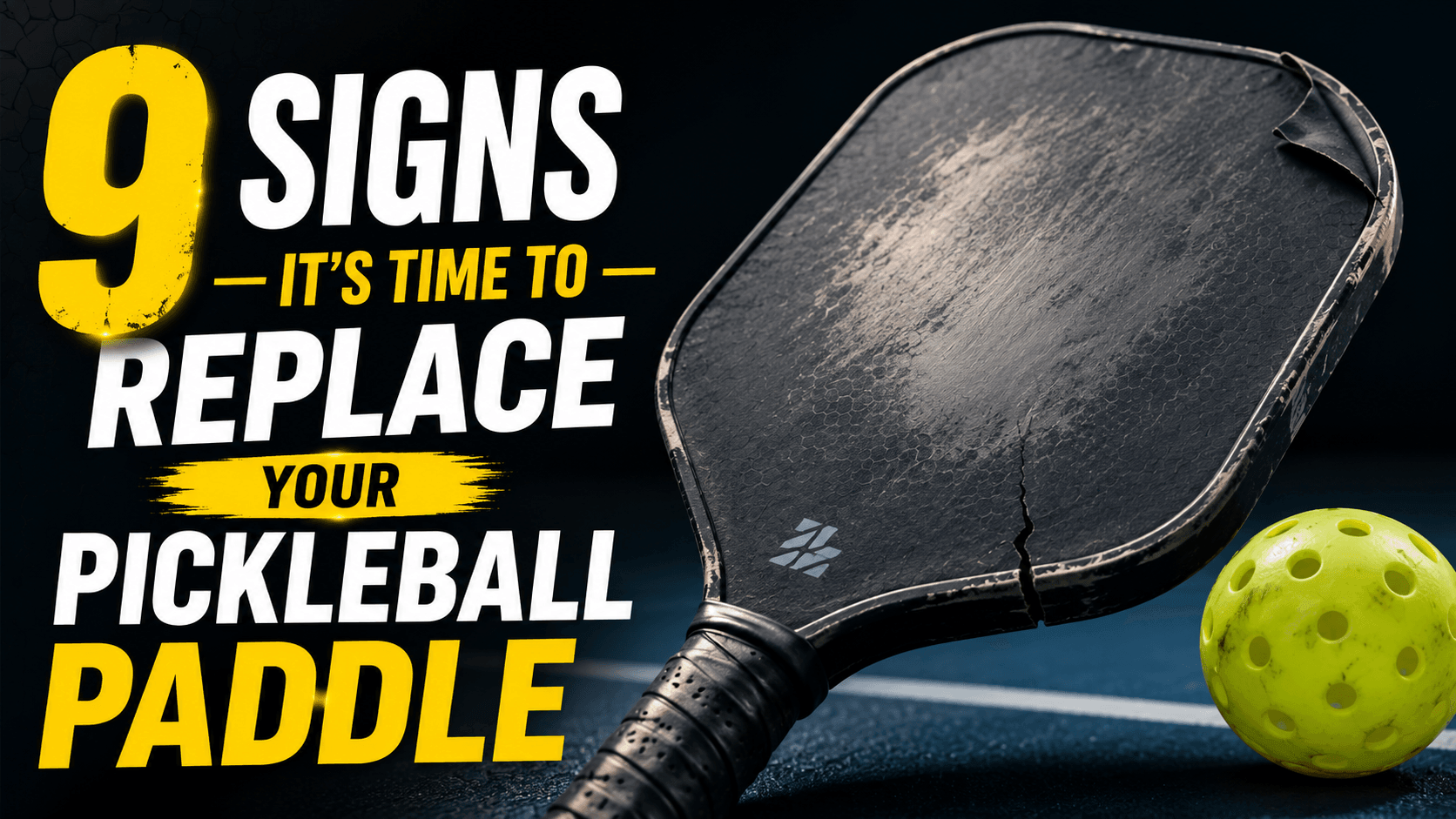
Knowing when to replace a pickleball paddle comes down to three questions: has the surface stopped biting the ball, has the core stopped returning energy, and has anything come apart structurally? If the answer to any of those is yes, no amount of cleaning or re-gripping brings it back.
The short version: replace the paddle when the grit no longer grabs, when rebound goes uneven across the face, or when you can see or feel separation anywhere. The tricky part is that most paddles don't die all at once. They fade, players adjust their swing to compensate, and months go by on gear that's working against them. Below are the nine signs, a two-minute test for each, and how to tell real failure from harmless cosmetic wear.
How Long Should a Pickleball Paddle Last?
There's no honest single number, and any article that gives you one is guessing. Paddle life is a function of how often you play, how hard you hit, what the paddle is made of, and how you store it.
When to Replace a Pickleball Paddle Based on How Often You Play
- Two or three sessions a week, recreational pace: most players get a full season or more from a quality paddle before performance shifts noticeably.
- Five or more sessions a week, competitive: evaluate every few months. Heavy drilling puts far more cycles through the core than social play does.
- Tournament players chasing peak spin: surface texture usually goes first, well before the core fails.
Construction matters as much as frequency. Raw carbon fiber faces bite beautifully out of the box, but the peel-ply texture creating that bite is a physical surface, and physical surfaces abrade. Thermoformed paddles with foam-injected perimeters put more stress on the face-to-core adhesive bond than older cold-pressed builds did.
Heat is the underrated killer. A paddle left in a car trunk through a New York July sits in conditions that stress adhesives and soften a polypropylene honeycomb core. Construction and storage move the answer to when to replace a pickleball paddle far more than the calendar does. If you do one thing to extend paddle life, stop storing your paddle in your car — a paddle cover costs very little and prevents heat exposure and edge damage both.
The 9 Signs at a Glance
Here's the full diagnostic for when to replace a pickleball paddle, organized by what you see, hear and feel.
| What You Notice | Sense | Likely Cause | Verdict |
|---|---|---|---|
| Ball skids off the face, topspin dies | Feel | Surface texture worn smooth | Replace |
| One area of the face responds differently | Feel / Hear | Dead spot from core failure | Replace |
| Drives land shorter with the same swing | Feel | Core losing energy return | Replace |
| Crunching when you press the face | Hear | Core crush | Replace |
| Resets suddenly rocket long | Feel | Disbonding / face separation | Replace immediately |
| Bubbling or a raised patch on the face | See | Face lifting from core | Replace |
| Crack in the face, throat or edge | See | Impact damage | Replace |
| Edge guard lifting or rattling | See / Hear | Adhesive failure or impact | Sometimes repairable |
| Handle twists, creaks or flexes | Feel | Handle-to-face joint failure | Replace |
Sign 1: Loss of Spin
This is the most common failure, and the one players are slowest to notice, because it happens gradually enough that you adapt without realizing it.
How to test it: run your thumbnail across the center of the face, then across an area near the edge that rarely gets contact. If the center feels noticeably slicker, the texture in your contact zone is gone. Second check: set a ball on the face and drag it. Healthy grit grabs and stutters. A worn surface glides.
On court it shows up as topspin drives that sit up instead of dipping and drops that carry longer than they used to. Cleaning helps only if dirt and ball residue are filling the texture. If a damp cloth changes nothing, worn grit is your answer to when to replace a pickleball paddle, and it doesn't come back. Some newer surface technologies resist this far better than others — see our breakdown of durable grit paddle surfaces before buying your next one.
Sign 2: Dead Spots and Uneven Rebound
A dead spot is an area where the internal structure no longer transfers energy, so the ball dies on contact instead of springing off.
The tap test
Let the paddle hang loosely from the handle. Tap a pen across the face in a grid pattern, listening carefully. A healthy paddle produces a consistent pitch everywhere; a damaged area sounds lower and hollower. Tap a paddle you know is healthy first so your ear has a reference.
The bounce test
Drop a ball from about a foot onto several points. Rebound height should be consistent across the sweet spot. If the ball dies in one region and bounces normally elsewhere, that region has failed.
Dead spots don't heal and they don't stay contained — once part of the core or bond fails, adjacent cells carry more load. A confirmed dead spot in the sweet spot is the clearest possible case of when to replace a pickleball paddle.
Sign 3: Loss of Pop or Power
Yes, a paddle can lose power, and it isn't your imagination. Energy return depends on face and core acting as a single stiff unit. As the honeycomb fatigues, more impact energy gets absorbed and less comes back.
The tell is swinging harder for the same depth. Drives that used to land at the baseline now land at the transition line. Before blaming the paddle, rule out the obvious: a worn grip changes how you actually hold it, cold weather stiffens balls and cores, and old balls that have gone soft feel dramatically different. Swap in a fresh ball and a fresh overgrip first.
Signs 4 and 5: Core Crush and Disbonding
These two are the most misunderstood failures in the sport, and they're opposites in effect.
| Failure | What's Happening | How It Plays | Tournament Legal? |
|---|---|---|---|
| Core crush | Honeycomb cells collapse under repeated impact | Dull, dead, inconsistent; power loss | Legal, but you're at a disadvantage |
| Disbonding | Adhesive between face and core fails | Trampoline effect; extra power, no touch | No |
| Delamination | Face layers separate from each other | Rare, but severe performance change | No |
| Surface wear | Grit texture abrades away | Spin loss, ball skids | Legal, but the paddle is done |
The press test for core crush
Place both thumbs near the center of the face and press firmly. A sound core stays solid and silent. A crushed core produces a faint crunching or crackling, and the face may give slightly. That crackling is collapsed honeycomb cells. Press gently the first time — you're diagnosing, not stress-testing.
Why disbonding is the urgent one
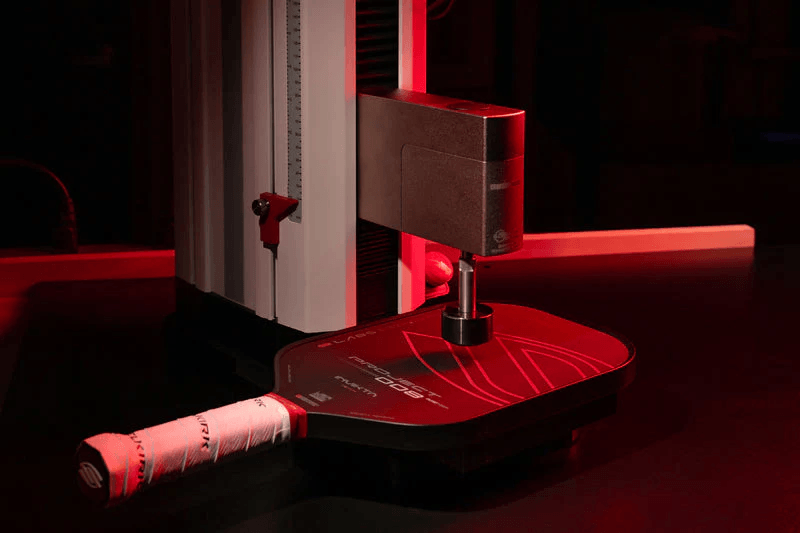
If your paddle suddenly got more powerful, that's not good news. When the face separates from the core it flexes and snaps back independently, adding rebound the paddle was never certified to produce. Resets fly, dinks pop up, and soft-game control disappears. A paddle in that condition no longer meets the limits it was approved under — USA Pickleball's Equipment Standards Manual covers deflection and Paddle/Ball Coefficient of Restitution requirements. Disbonding is the one case where when to replace a pickleball paddle has an immediate answer: today.
Signs 6, 7 and 8: Cracks, Bubbling and Edge Guard Separation
Six Zero Professional Edgeguard Tape 3 Pack
$18.00
Six Zero professional edgeguard tape will protect your paddle from scrapes and scratches. The tape incorporates a light weight multidirectional weave to conform around your paddle edges providing a secure barrier of protection for your paddle. The length and shape is… read more

These are the visible failures, and they remove the guesswork.
Bubbling or lifting on the face means the face material is separating from what's underneath. Look across the paddle at a low angle in good light; raised areas show as distortions in the reflection you'd never catch head-on. Any bubble is a replacement.
Cracks in the face, throat, or handle transition are structural and progressive. Hairline cracks around the throat are particularly serious because that's where torque loads concentrate. Cracks in the edge guard plastic alone are cosmetic; cracks in the paddle body are not.
Edge guard separation is the one case where repair is often reasonable. If the guard lifted at a corner from clipping the ground and the face underneath is intact, quality edge tape restores protection and kills the rattle. What you shouldn't do is assume all lifting is harmless — if face material is peeling with the guard, or something rattles loose inside, that's structural.
Sign 9: Handle Movement or Flex
Grip the handle firmly and try to twist the face against it. There should be zero movement and no sound. Any creaking, flex, or perceptible rotation means the handle-to-face joint is failing.
Take this one seriously beyond performance. A handle that separates mid-swing sends a paddle across the court at speed. If you feel movement, stop using it, and don't try to glue it.
When Cosmetic Damage Is Harmless
Knowing when to replace a pickleball paddle also means knowing when not to. Plenty of ugly paddles play perfectly.
- Scuffs and paint chips on the edge guard. That's what the edge guard is for.
- Ball marks and green residue on the face. Clean it and keep playing.
- Faded or scratched graphics. No performance effect whatsoever.
- A worn, slippery grip. Affects your game significantly, costs a few dollars to fix. Re-grip first.
Rule of thumb: damage on the outside of the edge guard or the surface of the graphics is cosmetic. Damage in the face, the core, or the handle joint is structural.
Warranty Claim vs Replacement
Before deciding when to replace a pickleball paddle at your own expense, check whether the brand owes you one. Most reputable manufacturers cover manufacturing defects, typically for six to twelve months from purchase, though terms vary widely.
Usually covered: core crush or delamination appearing early in the paddle's life under normal use, handle separation, edge guard adhesive failure without impact damage, face defects present from the start.
Usually not covered: normal grit wear, damage from paddle taps or hitting the ground, heat damage from car storage, cosmetic wear, and anything on a paddle bought secondhand from a private seller.
Document before you contact anyone: photograph the paddle in good light from multiple angles, capture the damage clearly, and locate proof of purchase. Most brands want a photo of the paddle with a handwritten note showing the date and claim number, so don't dispose of it until the claim resolves. If you bought from us, start with our warranty information and check the current terms on our return policy page. We coordinate warranty claims with brands on our customers' behalf, which is usually faster than going direct.
What Paddle Should You Buy Next?
Once you've settled the question of when to replace a pickleball paddle, the next one is what to replace it with. Resist buying the same model reflexively — your game has changed and paddle tech moves fast.
Start by diagnosing what failed
If yours died from surface wear, prioritize face durability. If it died from core crush and you're a heavy hitter, look at construction quality and core density rather than chasing the highest power rating. If it disbonded, look closely at how the brand builds the face-to-core bond.
Try before you commit
Paddle feel is personal, and specs on a page tell you very little about how something plays in your hand. Our demo program lets you hit with paddles before buying, and our Great Neck and Long Beach locations let you get hands on inventory in person. Our Boca Raton location has a full court on site.
Consider certified pre-owned
If you need something playable this week without paying full retail, certified pre-owned paddles are worth a look. Every CPO paddle we sell is inspected for exactly the failures described above: tap tested for dead spots, pressed for core integrity, graded on surface condition. It's also a low-risk way to try a construction style you're curious about.
Not sure where to start
Use our paddle finder to narrow by playing style, weight preference and skill level. If you're still unsure when to replace a pickleball paddle, bring yours into any Spinwave location for a hands-on assessment, or send us the details of what failed and how you play and we'll make a specific recommendation.
FAQs
How many years does a pickleball paddle last?
Think in hours of play rather than years. A recreational player hitting two or three times a week often gets a year or more from a quality paddle. A competitive player playing five or more times a week may notice meaningful change within a few months. Storage conditions and playing style shift that range considerably.
How do you test for dead spots?
Tap a pen across the entire face in a grid pattern and listen for tonal changes; damaged areas sound lower and hollower. Then drop a ball from about a foot onto several points and compare rebound height. Inconsistent sound and inconsistent bounce in the same spot confirms it.
Can a pickleball paddle lose power?
Yes. As the honeycomb core fatigues from repeated impact, it absorbs more energy and returns less, so you swing harder for less depth. This happens faster on lower-quality cores and on paddles regularly exposed to heat.
Is a loose edge guard a serious problem?
Not always. A guard lifted at a corner with the face intact underneath can often be re-secured with edge tape. It becomes serious if face material is peeling with the guard, if something rattles loose inside, or if the gap exposes the core to moisture.
Does paddle grit wear out?
It does, and it's the most common performance failure in modern paddles. Cleaning restores bite lost to dirt and ball residue, but once the texture itself is worn smooth it cannot be restored.
Can a delaminated or disbonded paddle be repaired?
Small localized separations are sometimes re-glued, but repairs rarely restore original performance and the paddle typically won't meet the rebound specifications it was certified under. For sanctioned play, replacement is the only appropriate answer.
Does temperature really damage pickleball paddles?
Heat stresses the adhesives bonding face to core and can soften polypropylene honeycomb. Leaving a paddle in a hot car is one of the most common avoidable causes of premature failure.