
Table of Contents
- Bread and Butter LOCO Review: Quick Verdict
- LOCO Specifications by Shape
- What's Actually Inside the LOCO
- Power and Pop
- Spin
- Control, Drops and Resets
- Sweet Spot, Stability and Forgiveness
- LOCO Standard (Widebody) Review
- LOCO Hybrid Review
- LOCO Elongated Review
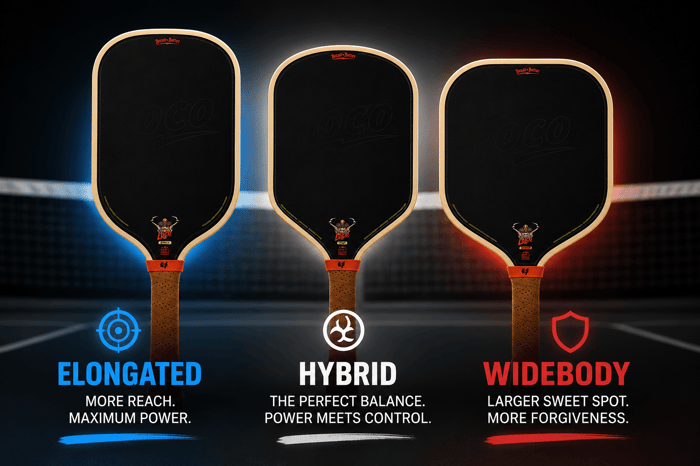
- LOCO Shape Comparison
- How the LOCO Compares
- Should You Add Weight to the LOCO?
- Warranty, Returns and the Registration Catch
- Is the Bread and Butter LOCO Worth $199?
- Final Verdict
- FAQs
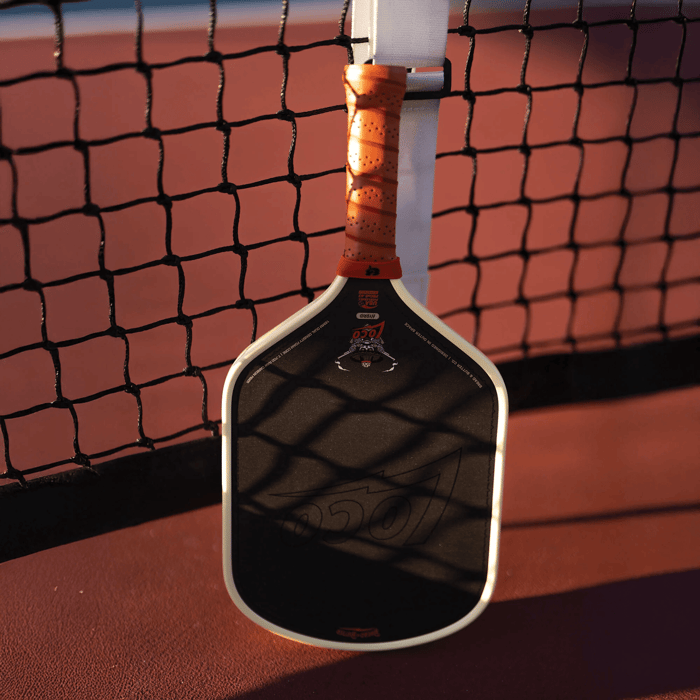
This Bread and Butter LOCO review covers all three shapes — Standard, Hybrid and Elongated — because treating the LOCO as one paddle is the mistake most coverage makes. They share a dual-density foam core and a fiberglass-boosted carbon face, but their swing weights span 108 to 120 and their twist weights span 6.28 to 7.3. Those are three different paddles wearing one name.
One clarification first: this is the current foam-core LOCO, not the older honeycomb-core Loco that still appears in some search results. Different construction, same name. If a review mentions thermoformed polypropylene, it's about the old one.
Bread and Butter LOCO Review: Quick Verdict
A genuine power paddle with more usable playability than most paddles in its class. The shape decision matters more than the color, and for most buyers the Hybrid is the right answer.
| Category | Power |
| Best overall shape | Hybrid |
| Fastest hands and most forgiving | Standard |
| Most reach and leverage | Elongated |
| Main drawback | Firm pop makes resets and touch shots harder at first |
| Surface | Raw T-700 carbon — strong spin, not an endurance-grit face |
| Approval | USAP approved, all three shapes |
| Price | $199, paddle cover included |
| Our advice | Pick the shape before the graphic |
The Loco 16mm Pickleball Paddle - Elongated

$149.95
$199.00
Bread & Butter LOCO — Elongated Balanced. Bold. Elongated. Built for players who want more reach, more leverage, and more control—without losing touch. Use code LOCO to see discount in cart. 🎯 Control Plush Touch + Calm Resets 📏 Reach… read more
Buy the LOCO if
- You want real power without Boomstik-level extremity
- You like firm, responsive contact
- You generate offense through drives, counters and speed-ups
- You want a genuine choice between three shapes
- You're cross-shopping $200 foam paddles
Consider something else if
- You want a soft, muted control paddle
- You already pop up resets
- You need a long handle for a two-handed backhand but dislike heavy swing weights
- You want a specialized durable-grit surface
- You just bought another strong foam paddle and expect a revolution
LOCO Specifications by Shape
Every Bread and Butter LOCO review starts here, and the spread across the three columns is the whole story.
| Spec | Standard | Hybrid | Elongated |
|---|---|---|---|
| Length | 16.0" | 16.2" | 16.5" |
| Width | 8.0" | 7.6" | 7.375" |
| Weight | 8.0–8.1 oz | 7.9–8.1 oz | 8.0–8.2 oz |
| Swing weight | 108–110 | 112–115 | 118–120 |
| Twist weight | 7.3 | 6.65 | 6.28 |
| Handle | 5.3" | 5.3" | 5.5" |
| Grip circumference | 4.25" | 4.25" | 4.25" |
| Core | 16mm dual-density EPP + EVA foam | ||
| Face | T-700 raw carbon fiber with a fiberglass layer | ||
| Approval | USAP | ||
| Price | $199 | ||
Two things to hold onto. First, the twist weight drops by roughly a full point from Standard to Elongated — that's the forgiveness gap, and it's larger than the shape names suggest. Second, independently measured units routinely differ from published figures. One reviewer measured about 6.15 on an Elongated and 7.34 on a Standard. Treat manufacturer numbers as the center of a range, not a guarantee.
What's Actually Inside the LOCO
Dual-density foam, not solid foam
The core pairs a denser EPP center with a softer EVA perimeter band. The intent is rebound through the middle and a broader usable hitting area toward the edges. Reviewers call it a "full foam" or "Gen 4" paddle — useful shorthand, but not an official category, and not literally accurate. X-ray analysis of the LOCO shows polypropylene honeycomb in the handle to manage weight. It isn't foam end to end.
The fiberglass layer is the personality
B&B lists the face as T-700 raw carbon fiber with a layer of fiberglass added for pop. Independent teardowns describe the layup as a carbon-fiberglass-carbon sandwich. Either way, the fiberglass is what separates the LOCO from softer foam paddles: it adds liveliness and rebound, and it's why the paddle feels firm and quick off the face rather than plush. If you're coming from a Honolulu NF-series paddle, this is the difference you'll feel first.
Why testers disagree about the feel
Published descriptions of the LOCO's feel include crisp, slightly hollow, dense, firm and connected, smooth but poppy. That spread isn't sloppy reviewing — feel is subjective and depends heavily on what you played before. Swing weight, twist weight and ball exit can be measured. "Feel" can't. Weight any Bread and Butter LOCO review's feel description against what that tester was previously using.
Power and Pop
Independent testing places all three shapes firmly in the power category, with combined power and pop scores in the high 80s and 90s and similar energy return across the family. The LOCO is not the single hardest-hitting paddle available. Its appeal is that most players can access the offense without surrendering the control that the hottest foam paddles take away.
By shape: the Elongated delivers the most plow-through and serve leverage, the Hybrid gets most of that offense at a swing weight you can still move, and the Standard trades baseline leverage for the fastest counters of the three.
One caveat on the numbers: most LOCO review testing measures power on centered contact, which flatters a paddle family whose lateral forgiveness varies this much by shape. The Elongated's published power advantage assumes you're finding the middle of a 7.375-inch face.
Spin
Independent testing has measured the LOCO family in roughly the 2,050 to 2,150 RPM range depending on shape and tester. That's a strong tier, not a category-leading one, and the surface is standard raw carbon rather than a specialized endurance grit.
Be skeptical of any single RPM figure quoted as the paddle's permanent number. Results move with the unit, the ball, swing speed, surface age and measurement protocol. The honest framing is that the LOCO produces high-tier spin and that its texture will smooth with use like any raw carbon face.
Spin also interacts with shape. A LOCO review measuring the Standard and one measuring the Elongated are testing different contact geometries on the same surface, which is part of why published figures cluster without converging.
Control, Drops and Resets
This is where reviewers and owners disagree most, and it's the section that matters most in an honest LOCO review.
Some testers reported real difficulty managing the LOCO's pop on resets initially, describing the ball leaving the face faster than expected. Owner reports echo that adjustment period. Other testers describe the Hybrid as intuitive within a few sessions. Both are probably true — this is a paddle with a firm, fast launch, and the question is how quickly you recalibrate.
It helps to separate three things people lump under "control":
- Launch control — how fast the ball leaves. The LOCO's weak point, particularly early.
- Directional control — how accurately you hit targets. Shape-dependent, and the Standard's width helps here.
- Spin-assisted control — how topspin brings aggressive shots down. The LOCO is good at this.
If you routinely float resets with your current paddle, the LOCO will not fix that, and may briefly make it worse.
Sweet Spot, Stability and Forgiveness
Width drives twist weight, and twist weight drives lateral forgiveness. The published spread — 7.3, 6.65, 6.28 — maps directly onto the shape order, and independent measurements generally support the pattern even when the exact numbers differ.
What this means practically: the Standard tolerates side-edge contact best and blocks most predictably. The Hybrid is stable enough in stock form for most players. The Elongated punishes lateral mishits, and adding weight helps but can't widen the face. A large vertical sweet spot on an elongated paddle is not the same thing as side-to-side stability, and this is where the marketing language for every elongated paddle tends to blur.
The Loco 16mm Pickleball Paddle - Standard

$149.95
$199.00
Bread & Butter LOCO — Standard Balanced. Bold. Built for control. A wider face and perfectly balanced swing weight deliver a stable, forgiving response—without losing pop. Use code LOCO to see discount in cart. 🤲 Forgiving Wide face = easy… read more
LOCO Standard (Widebody) Review
The 16 by 8-inch face, lowest swing weight and highest twist weight of the family. This is the LOCO for people whose priority is hand speed and forgiveness rather than reach.
Best for: doubles specialists, kitchen-focused players, anyone whose contact isn't reliably centered, and control-oriented players stepping into foam power for the first time.
The catch: the 5.3-inch handle is short. If you hit a conventional two-handed backhand, it will feel cramped. That's the single most cited drawback across LOCO review coverage and it applies to the Hybrid equally.
The Loco 16mm Pickleball Paddle - Hybrid

$149.95
$199.00
Bread & Butter LOCO — Hybrid Balanced and Bold. The sweet spot between elongated reach and standard maneuverability—built to be a true all-court weapon. Use code LOCO to see discount in cart. 🧠 All-Court Built For Every Phase 🤲 Plush… read more
LOCO Hybrid Review
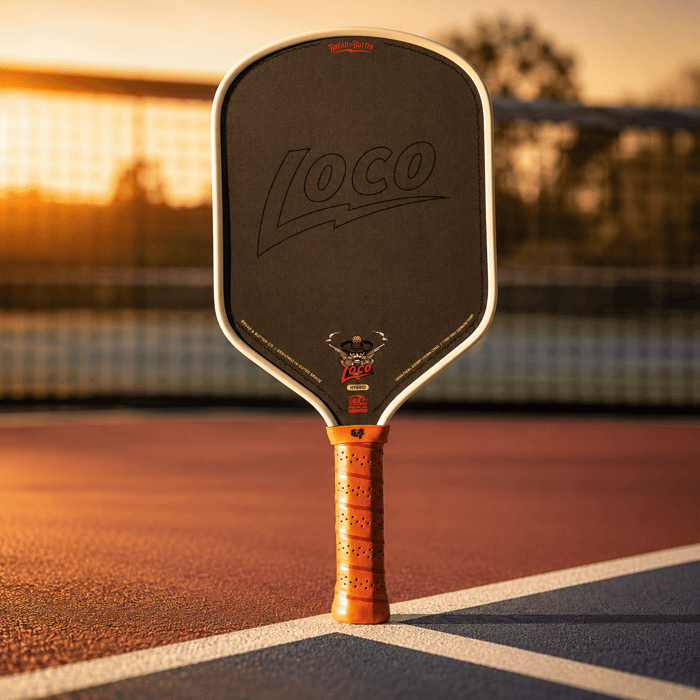
16.2 by 7.6 inches, midrange swing weight, and the shape most reviewers landed on after testing all three. It keeps most of the Elongated's offense while staying maneuverable and leaving the most room for customization.
Best for: aggressive all-court players, anyone who drives and counters in equal measure, and — importantly — anyone unsure which shape they want. The Hybrid is the low-regret purchase.
The catch: same 5.3-inch handle as the Standard, and it specializes in nothing. If you know you want maximum reach or maximum hand speed, one of the other two serves you better.
Our provisional verdict for this Bread and Butter LOCO review: the Hybrid is the default recommendation unless you have a specific reason to choose otherwise.
The Loco 16mm Pickleball Paddle - Elongated
$149.95
$199.00
Bread & Butter LOCO — Elongated Balanced. Bold. Elongated. Built for players who want more reach, more leverage, and more control—without losing touch. Use code LOCO to see discount in cart. 🎯 Control Plush Touch + Calm Resets 📏 Reach… read more
LOCO Elongated Review
16.5 inches with a 5.5-inch handle, the highest swing weight in the family and the lowest twist weight. Maximum leverage, narrowest margin for error.
Best for: singles players, baseline drivers, two-handed backhands, and players who already know they prefer elongated shapes.
The catch: this is the shape that draws the most consistent criticism. It can feel heavy without returning proportional forgiveness, kitchen exchanges are slower, and there's limited headroom for added weight — one measured unit already sat above 121 swing weight before any modification, and modest side additions pushed it to about 125. If you're choosing Elongated because it sounds more advanced rather than because you play that way, choose the Hybrid.
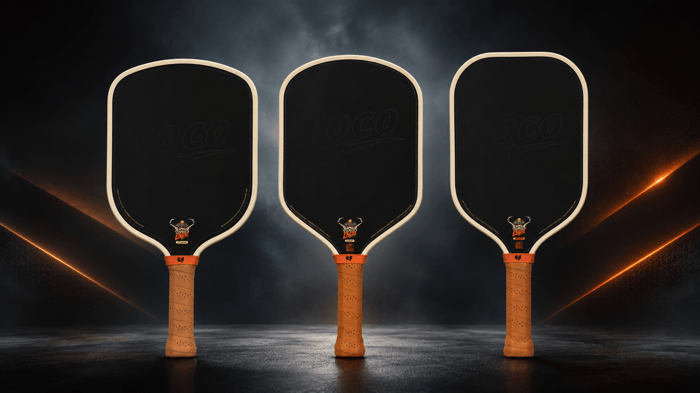
LOCO Shape Comparison
| Category | Standard | Hybrid | Elongated |
|---|---|---|---|
| Hand speed | Best | Very good | Slowest |
| Reach | Lowest | Good | Best |
| Baseline power | Strong | Very strong | Best |
| Lateral forgiveness | Best | Good | Lowest |
| Two-handed backhand | Limited | Limited | Best |
| Kitchen play | Best | Balanced | Demanding |
| Room to customize | High | Best | Limited |
| Buy it if | You want forgiveness | You're unsure | You're already elongated |
If you're still deciding between shapes generally, our guide to elongated vs hybrid vs widebody paddles covers the underlying mechanics.
How the LOCO Compares
LOCO vs Selkirk Boomstik
The Boomstik offers a higher raw power ceiling. The LOCO is less expensive, more manageable across a full match, and available in three practically distinct shapes. The question isn't which hits harder — it's whether you want maximum firepower or power you can still control in the third game.
LOCO vs Honolulu J2NF
This one separates power from plushness. The LOCO is firmer, livelier and has the higher offensive ceiling. The J2NF is softer with a cleaner, more forgiving sweet spot. Control-first players generally prefer the J2NF; players who want to finish points prefer the LOCO.
LOCO vs Honolulu J2CR Crystal Blue
The short version: the J2CR's Blue Grit is built to hold texture longer, while the LOCO's raw carbon will smooth normally. The LOCO's fiberglass layer gives it a livelier, firmer response. We've covered this matchup in full in our J2CR Blue Grit vs Bread & Butter LOCO comparison.
LOCO vs JOOLA Pro IV and Pro V
The LOCO undercuts both on price and offers three shapes against JOOLA's handle-length variants. JOOLA brings broader availability and a more established warranty operation. We'd stop short of the "JOOLA killer" framing that appears in some LOCO review coverage — that's a claim that needs head-to-head testing behind it.
Should You Add Weight to the LOCO?
Play it stock for several hours first. Plenty of owners are satisfied with the Hybrid untouched, and modifying before you know the baseline wastes the baseline.
If you do modify: the Standard often needs nothing. The Hybrid has the most headroom, and small equal amounts of tungsten tape at 3 and 9 o'clock raise lateral stability. The Elongated should get modest additions only — it starts heavy and gets unwieldy fast.
Before you add anything, read the next section. Modifications interact with B&B's policies in ways most buyers don't expect.
Warranty, Returns and the Registration Catch
This is the part almost no LOCO review mentions, and it's the part that costs people money.
B&B's published warranty and return policy gives one year from date of delivery against defects in workmanship and materials, non-transferable, original purchaser only. There's also a separate 30-day return window on direct orders.
The registration requirement. B&B lists paddles that were not registered when purchased from a third party among the conditions that void the warranty. Spinwave is a third-party dealer. Register your paddle with Bread & Butter after purchase — it takes two minutes and it's the difference between having a warranty and not.
The modification rules. Lead tape, edge guard tape and overgrips over the factory grip are all permitted. Removing the factory grip, altering the butt cap, or any handle modification including PU inserts voids the return policy. B&B's warranty terms also list modifications generally — Slyce caps included by name — among voiding conditions, which is worth knowing given that weighted speed caps are sold for the LOCO. Confirm directly with B&B before installing one if warranty coverage matters to you.
Spinwave's own return policy is separate from B&B's and applies to purchases made through us.
Is the Bread and Butter LOCO Worth $199?
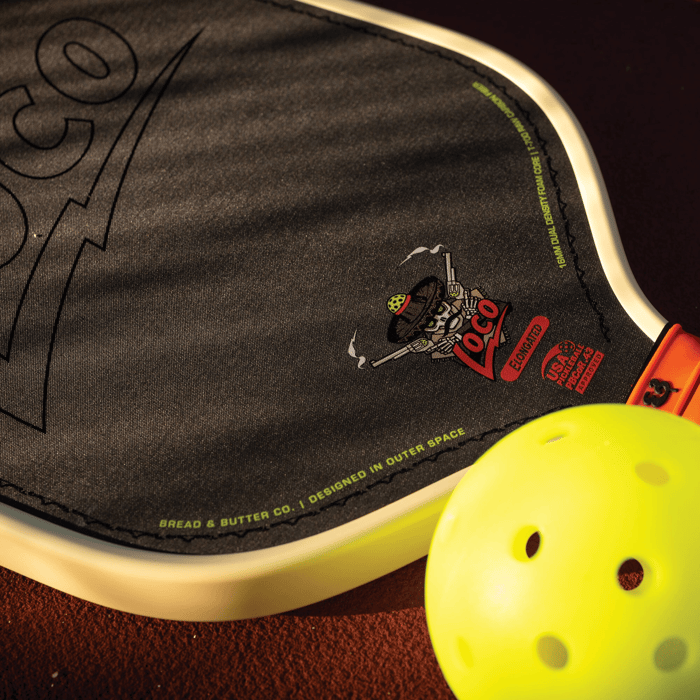
For a player actively shopping foam-core power, yes. You get dual-density construction, three genuinely different shapes, a cover, USAP approval and a one-year warranty at a price that undercuts most $250 to $300 flagships.
It's weaker value if you need a soft control paddle, if you specifically want durable-grit longevity, or if you're an elongated player who wants something light. And it's poor value if you're buying because of the hype and already own a capable foam paddle — the LOCO is very good without being a category reset.
The value case in this Bread and Butter LOCO review assumes you buy the right shape. Buy the wrong one and you've spent $199 fighting a paddle for a season, which is exactly why the shape sections above are longer than the price section.
If price is the constraint, our certified pre-owned paddles include foam-core options worth checking first.
Final Verdict
The LOCO earns most of its reputation. It combines real power, a generous response and three meaningfully different shapes at a competitive price. It is not a soft control paddle, and players coming from forgiving carbon models should expect a recalibration period with the fiberglass-driven pop.
The conclusion of this Bread and Butter LOCO review by player type: Hybrid for most aggressive all-court players and anyone undecided. Standard for doubles players who value fast hands and forgiveness, and it's the smarter pick more often than its lower profile suggests. Elongated only if you already play elongated and want reach and leverage over reaction speed.
Not sure which? Demo a LOCO before buying — our Great Neck and Long Beach locations carry all three shapes, and hitting them back to back settles the question faster than any spec sheet. You can also get a free paddle recommendation or order a customized LOCO build with the weighting already done.
FAQs
Which LOCO shape is best?
The Hybrid is the safest choice for most all-court players. The Standard is best for fast hands and forgiveness; the Elongated is best for reach, leverage and two-handed backhands.
Is the Bread and Butter LOCO a power or control paddle?
A power paddle. The dual-density foam core and fiberglass-boosted carbon face produce strong rebound and pop, though the Standard and Hybrid offer more control than most extreme power models.
Is the Bread and Butter LOCO good for beginners?
Better suited to intermediate and advanced players. Beginners who struggle with touch may find the pop hard to manage, though the Standard is the most approachable of the three.
Is the LOCO a full-foam paddle?
It uses an EPP foam center with an EVA perimeter band. Reviewers call it full-foam or Gen 4, but X-ray analysis shows polypropylene honeycomb in the handle to manage weight.
Is the Bread and Butter LOCO USAP approved?
Yes. Bread & Butter lists the Standard, Hybrid and Elongated LOCO as USAP approved.
Does the LOCO need a break-in period?
Some players need several sessions to adjust to its launch and pop. Longer-term testers report slight softening, but much of the improvement is the player learning the paddle rather than the paddle changing.
Does the LOCO grit wear out?
The raw carbon surface smooths with use like any raw carbon face. Visible texture loss doesn't necessarily mean spin has gone, but this is not positioned as an endurance-grit surface.