
Table of Contents
- Quick Verdict
- What Is Identical
- The One Real Difference: Core Generation
- RPM Friction Pro V2 vs Q2: Side-by-Side Specs
- The Swing Weight Numbers Contradict Each Other
- Feel: The Difference You Will Notice First
- Power and Drives
- Forgiveness
- Spin
- Shapes and Thicknesses
- The Certification Advantage Both Share
- Which Should You Buy?
- If You Own the Original Friction Pro
- The Complaints Worth Taking Seriously
- Related Spinwave Links
- Final Verdict
- FAQs
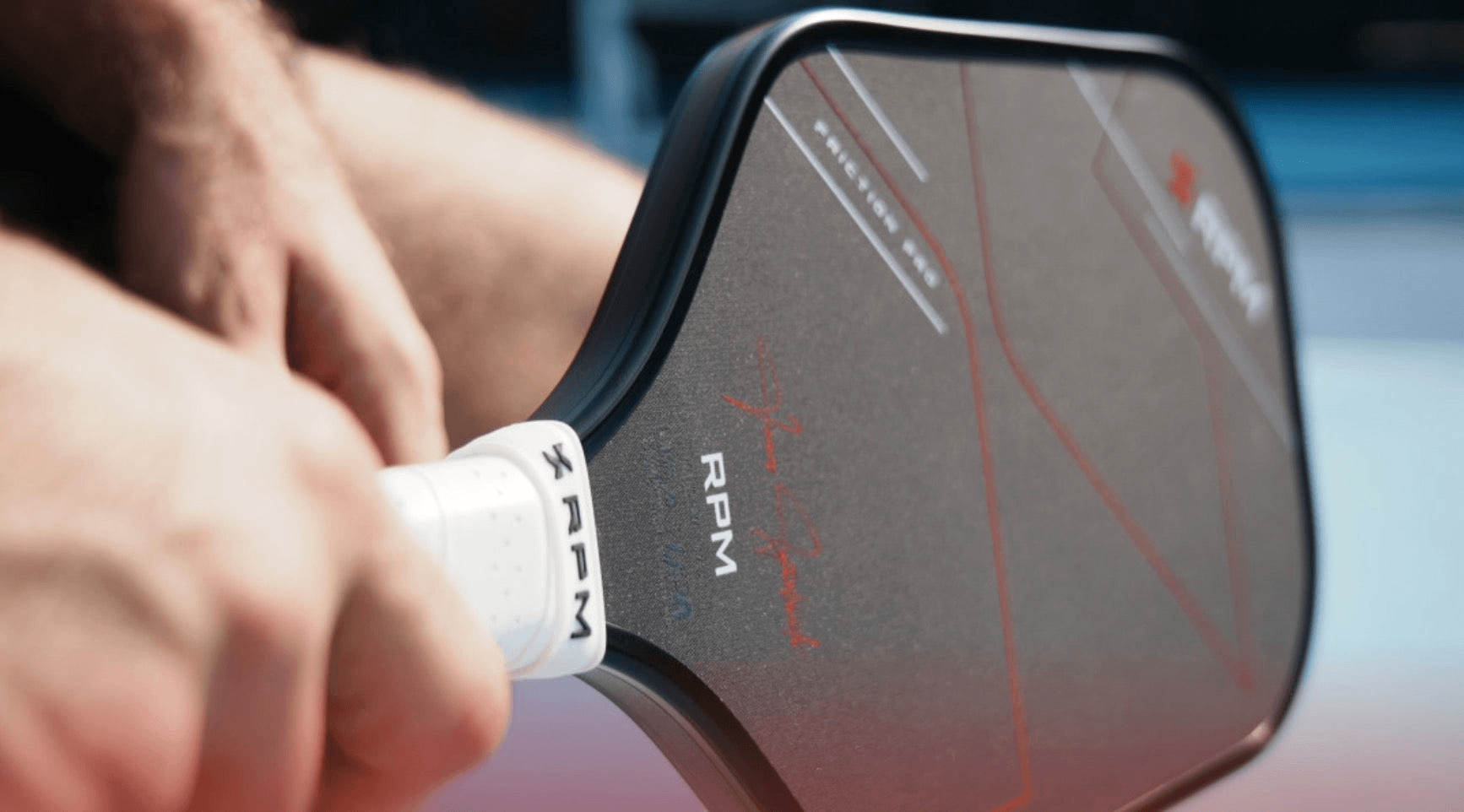
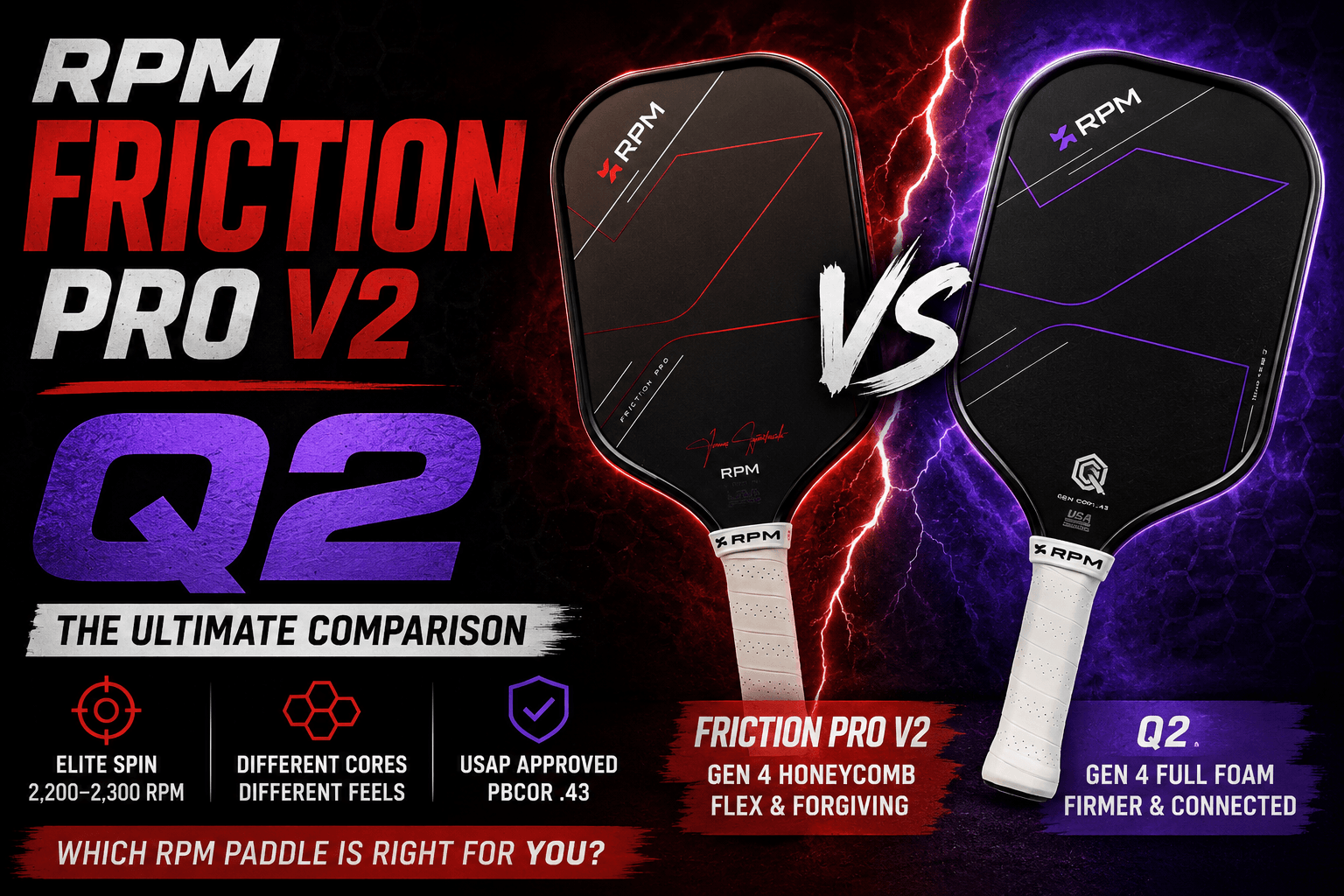
RPM Friction Pro V2 vs Q2 is the hardest paddle decision RPM makes you take, because on paper these two are nearly the same product. Same $249.99 price. Same CarbonBite carbon face. Same 16.5" x 7.5" elongated frame, same 5.5" handle, same 4.125" grip. Both USAP approved at PBCoR .43.
One variable separates them, and it is the one that matters most: what is inside the core. The Friction Pro V2 is Gen 3. The Q2 is Gen 4. Both took category wins in our Q3 2026 paddle rankings — the V2 as Best Gen 3 Elongated, the Q2 as Best Gen 4 Widebody.
Quick Verdict
Take the Friction Pro V2 if you have played honeycomb paddles for years and want elite spin without relearning your hands. It is the more forgiving of the two on every published measurement, and it is James Ignatowich's competition paddle.
Take the Q2 if you want RPM's newest platform, a firmer and more connected response, and a foam core that stays consistent as it ages. Budget two or three sessions to adjust.
Neither is a downgrade. The RPM Friction Pro V2 vs Q2 choice is a feel preference, not a performance ranking.
What Is Identical
Before the differences, it is worth being clear about how much overlap there is. Any RPM Friction Pro V2 vs Q2 comparison that implies these are wildly different paddles is overselling the gap.
- Price: $249.99 for both
- Face: CarbonBite raw carbon on both, the surface that built RPM's reputation for spin
- Elongated dimensions: 16.5" x 7.5" on both
- Handle: 5.5" length, 4.125" circumference — two-hand backhand friendly on both
- Certification: USAP approved, PBCoR .43, on both
- Axial Carbon Layup: RPM's carbon layering appears in both builds
- Spin tier: both measure in elite territory, in the 2,200–2,300 RPM range depending on the tester
Pick either one up blind and the reach, the grip and the bite on the ball will feel like the same family. The divergence starts at contact.
The One Real Difference: Core Generation
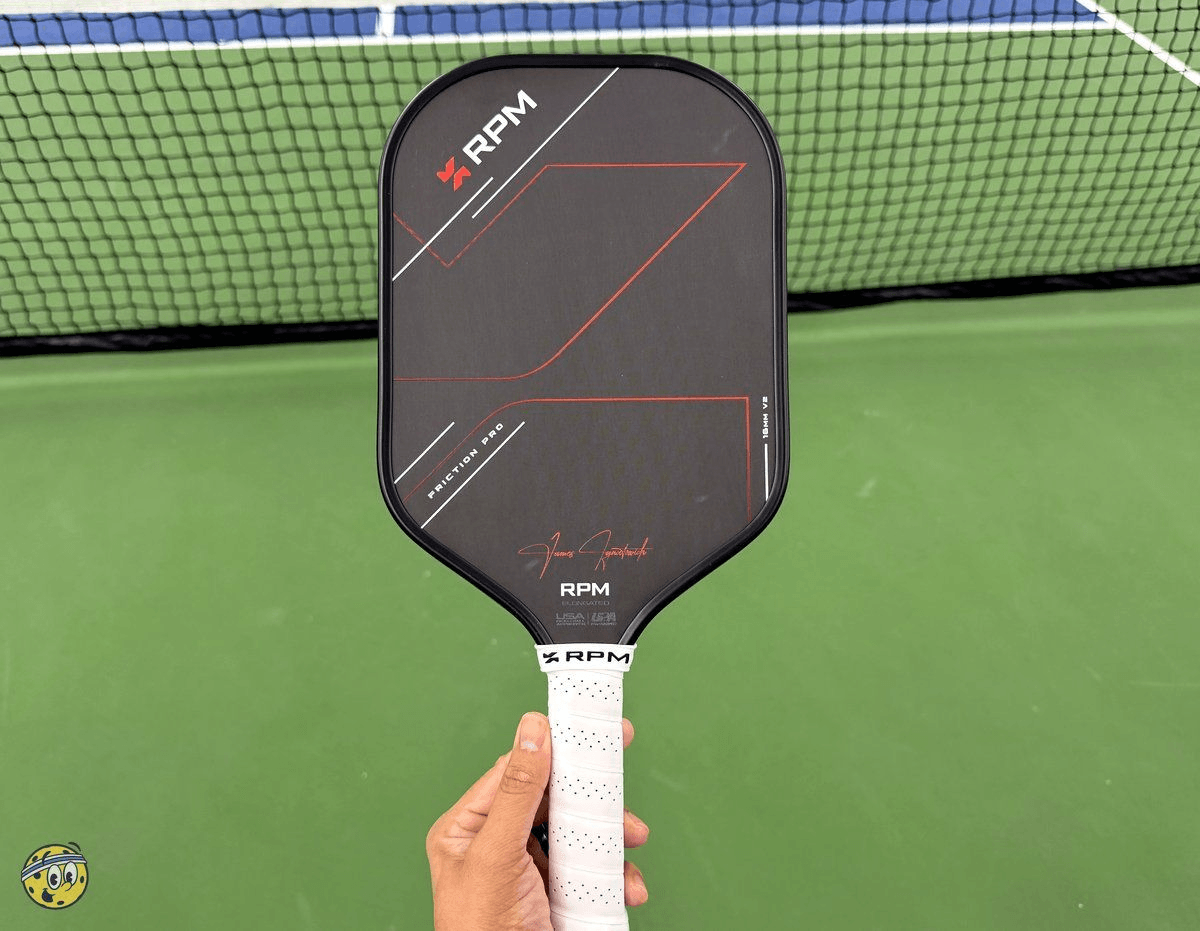
This is the whole story of RPM Friction Pro V2 vs Q2.
The Friction Pro V2 uses a Tri-Density core — a polypropylene honeycomb centre with an EVA foam perimeter ring, tuned with three materials of different densities. That is Gen 3 construction. You get the dwell time foam provides while keeping the communicative feedback honeycomb is known for. The V2 refined this over the original with a revised EVA ring and a reinforced throat.
The Q2 uses a fully molded EPP foam core with 3mm groove channels formed directly into the foam, TPU perimeter inserts at 3 and 9 o'clock, and TPE inserts at the neck. That is Gen 4. Full foam throughout, engineered by John Kew specifically to avoid the muted, disconnected feel that turns players off foam paddles.
Everything below follows from that one difference.
RPM Friction Pro V2 vs Q2: Side-by-Side Specs
Both in 16mm elongated, the configuration most buyers are choosing between.
| Spec | Friction Pro V2 16mm Elongated | Q2 16mm Elongated |
|---|---|---|
| Generation | Gen 3 — honeycomb with foam perimeter | Gen 4 — full foam |
| Core | Tri-Density honeycomb + EVA foam ring | Molded EPP foam, TPU and TPE inserts |
| Dimensions | 16.5" x 7.5" | 16.5" x 7.5" |
| Avg Weight | 7.9 oz | 7.9 oz |
| Swing Weight | 117 (reported 116.9 – 117) | 114 – 120 depending on tester |
| Twist Weight | 6.28 – 6.5 | 6.05 – 6.1 |
| Feel | Flex and thump, ball sinks in | Firmer, tighter, more immediate |
| Face | CarbonBite raw carbon fiber | |
| Handle | 5.5", 4.125" circumference | |
| Certification | USAP approved, PBCoR .43 | |
| Price | $249.99 | |
The Swing Weight Numbers Contradict Each Other
Worth knowing before you trust any spec table, including ours. Independent testers disagree about which of these two paddles is heavier through the stroke. One well-known lab measures the Q2 Elongated at 120.16 against the Friction Pro V2 at 116.91 — making the Q2 the power option. Another retailer with hands-on measurements reports the opposite: Q2 at 114, Friction Pro V2 at 117.
Those cannot both be right, and the gap is large enough to flip the recommendation. Foam paddles are known for unit-to-unit variance, and the Q2 appears to be a particularly variable build.
The practical takeaway for anyone weighing RPM Friction Pro V2 vs Q2: do not buy either based on a published swing weight figure. If a specific number matters to your setup, weigh the paddle you actually receive before you build lead tape around it.
What every source does agree on is twist weight. The Friction Pro V2 measures higher — between 6.28 and 6.5, against 6.05 to 6.1 for the Q2. That is a consistent signal across testers, and it means the V2 is the more forgiving paddle on off-center contact regardless of which swing weight figure turns out to be correct.
Feel: The Difference You Will Notice First
Reviewers who have played both describe the Friction Pro V2 as having a satisfying thump on contact — you can feel the face flex and the ball sink in slightly, without the paddle feeling soft or flimsy. It sits between the original Friction Pro, which was noticeably plusher, and genuinely stiff foam paddles.
The Q2 is on the firmer end of that same spectrum. It has been directly compared to the Selkirk Boomstik for stiffness. RPM built it specifically to give feedback that most foam paddles do not, and by Gen 4 standards it succeeds — but next to the V2 it is the tighter, more immediate of the two.
If you have never hit full foam and you like your current paddle, this is the section of the RPM Friction Pro V2 vs Q2 decision that should carry the most weight. Feel preference is not something you talk yourself out of.
RPM Friction Pro V2 Elongated 16mm Pickleball Paddle - Ella Oh Pink Signature
$249.99
RPM Friction Pro V2 — Elongated 16mm, Ella Oh Pink Signature This is the paddle that built on 2025 Paddle of the Year and made it meaner. The Friction Pro V2 pairs RPM new Axial Carbon Layup with the grippy… read more

Power and Drives
Power is the closest call in the RPM Friction Pro V2 vs Q2 comparison. Both are power-capable, and both ask for a compact swing. The Friction Pro V2 delivers more power than the original Friction Pro did, with the plow-through that a 117 swing weight and higher twist weight produce — heavier through the ball, more stable when you block pace.
The Q2's power arrives faster off the face. Reviewers consistently report needing to shorten their motion, and long swings send balls long. Whether it out-hits the V2 depends entirely on which swing weight figure you believe, which is why we would not make that claim in either direction.
One honest note that appears in multiple independent reviews: neither of these is the paddle for someone whose entire identity is the heaviest serve on the court. Both are spin-first designs that reward shaping the ball.
Forgiveness
The clearest win in the RPM Friction Pro V2 vs Q2 matchup, and it goes to the V2. A twist weight in the 6.3 to 6.5 range against the Q2's 6.05 is a meaningful difference on an elongated frame, where the sweet spot is already narrower than a widebody.
If you mishit even occasionally — and most players do more than they think — the V2 will hold its line better. This is also why we recommend the Q2 in its Widebody form, where twist weight climbs to 6.9, rather than the Elongated.
Spin
Effectively a tie, which makes sense given the identical face. Both measure in the low-to-mid 2,200s in independent testing, putting them in elite company without quite reaching the very top of the durable-grit field where Honolulu's Crystal Blue and 11SIX24's HexGrit sit.
What CarbonBite does not offer is a durable-grit claim. Both of these will wear the way raw carbon wears. If texture longevity is your priority, the honest answer is that neither paddle in this RPM Friction Pro V2 vs Q2 comparison is the right buy — look at the Coral Pro or the Crystal Blue paddles instead.
Shapes and Thicknesses
The RPM Friction Pro V2 vs Q2 choice is not only about the core. Both lines offer more than the elongated 16mm, and the options differ.
The Friction Pro V2 comes in 16mm and 14mm elongated, plus a widebody at 16" x 8". The widebody is the most forgiving paddle in the family by a wide margin. The 14mm elongated, the Ryan Fu signature at a 113 swing weight, is the quicker and sharper option for tennis converts.
The Q2 comes in four: 14mm and 16mm, each in widebody and elongated. The 16mm Widebody at a 107 swing weight and 6.9 twist weight is the standout of the line and the version we recommend most often.
Which matters for this comparison: if you are open to a widebody, the Q2 Widebody is arguably the better paddle than either elongated option here, and it is where the Q2's engineering shows best.
RPM Q2 16MM Elongated Pickleball Paddle
$249.99
RPM Q2 16MM Elongated Pickleball Paddle The RPM Q2 is the launch model of RPM’s new Q Series, developed in collaboration with legendary paddle engineer and reviewer John Kew. Built as a refined full-foam performance paddle, the Q2 is designed… read more

The Certification Advantage Both Share
Both are USAP approved at PBCoR .43. That is worth flagging because several of the strongest paddles at this price — the Six Zero Coral Pro, the 11SIX24 Power 2 line, the Honolulu Crystal Blue paddles — are UPA-A only and cannot be used in USA Pickleball sanctioned tournaments.
If you play USAP events, the RPM Friction Pro V2 vs Q2 question is a genuinely good problem to have. Most of the durable-grit competition is not on your list at all.
Which Should You Buy?
Here is how the RPM Friction Pro V2 vs Q2 decision breaks down.
Take the Friction Pro V2 if:
- You have played honeycomb paddles for years and like how they communicate
- Forgiveness matters more to you than novelty — higher twist weight, consistently measured
- You want plow-through and stability when blocking pace
- You do not want to spend sessions adjusting to a new platform
Take the Q2 if:
- You want RPM's newest engineering and a response that stays consistent as the paddle ages
- You prefer a firmer, tighter contact feel
- You are open to the Widebody, where the Q2 is at its best
- You have played foam before and know you like it
If You Own the Original Friction Pro
The V2 is a refinement rather than a redesign: a revised EVA foam ring, a reinforced throat, and a shift from PBCoR .44 to .43. The identity is intact. If you love your V1 and it is still holding grit, there is no urgency to replace it.
If you are replacing anyway, the V2 is the natural step and the more conservative choice. Jumping to the Q2 is the bigger change, and one worth hitting before you commit.
The Complaints Worth Taking Seriously
Three come up repeatedly across both paddles.
The price. $249.99 is flagship money in a category where $200 buys a great deal. Both justify it on build quality and certification, but neither is the value pick.
Spec variance. Covered above, and it is worse on the Q2. Weigh what you receive.
Neither is a durable-grit paddle. CarbonBite is excellent raw carbon, but it wears like raw carbon. In a market where texture longevity has become a headline spec, that is a real gap at this price.
Related Spinwave Links
- Shop all RPM paddles
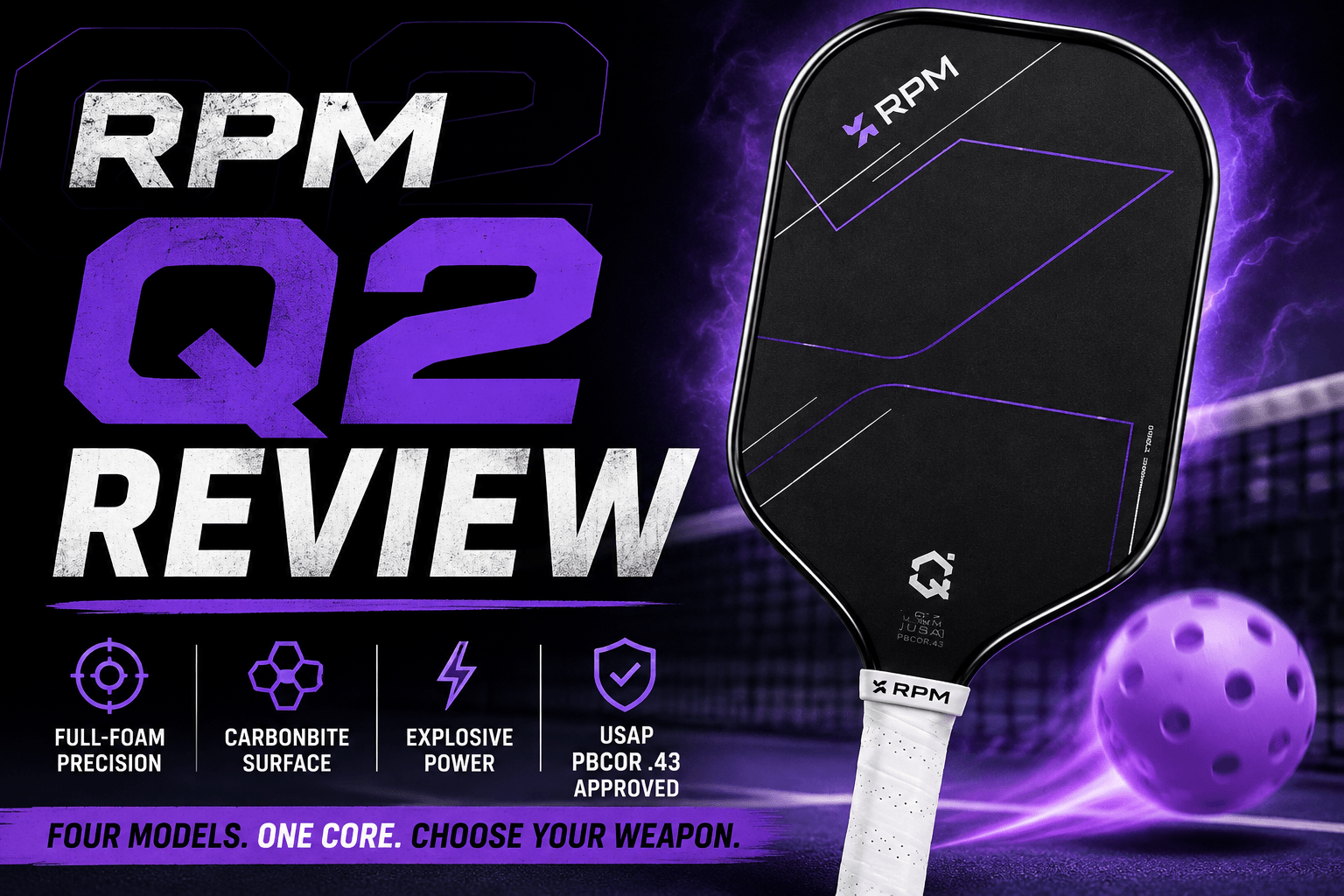
- Read our full RPM Q2 review
- Read our Q3 2026 best pickleball paddles rankings
- Read our best foam core pickleball paddles guide
- Read our Six Zero Coral Pro review
- Shop power pickleball paddles
- Shop Spinwave Certified Pre-Owned paddles
- Get a free paddle consultation
Final Verdict
The conclusion of this RPM Friction Pro V2 vs Q2 comparison is that RPM has built two genuinely good paddles at the same price and made the choice about feel rather than performance. Neither one out-classes the other.
If we had to hand one to a player who could not demo first, it would be the Friction Pro V2 — the forgiveness edge is real and consistently measured, and the Gen 3 feel is what more players already know. But the Q2 in Widebody form is the more interesting paddle, and for a doubles player it may be the better one.
Every paddle we sell comes with a 30-day play-test guarantee, so you can take both on court and send back whichever loses. If you would rather talk it through first, visit us in Great Neck or at the Long Beach Tennis Center pro shop, call 1-888-629-1915, or book a free paddle consultation online.
FAQs
What is the difference between the RPM Friction Pro V2 and the Q2?
The core generation, and almost nothing else. The Friction Pro V2 is Gen 3: a polypropylene honeycomb centre tuned with an EVA foam perimeter ring. The Q2 is Gen 4: a fully molded EPP foam core with TPU perimeter inserts and TPE inserts at the neck. Everything else matches. Both are $249.99, both use the same CarbonBite raw carbon face, both come in a 16.5 x 7.5 inch elongated shape with a 5.5 inch handle, and both are USAP approved at PBCoR .43.
Which is more forgiving, the Friction Pro V2 or the Q2?
The Friction Pro V2, in the elongated shape. Its twist weight measures between 6.28 and 6.5 against 6.05 to 6.1 for the Q2 Elongated, and that gap matters on a frame where the sweet spot is already narrower than a widebody. Every source agrees on this one, even though they disagree on swing weight. If forgiveness is your top priority, though, the better answer is the Q2 Widebody rather than either elongated paddle, because its twist weight climbs to 6.9.
Which one hits harder, the RPM Friction Pro V2 or the Q2?
We will not make that claim in either direction, because the published numbers contradict each other. One well-known lab measures the Q2 Elongated at a 120.16 swing weight against the Friction Pro V2 at 116.91, which would make the Q2 the power option. Another retailer with hands-on measurements reports the opposite: Q2 at 114, Friction Pro V2 at 117. Foam paddles are known for unit-to-unit variance and the Q2 appears to be a particularly variable build. If a specific swing weight matters to your setup, weigh the paddle you actually receive before you build lead tape around it.
Do the Friction Pro V2 and Q2 spin the same?
Effectively yes, which makes sense given they share the identical CarbonBite raw carbon face. Both measure in the low-to-mid 2,200s RPM in independent testing, putting them in elite company. Neither is a durable-grit paddle, though. CarbonBite is excellent raw carbon, but it wears the way raw carbon wears, and in a market where texture longevity has become a headline spec that is a real gap at this price. If grit life is your priority, look at the Six Zero Coral Pro or the Honolulu Crystal Blue instead.
Are the RPM Friction Pro V2 and Q2 USAP approved?
Yes, both are USAP approved at PBCoR .43. That is worth flagging because several of the strongest paddles at this price are not. The Six Zero Coral Pro, the 11SIX24 Power 2 line and the Honolulu Crystal Blue paddles are UPA-A only and cannot be used in USA Pickleball sanctioned tournaments. If you play USAP events, choosing between these two RPM paddles is a genuinely good problem to have, because most of the durable-grit competition is not on your list at all.
Should I upgrade from the original Friction Pro to the V2?
Not urgently. The V2 is a refinement rather than a redesign: a revised EVA foam ring, a reinforced throat, and a shift from PBCoR .44 to .43. The identity of the paddle is intact. If you love your V1 and it is still holding grit, there is no reason to replace it. If you are replacing anyway, the V2 is the natural step and the more conservative choice. Jumping to the Q2 is the bigger change, and one worth hitting before you commit.
Which RPM paddle does James Ignatowich play with?
The Friction Pro V2 is James Ignatowich's competition paddle. That is part of why the V2 carries more name recognition than RPM's newer Q Series, but it should not settle the decision for you. The endorsement speaks to the paddle's pedigree, not to which of the two suits your game. If you have played honeycomb for years and want elite spin without relearning your hands, the V2 is the safer pick regardless of who else plays it.