
Table of Contents
- Quick Answer: Where Should You Add Weight to a Pickleball Paddle?
- Why Add Weight to a Pickleball Paddle?
- The Clock Method: Where to Put Paddle Weight
- Swing Weight vs Twist Weight: Know the Difference
- Weight Materials: Lead Tape vs Tungsten Tape
- Safety and Tournament Rules
- DIY vs Professional Paddle Tuning
- Related Spinwave Links
- Pickleball Weight Placement: The Bottom Line
- FAQs
- Where should I add weight to a pickleball paddle?
- What's the difference between swing weight and twist weight?
- Is lead tape or tungsten tape better for pickleball paddles?
- How much weight should I add to my paddle?
- Will adding weight to my paddle make it illegal for tournaments?
- Should I tune my paddle myself or have a pro do it?
Pickleball weight placement is one of the fastest ways to change how your paddle plays. By adding weight in the right spots, you can increase power, improve stability, reduce twisting, expand the sweet spot, and make your paddle feel more dialed in for your game.
Let’s get one thing straight. The paddle you bought off the shelf may be good, but it is not automatically perfect for you. Factory paddles are built for a wide range of players, which means the balance, swing weight, and stability may not match your exact playstyle.
If you want to hit harder, block better, and stop your paddle from twisting in your hand, smart pickleball weight placement can make a major difference. The key is knowing where to place the weight. If you slap tape on randomly, you can ruin the balance and create problems you did not have before.
This guide explains how paddle weight placement works, where to add weight, the difference between swing weight and twist weight, what materials to use, and how to customize your paddle safely.
Quick Answer: Where Should You Add Weight to a Pickleball Paddle?
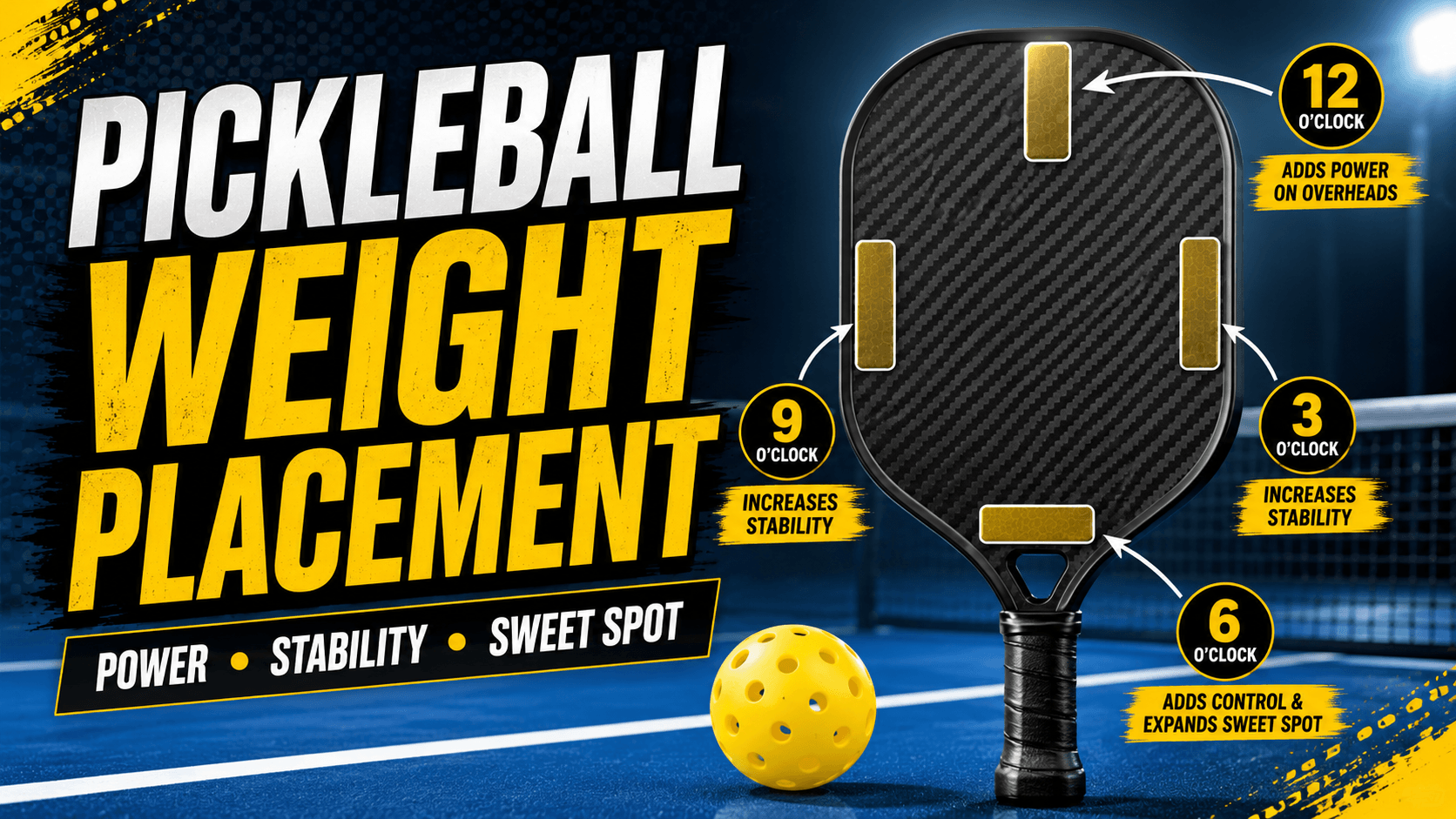
The best pickleball weight placement depends on what you want to improve. Add weight at 12 o’clock for more power and plow-through. Add weight at 3 and 9 o’clock for more stability, forgiveness, and twist weight. Add weight near 6 o’clock or the throat if you want a more solid feel without slowing the paddle down too much.
For most players, the best starting point for pickleball weight placement is 3 and 9 o’clock because it improves stability and makes off-center hits feel better without making the paddle feel overly head-heavy.
Why Add Weight to a Pickleball Paddle?
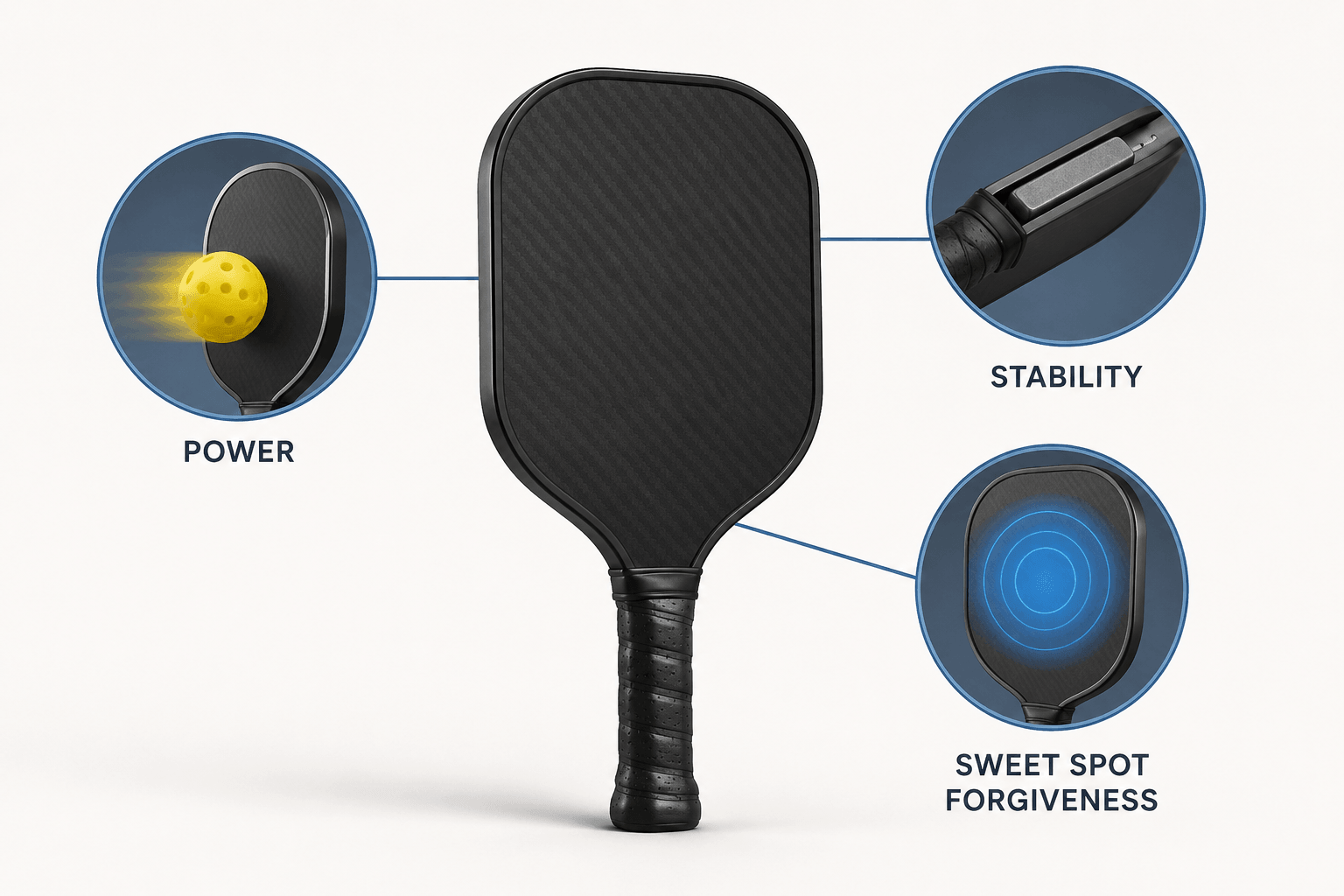
Players usually add weight to a paddle for three main reasons: power, stability, and sweet spot forgiveness.
Power
A heavier paddle can create more momentum through the ball. If you feel like you are swinging hard but the ball is not moving the way you want, your paddle may be too light or too low in swing weight.
Adding weight, especially higher on the paddle, can help create more drive power, more plow-through, and more depth on aggressive shots.
Stability
Stability is one of the biggest reasons players customize pickleball weight placement. When you block a hard drive near the edge of the paddle, a low-stability paddle can twist in your hand. That twisting can cause pop-ups, weak counters, and inconsistent resets.
Adding weight to the sides of the paddle can make the paddle more resistant to twisting and more predictable on off-center hits.
Sweet Spot Forgiveness
When you increase twist weight, the paddle becomes more forgiving across the face. Mishits feel more solid, blocks feel cleaner, and the paddle punishes you less when contact is not perfect.
The Clock Method: Where to Put Paddle Weight
The easiest way to understand pickleball weight placement is to imagine the paddle face as a clock. The top of the paddle is 12 o’clock, the sides are 3 and 9 o’clock, and the throat area is 6 o’clock.
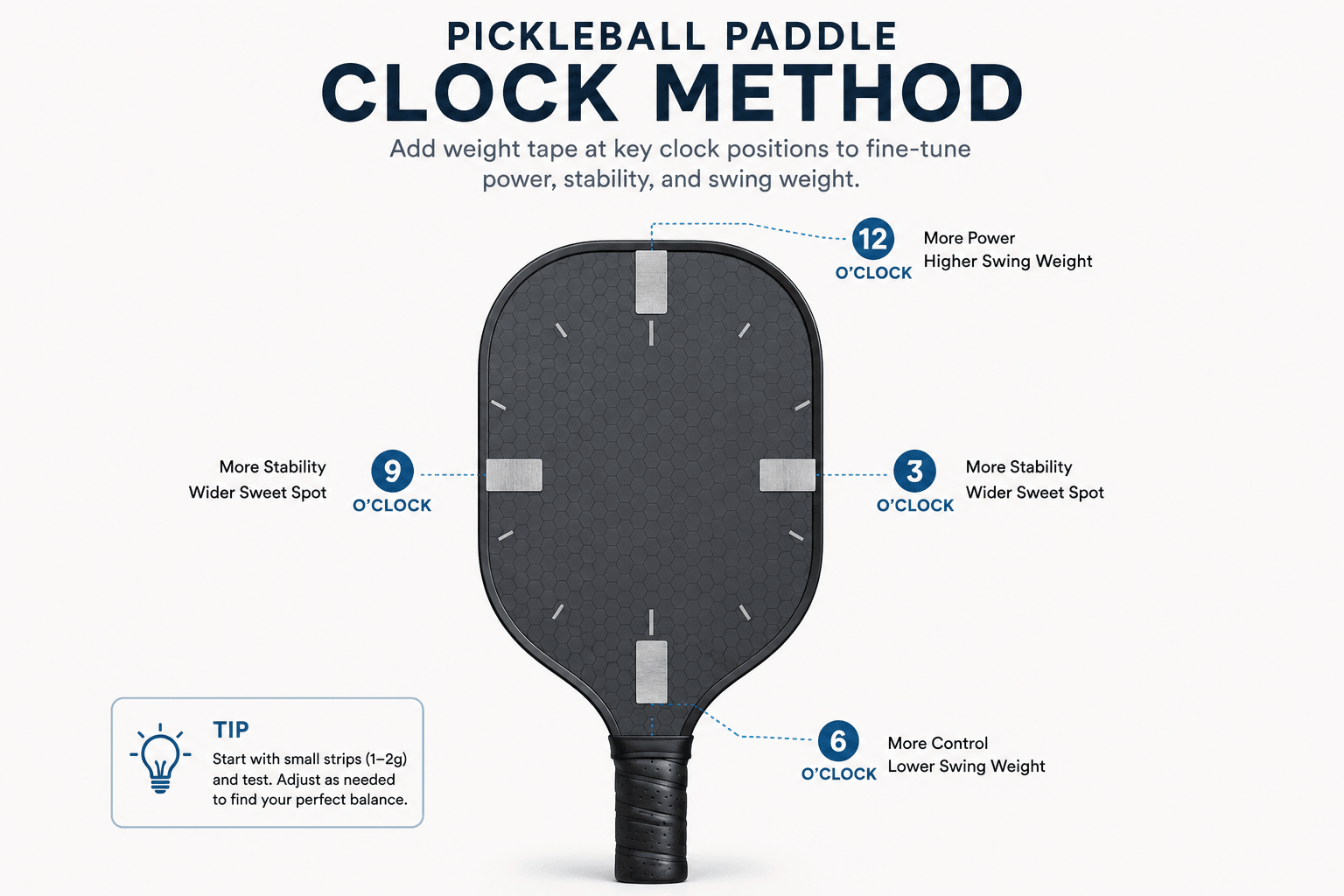
Each position changes the paddle differently. The same amount of weight can feel completely different depending on where you place it.
12 O’Clock: More Power
Adding weight at the top of the paddle is the most power-focused setup. It increases swing weight, which makes the paddle feel heavier during the swing and helps it drive through the ball with more force.
This can be great for players who want more power on drives, serves, overheads, and finishing shots.
The tradeoff is hand speed. A paddle with too much weight at 12 o’clock can feel slower in kitchen battles, counters, and quick exchanges. If you already struggle with fast hands, be careful adding too much weight here.
3 and 9 O’Clock: More Stability
Adding weight to the sides of the paddle is the most popular pickleball weight placement for many players. Weight at 3 and 9 o’clock increases twist weight, which helps the paddle resist twisting on off-center contact.
This is usually the best placement for players who want more forgiveness, a larger effective sweet spot, better blocks, and more stable resets.
If your paddle twists when blocking fast drives or feels unstable when you miss the center of the face, start here before adding weight anywhere else.
Always add the same amount of weight to both sides. Uneven weight can make the paddle feel off-balance and inconsistent.
6 O’Clock: More Solid Feel
Adding weight near the throat or lower edge increases overall paddle weight without increasing swing weight as dramatically as top-loaded setups.
This can make the paddle feel more solid and planted without making it feel much slower. It is a subtle tuning option for players who want more substance in the hand but do not want to sacrifice fast reactions.
This placement can also help players who want a more balanced feel instead of a head-heavy setup.
Swing Weight vs Twist Weight: Know the Difference
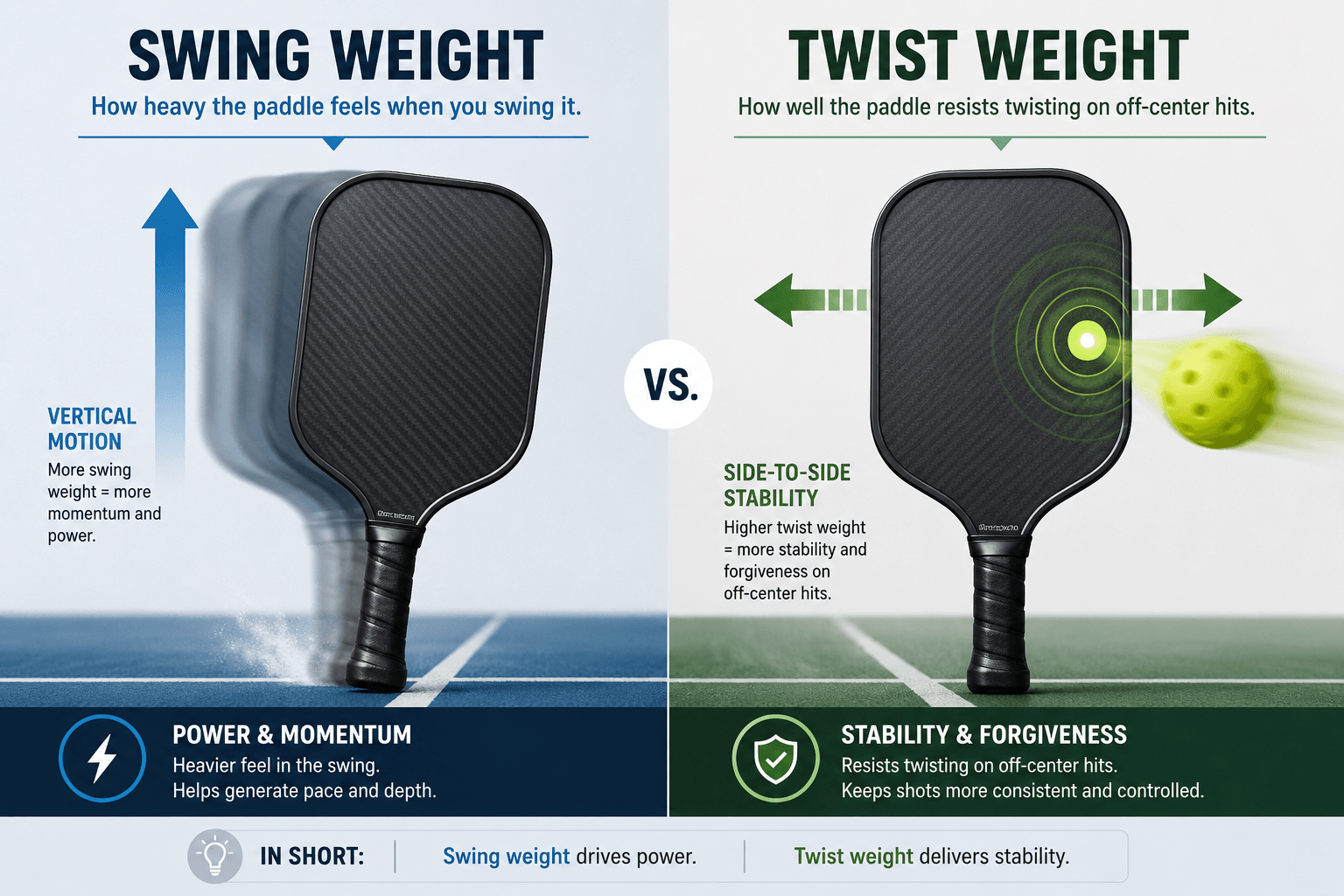
Before experimenting with pickleball weight placement, you need to understand the difference between swing weight and twist weight.
Swing Weight
Swing weight measures how heavy the paddle feels when you swing it. It is not the same as static weight on a scale. A paddle can weigh the same overall but feel much heavier if more of that weight is placed near the top.
Higher swing weight usually means more power and plow-through, but slower hand speed.
Twist Weight
Twist weight measures how resistant the paddle is to twisting on off-center hits. Higher twist weight usually means more stability, more forgiveness, and a larger effective sweet spot.
For many recreational and competitive players, twist weight is the more important number because it directly affects blocks, resets, counters, and mishits.
Weight Materials: Lead Tape vs Tungsten Tape
There are a few different ways to add weight to a pickleball paddle. The most common are lead tape, tungsten tape, tungsten putty, and weighted edge guard systems.
TOURNA Pickleball Lead Tape

$9.95
Adds weight and stability to your paddle for more power Adhesive backed to easily attach to paddle Cut the desired amount to optimize performance 1/4 inch wide cut is ideal for paddles … read more
Lead Tape
Lead tape is the classic option for pickleball weight placement. It is inexpensive, easy to cut, and highly customizable. You can stack it, trim it, and place it almost exactly where you want.
The downside is that lead should be handled carefully. Wash your hands after using it and cover it with edge guard tape so it is not exposed during play.
VERSIX® Pickleball Tungsten Tape

$24.99
VERSIX® Pickleball Weighted Tungsten Tape Change the balance point, swing speed, and overall weight of your paddle while also skipping the toxicity of lead with the VERSIX® Pickleball Tungsten Tape. This tungsten tape is designed for avid pickleball players who… read more
Tungsten Tape
Tungsten tape is a popular modern choice because it is dense and non-toxic. You need less material to add the same amount of weight compared with some other options.
For most players, tungsten is the cleaner and safer choice for pickleball weight placement. It works well under edge guard tape and is easy to experiment with.
Pickleball Effect Tungsten Weighted Tape - .5G Per Inch

$23.00
Custom paddles aren’t just for the Pro’s! Create your own signature paddle with the help of Pickleball Effect Tungsten Tape. This weighted tape pairs a non-toxic construction with the simple and secure application of 3M adhesive so that you can… read more
Weighted Edge Guard Tape
Weighted edge guard tape can add protection and weight at the same time. This is a clean option if you want paddle protection, stability, and a more finished look without layering multiple materials.
Safety and Tournament Rules
Adding weight to a pickleball paddle is generally allowed as long as the modifications are applied to permitted areas such as the edge guard or handle. You should not place weight on the hitting surface of the paddle.
Always cover added weight with protective edge tape. This keeps the weight secure, helps prevent peeling, and gives the paddle a cleaner finished look.
If you play tournaments, check the current rules and make sure your paddle remains compliant after customization.
DIY vs Professional Paddle Tuning
You can absolutely tune your paddle yourself with a roll of tungsten tape and some patience. Start small, test the paddle, and make changes slowly.
The advantage of professional tuning is precision. A good paddle specialist can weigh the paddle, balance it, apply weight evenly, and help match the setup to your game.
At Spinwave Pickleball, paddle customization is about more than throwing tape on the edge. The goal is to understand your playstyle, your paddle model, your hand speed, and what you actually want to improve.
Related Spinwave Links
Want to customize your paddle setup? These Spinwave links can help:
- Shop paddle accessories
- Shop edge guard tape
- Shop pickleball overgrips
- Shop pickleball paddles
- Get a free paddle recommendation
- Read the edge guard tape guide
Pickleball Weight Placement: The Bottom Line
Smart pickleball weight placement can make your paddle more powerful, more stable, more forgiving, and more customized to your game. But placement matters.
Add weight at 12 o’clock for power. Add weight at 3 and 9 o’clock for stability and forgiveness. Add weight near 6 o’clock for a more solid feel without making the paddle too head-heavy.
Start small, keep the setup symmetrical, cover the weight with edge tape, and test before adding more. Done correctly, a few grams can completely change how your paddle performs.
FAQs
What is pickleball weight placement?
Pickleball weight placement refers to where you add weight on a paddle to change how it feels and performs. Different placements can increase power, stability, twist weight, swing weight, or sweet spot forgiveness.
Where should I add weight to my pickleball paddle?
Add weight at 12 o’clock for more power, 3 and 9 o’clock for more stability and forgiveness, and 6 o’clock or near the throat for a more solid feel without making the paddle too head-heavy.
Does adding weight to a pickleball paddle increase power?
Yes. Adding weight can increase power by giving the paddle more mass and plow-through. Weight near the top of the paddle usually adds the most power but can also slow down hand speed.
What is the best weight placement for more stability?
The best weight placement for stability is usually 3 and 9 o’clock on the sides of the paddle. This increases twist weight and helps the paddle resist twisting on off-center hits.
Should I use lead tape or tungsten tape?
Tungsten tape is usually the better option for most players because it is dense, easy to apply, and non-toxic. Lead tape works, but it should be handled carefully and covered with edge guard tape.
Can adding weight make my paddle worse?
Yes. Too much weight or poor placement can make your paddle feel slow, unbalanced, or harder to control. Start with small amounts and test before adding more.
Is adding weight legal in pickleball?
Adding weight is generally allowed if it is applied to permitted areas like the edge guard or handle. Do not place weight on the hitting surface, and check current tournament rules if you compete.
How much weight should I add to my paddle?
What's the difference between swing weight and twist weight?
Swing weight is how heavy the paddle feels through the swing — higher swing weight means more power but slower hands. Twist weight is how resistant the paddle is to twisting on off-center hits — higher twist weight means more stability and forgiveness. For blocks, resets, and counters, twist weight matters more.
Is lead tape or tungsten tape better for pickleball paddles?
Tungsten tape is the cleaner, safer modern choice — it's denser than lead, non-toxic, and you need less material for the same weight. Lead tape is cheaper and more customizable but should always be covered with edge guard tape since handling raw lead isn't great long-term. Most players today choose tungsten.
How much weight should I add to my paddle?
Start with 2-4 grams total per spot and play with the setup for a few sessions before adding more. Pickleball weight placement is sensitive — even 1 gram can change how the paddle feels. Adding too much too fast slows hand speed and increases fatigue. Build slowly and test.
Will adding weight to my paddle make it illegal for tournaments?
Generally no, as long as the weight is applied to allowed areas like the edge guard or handle — not the hitting surface. Always cover added weight with edge guard tape and check current tournament rules before competing. The paddle also needs to remain within the standard weight and dimension limits.
Should I tune my paddle myself or have a pro do it?
You can absolutely DIY pickleball weight placement with a roll of tungsten tape and some patience — just start small and adjust slowly. Pro tuning offers precision: weighing the paddle, measuring balance, applying weight evenly, and matching the setup to your specific game. If you're not sure what to change, a pro consultation saves trial-and-error.