
Table of Contents
- Quick Comparison: Gen 3 vs Gen 4 Pickleball Paddles
- What Is a Gen 3 Pickleball Paddle?
- Why Players Still Love Gen 3 Paddles
- The Downside of Gen 3 Paddles
- What Is a Gen 4 Pickleball Paddle?
- Why Players Love Gen 4 Paddles
- Why Gen 4 Feels Different
- The Truth About Gen 3 vs Gen 4 Pickleball Paddles
- So Which One Should You Choose?
- The Bigger Picture
- Final Take: Gen 3 vs Gen 4 Pickleball Paddles
- Final Recommendation
- Related Spinwave Guides
- FAQs
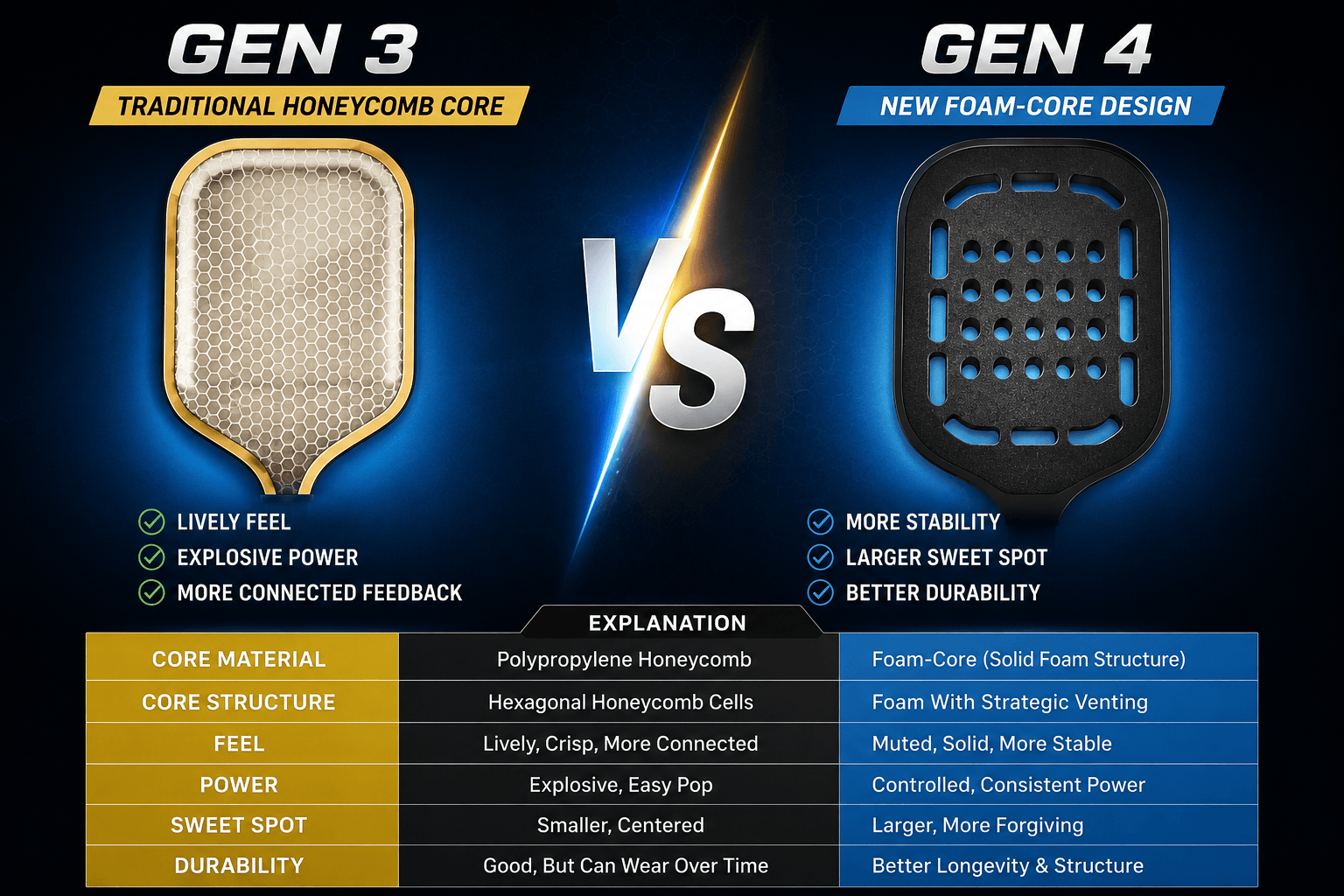
The Gen 3 vs Gen 4 pickleball paddles conversation is one of the biggest topics in paddle technology right now. A lot of players are asking the same question: is Gen 4 actually better than Gen 3?
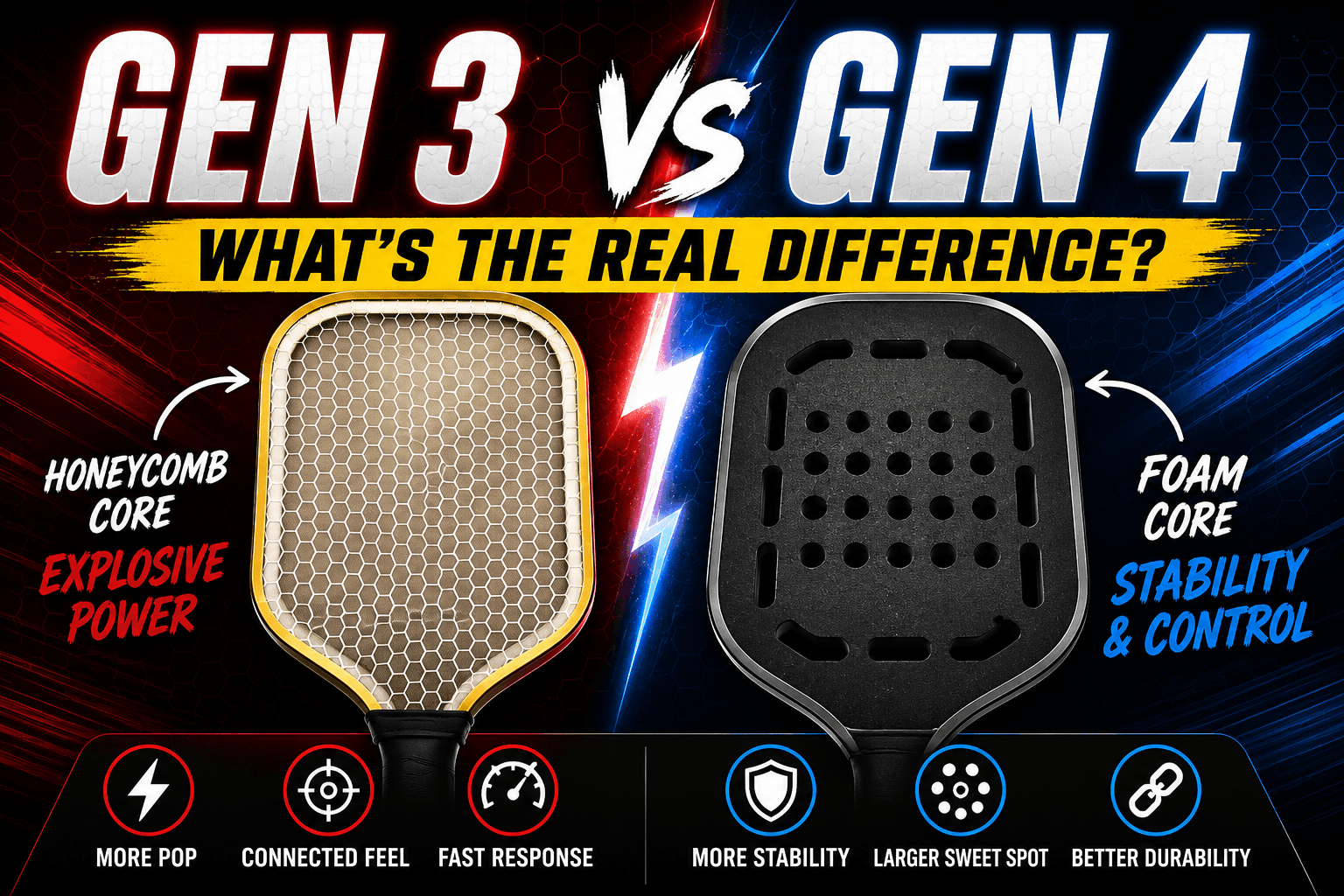
The short answer is no — at least not in the simple way social media makes it sound. What is really happening is that pickleball paddles are splitting into two different feel categories. Gen 3 paddles usually feel more alive, connected, and explosive. Gen 4 paddles usually feel more solid, absorbent, muted, and durable.
Neither technology is automatically “better.” They just reward different styles of play. At Spinwave Pickleball, we see high-level players still using both every single day. Some players try Gen 4 and immediately love the extra stability. Others go right back to Gen 3 because they miss the feel, feedback, and explosiveness.
The reality is that both technologies are excellent. Understanding the difference matters more than chasing hype.
Quick Comparison: Gen 3 vs Gen 4 Pickleball Paddles
| Category | Gen 3 Paddles | Gen 4 Paddles |
|---|---|---|
| Core Feel | Lively, connected, explosive | Muted, solid, absorbent |
| Best For | Players who want pop, feedback, and fast response | Players who want stability, durability, and forgiveness |
| Impact Feel | Crisp and springy | Deeper and more controlled |
| Main Strength | Explosive power and feedback | Consistency and structural stability |
What Is a Gen 3 Pickleball Paddle?
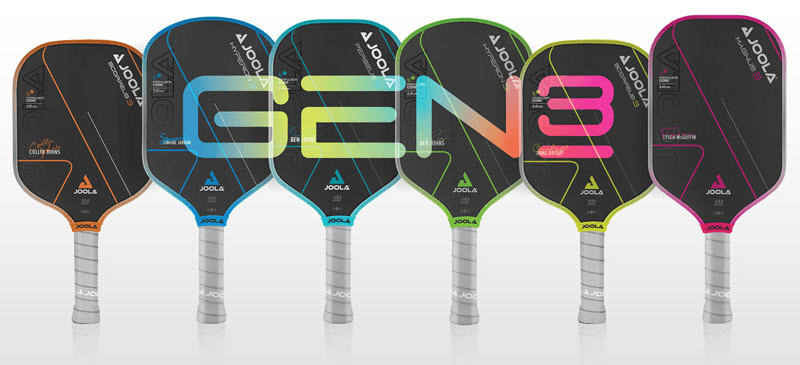
The reason players fell in love with Gen 3 paddles is simple: they feel explosive. The ball compresses into the face, pockets slightly, then launches out with energy. That creates the connected feel that many competitive players still prefer today.
In the Gen 3 vs Gen 4 pickleball paddles debate, this connected feedback is one of the biggest reasons Gen 3 still has such a loyal following. Players can feel where the ball hits the face, how the paddle loads, and how the ball releases. That feedback makes the paddle feel alive.
Why Players Still Love Gen 3 Paddles
Thrive FURY Hybrid 15.5mm (GEN 3.5 POWER SERIES)
$199.99
FURY Hybrid Paddle Hybrid. Redefined. The FURY Hybrid Paddle is engineered for unmatched power with a lightning-fast swing weight, delivering elite stability, spin, and precision. This Gen 3+ paddle blends explosive pop with refined touch—perfect for drives, resets, and confident… read more

Gearbox GBX Power 16mm Pickleball Paddle
$179.99
GBX Power • Gen-3 Honeycomb Gearbox GBX Power Series Two shapes • Same Gen-3 suspended honeycomb platform GBX Power Hybrid Paddle Shape: Hybrid Gen-3 Honeycomb Gen-3 Honeycomb Performance, the Gearbox Way The GBX Power Hybrid delivers explosive Gen-3 honeycomb power… read more

LUZZ Pro 4 Inferno MPP Pickleball Paddle
$199.00
LUZZ Pro 4 Inferno MPP Pickleball Paddle The LUZZ Pro 4 Inferno MPP is built for players who want a forgiving feel, a large, easy-to-hit sweet spot, and a durable core that stays consistent over time. It’s the kind of… read more

Gen 3 paddles often feel:
- More lively off the face
- More connected to the ball
- More explosive on drives
- Faster through contact
- Better for shaping shots
- Easier to feel during play
A lot of players describe Gen 3 paddles as having better feedback. You feel the contact. You feel the pocketing. You feel the release. For aggressive players, that can make the paddle feel more natural when driving, countering, rolling, and speeding the ball up.
This is why paddles with Gen 3-style technology still have massive followings. Players who like that crisp, explosive, connected response are not always looking for something more muted. They want the paddle to talk back to them during points.
The Downside of Gen 3 Paddles
The biggest concern with Gen 3 paddle technology is durability. Over time, some Gen 3 paddles can experience performance changes, especially when they are hit hard and used heavily.
Some possible Gen 3 issues include:
- Core crush
- Delamination
- Dead spots
- Inconsistent performance over time
- Changes in pop or rebound after heavy use
That does not mean every Gen 3 paddle breaks quickly. Many hold up extremely well. But durability concerns are one of the biggest reasons manufacturers started investing heavily into newer Gen 4 foam technology.
In other words, Gen 3 is loved because of its feel, but Gen 4 exists because brands are trying to make paddles more consistent and durable over time.
What Is a Gen 4 Pickleball Paddle?
Gen 4 pickleball paddles move away from the traditional polypropylene honeycomb core and instead use full-foam or mostly foam-based core systems. These paddles are designed to create a different type of response: more stable, more absorbent, and more consistent across the face.
HONOLULU Pickleball Company Sword & Shield J2FC+
$195.00
Sword & Shield J2FC+ Pickleball Paddle Next-gen hybrid performance — massive sweet spot, explosive power, and plush control. The Sword & Shield J2FC+ is the next evolution in Honolulu’s multi-density all-foam paddle technology — delivering unmatched power, spin, and control… read more

The goal of Gen 4 technology is to create:
- Larger sweet spots
- More consistent response
- Better durability
- Less core crush risk
- More stable impact feel
- Better performance consistency over time
When players compare Gen 3 vs Gen 4 pickleball paddles, this is usually the biggest divide. Gen 3 often feels more explosive and springy. Gen 4 often feels more solid and controlled.
Why Players Love Gen 4 Paddles
Gen 4 paddles usually feel:
- More muted
- More absorbent
- More stable
- More solid
- More forgiving
- More consistent across the face
Instead of the sharp trampoline-style response many Gen 3 paddles have, Gen 4 paddles tend to absorb energy differently. The impact feels deeper and more controlled. Some players describe it as a “thud” instead of a “pop.”
That softer impact profile is one reason many players feel Gen 4 paddles are easier during resets, blocks, and transition play. The ball does not always jump as aggressively, which can help players keep the paddle face under control when the pace gets fast.
Why Gen 4 Feels Different
The biggest difference is how foam handles energy. Traditional honeycomb cores flex and rebound differently than foam structures. Foam-based construction changes how the paddle flexes, transfers power, absorbs impact, and maintains consistency across the face.
That is why many Gen 4 paddles feel more stable even if they still generate plenty of power. The paddle may not feel as sharp or springy as a Gen 3 paddle, but it can feel more trustworthy when blocking, resetting, or absorbing pace.
For some players, that muted response feels premium and controlled. For others, it feels too quiet and less connected. That is why the Gen 3 vs Gen 4 pickleball paddles conversation is really about preference, not one technology being universally better.
The Truth About Gen 3 vs Gen 4 Pickleball Paddles
A lot of the “Gen 4 is better” conversation is marketing. The reality is that many advanced players still prefer Gen 3 feel, while many others now prefer Gen 4 consistency.
This is not a “foam wins, polymer loses” situation. It is about what you want the paddle to do for your game.
Choose Gen 3 If You Want:
- More pop
- More feedback
- More responsiveness
- More connected feel
- More explosive counters and drives
Choose Gen 4 If You Want:
- More forgiveness
- More consistency
- More stability
- More durability
- A more muted, absorbent feel
So Which One Should You Choose?
Choose a Gen 3 paddle if you want the paddle to feel lively, crisp, and connected. Gen 3 is usually the better fit for players who like fast feedback, easy power generation, and an explosive response on drives, counters, and attacks.
Choose a Gen 4 paddle if you want more durability, a larger sweet spot, better stability, and a more muted feel. Gen 4 is usually the better fit for players who value consistency, forgiveness, and a paddle that feels solid on off-center contact.
The best answer in the Gen 3 vs Gen 4 pickleball paddles debate depends on how you actually play. If you create offense with hands, timing, and quick acceleration, Gen 3 may feel more exciting. If you win points by absorbing pace, resetting cleanly, and staying stable under pressure, Gen 4 may feel easier to trust.
The Bigger Picture
The most important thing players should understand is this: we are not replacing Gen 3 with Gen 4. We are entering a phase where both technologies will exist together.
Some players will always prefer the explosive, connected feel of Gen 3 paddles. Others will prefer the stability and consistency of Gen 4 foam paddles. That is a good thing for pickleball. More real choices means players can finally choose paddles based on feel instead of just chasing whatever is newest.
At Spinwave Pickleball, we carry both Gen 3 and Gen 4 style paddles because different players respond to different technologies. Some players immediately connect with the livelier response of Gen 3-style paddles. Others pick up newer foam platforms and never want to go back.
Final Take: Gen 3 vs Gen 4 Pickleball Paddles
The best paddle is not always the newest technology. It is the paddle that matches your game. Gen 3 paddles are still great because they offer feel, feedback, explosiveness, and connected power. Gen 4 paddles are great because they offer stability, consistency, forgiveness, and improved durability.
If you want a paddle that feels alive and explosive, look at Gen 3. If you want a paddle that feels stable, solid, and more consistent over time, look at Gen 4.
Final Recommendation
Do not choose based on hype. Choose based on feel. In the Gen 3 vs Gen 4 pickleball paddles debate, both technologies are excellent — the right choice is the one that fits how you play.
Related Spinwave Guides
FAQs
Is Gen 4 better than Gen 3 for pickleball paddles?
Not automatically. Gen 4 paddles usually offer more stability, durability, and forgiveness, while Gen 3 paddles often feel more explosive, lively, and connected.
What is the biggest difference between Gen 3 and Gen 4 pickleball paddles?
The biggest difference is the core feel. Gen 3 paddles usually use honeycomb-style cores with a more lively response, while Gen 4 paddles use foam-based core systems that feel more muted, solid, and stable.
Do Gen 3 paddles have more power?
Many Gen 3 paddles feel more explosive because they produce a sharper pop off the face. Players who like fast counters, drives, and aggressive attacks may prefer the Gen 3 feel.
Are Gen 4 paddles more durable?
Generally, yes. Gen 4 foam-core paddles are designed to reduce core crush risk, improve structural consistency, and maintain a more stable response over time.
Which paddle type has better control?
Gen 4 paddles often feel easier to control on blocks, resets, and transition shots because they absorb pace better. Gen 3 paddles can still have excellent control, but they usually feel livelier.
Why do some players still prefer Gen 3 paddles?
Some players prefer Gen 3 paddles because they provide more feedback, a crisper feel, and a stronger connection to the ball during drives, counters, and spin shots.
Why do players like Gen 4 paddles?
Players like Gen 4 paddles because they tend to feel more stable, forgiving, and consistent across the face. They can also feel better for players who want a more controlled response.
Which is better for aggressive players, Gen 3 or Gen 4?
Aggressive players may prefer Gen 3 if they want more pop and feedback. However, some aggressive players may prefer Gen 4 if they want power with added stability and consistency.
Which is better for resets and blocks?
Gen 4 paddles are usually easier for resets and blocks because they feel more absorbent and muted on contact.
Should I buy a Gen 3 or Gen 4 paddle?
Choose Gen 3 if you want explosive feel, connected feedback, and more pop. Choose Gen 4 if you want durability, stability, forgiveness, and a more muted response.