
Table of Contents
- Quick Answer: What Pickleball Overgrip Should You Use?
- Tacky vs. Dry: Which Pickleball Overgrip Do You Actually Need?
- The Impact of Grip Thickness on Control
- Top Picks for Sweaty Hands
- How to Wrap a Paddle Like a Pro
- The Grip Refresh Checklist
- How Pickleball Overgrips Work with Hesacore
- Lock In Your Grip Game
- FAQs
Your pickleball overgrip is the most underrated upgrade in the sport. The factory grip on your paddle is usually not good enough. It can get slick, fail to manage moisture, and break down after a few weeks of serious play. This guide — call it The Overgrip Bible — breaks down everything you need to choose the right grip for your hand, sweat level, paddle setup, and playstyle.
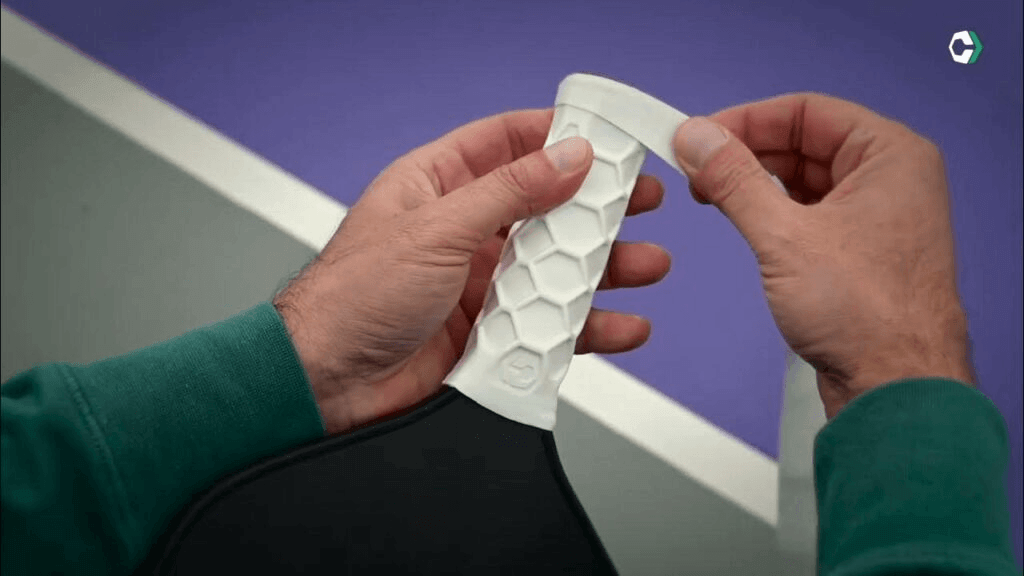
At Spinwave Pickleball, we consider the pickleball overgrip one of the most important upgrades you can make because the grip is your only physical connection to the paddle. If it slips, you lose control. If it feels uncomfortable, you lose focus. If it is too worn out, your hand starts squeezing harder to compensate.
The right grip helps you manage sweat, improve comfort, protect your paddle handle, and keep the paddle secure during fast hands battles. The wrong one can make even a great paddle feel unstable.
This guide breaks down tacky vs dry grips, thickness, sweaty-hand setups, Hesacore compatibility, how to wrap a paddle, and when to replace your overgrip.
Quick Answer: What Pickleball Overgrip Should You Use?
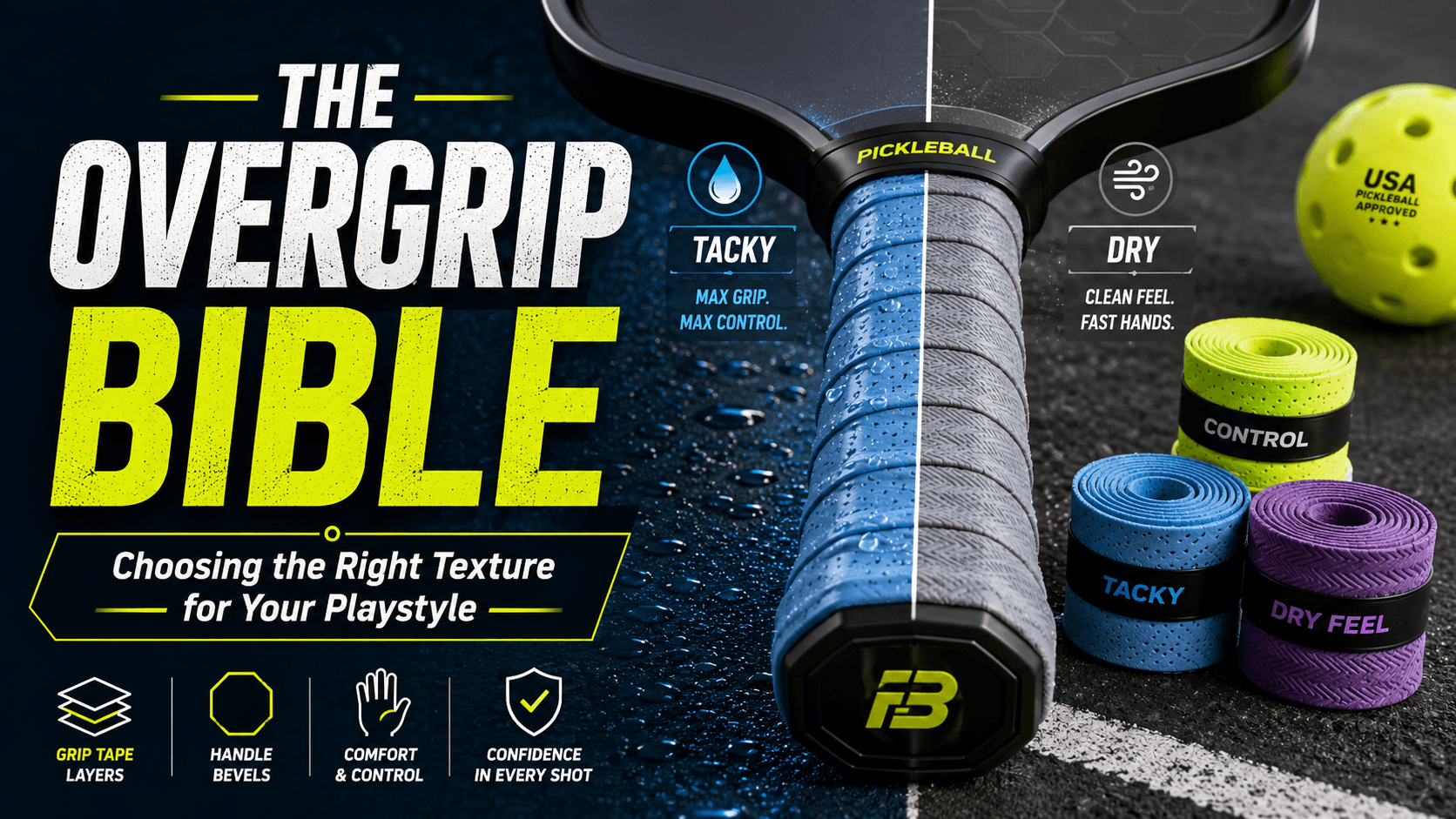
The best pickleball overgrip depends on your hands and playing conditions. Players with dry hands usually do better with tacky grips because they help lock the paddle in place. Players with sweaty hands usually need dry, absorbent grips that manage moisture during long sessions.
If you play indoors in a climate-controlled facility, a tacky grip may feel better. If you play outdoors in humidity or sweat heavily, a dry absorbent grip is usually the better choice. If you use a Hesacore base grip underneath, choose a thinner overgrip so you can still feel the ridges.
Tacky vs. Dry: Which Pickleball Overgrip Do You Actually Need?
This is the biggest grip debate we hear in the shop every day: tacky or dry? The answer is not about what feels best for five seconds in your hand. It is about what still works after you have been playing hard for an hour.
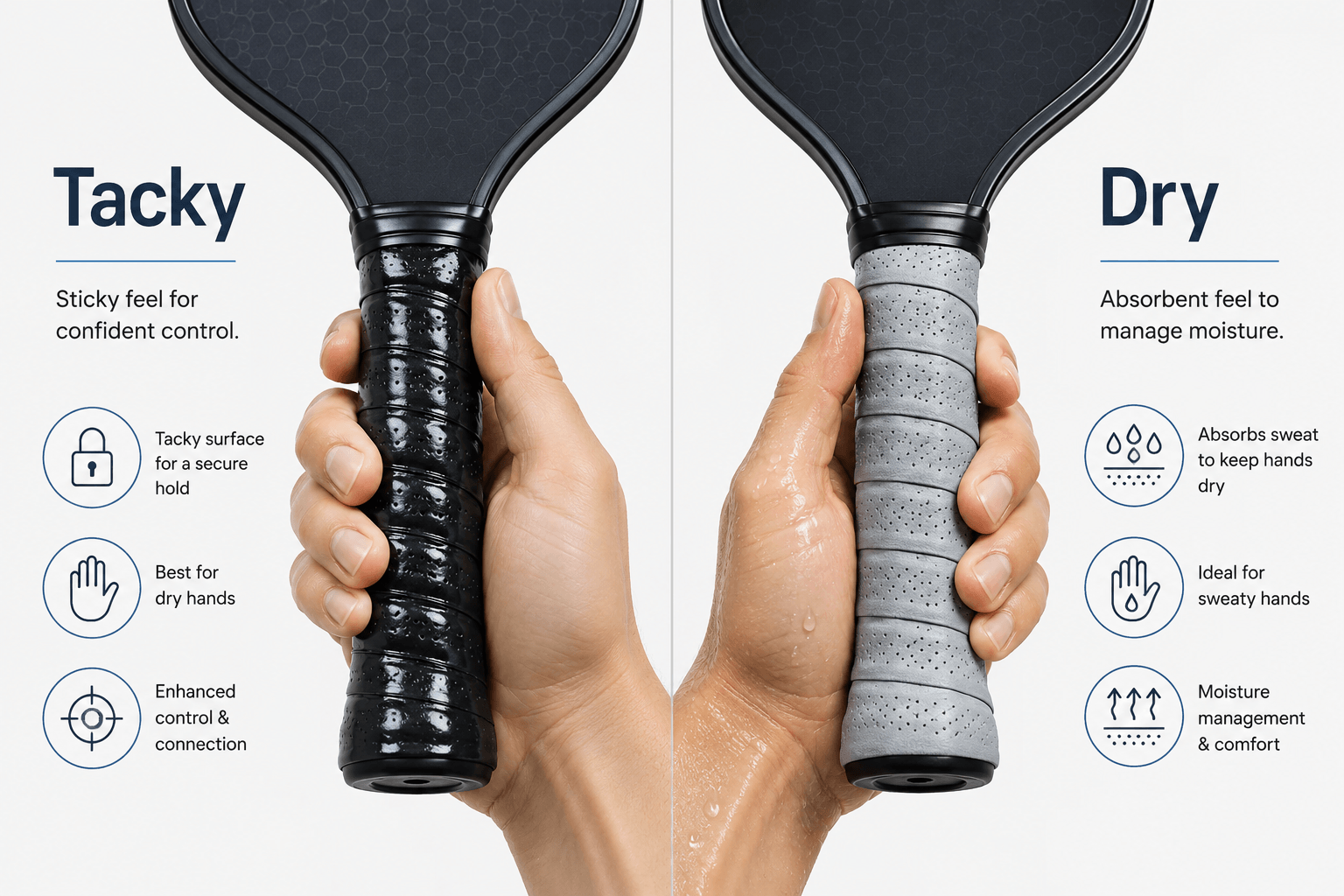
Tacky Grips
Tacky grips feel sticky right out of the package. They grab your palm and help lock the paddle in place. If you play indoors, play in a climate-controlled facility, or naturally have dry hands, tacky is usually the way to go.
The advantage of a tacky grip is that you can hold the paddle with a more relaxed hand. You do not need to squeeze as hard because the grip gives you that locked-in feel.
But there is a catch. If you sweat heavily, a tacky grip can become slippery. Moisture sits on top of the sticky surface and creates a slick film. That is why many summer outdoor players struggle with tacky grips once the humidity kicks in.
Dry Absorbent Grips
Dry grips feel more like soft felt or suede. They are not sticky out of the package, which can feel strange if you are used to tacky. But the magic happens once you start sweating.
A dry absorbent grip pulls moisture away from your hand and can actually feel more secure as you play. If you have sweaty hands, play outdoors, or compete in hot conditions, this style is usually a better match.
The bottom line is simple: match your grip to your sweat level. Do not pick only based on how it feels in the store. Pick based on how it performs in the third game of a humid afternoon.
The Impact of Grip Thickness on Control
Pickleball overgrips come in different thicknesses, usually ranging from around 0.4mm to 0.7mm. That sounds tiny, but your hand will notice the difference immediately.
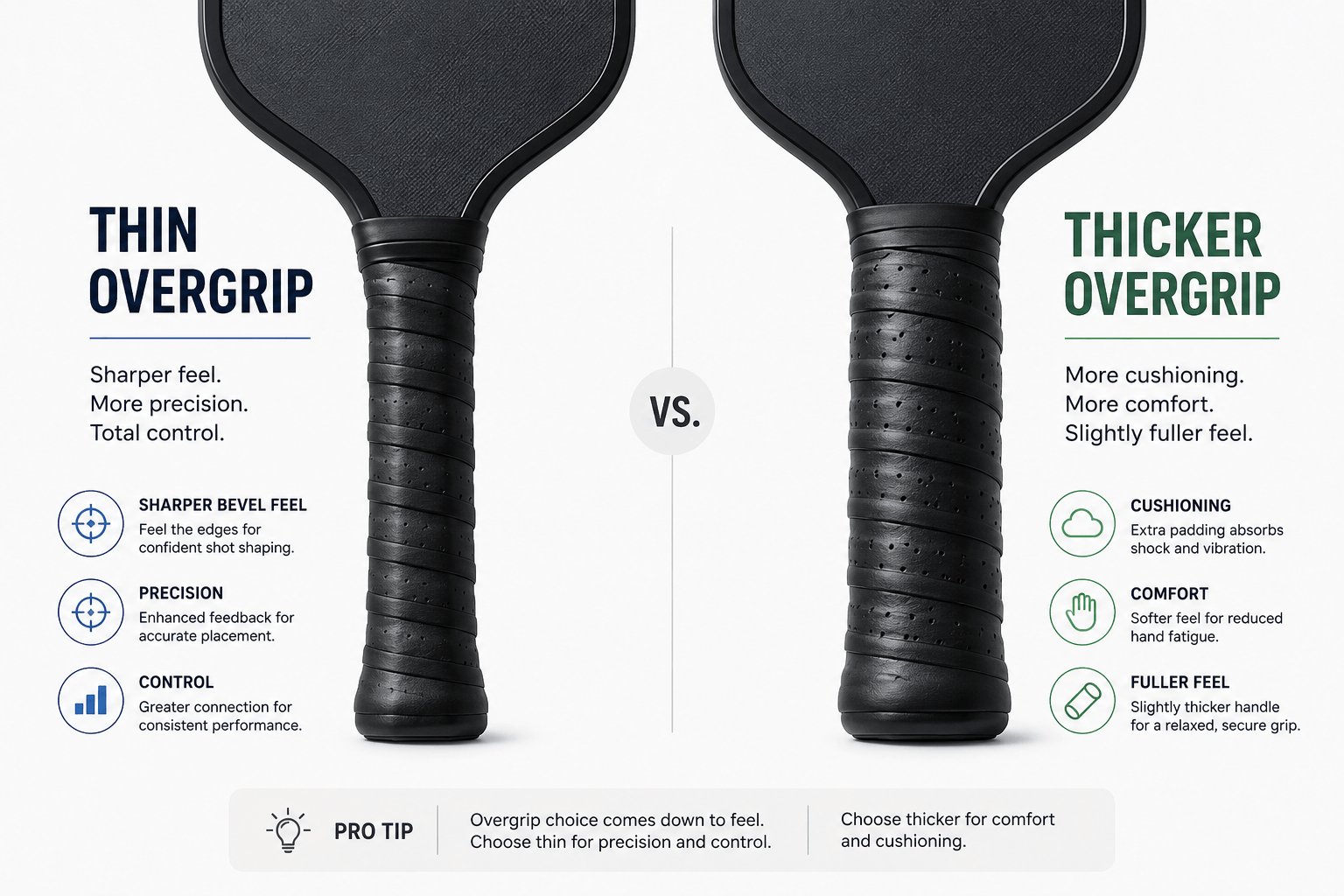
Thin Grips
Thin grips, usually around 0.4mm to 0.5mm, preserve the bevels of the paddle handle. That means you can still feel the flat edges and understand where the paddle face is during quick exchanges.
This matters at the kitchen line. When you are switching between forehand and backhand volleys in a split second, handle feel gives you more control. Thin overgrips are often preferred by advanced players who want maximum feedback and precision.
Thicker Grips
Thicker grips, usually 0.6mm and up, add cushioning and increase the overall handle size. They can help absorb shock, reduce vibration, and make the paddle feel more comfortable.
The tradeoff is that thicker grips can round out the bevels and make the handle feel less precise. If you prioritize comfort over maximum paddle-face awareness, a thicker grip can make sense.
Pro Tip: If you use a Hesacore base grip underneath, go thin on the overgrip. The Hesacore already adds shape, cushioning, and circumference. A thick wrap on top can make the handle feel oversized.
Top Picks for Sweaty Hands
Sweaty hands are one of the most common grip complaints we hear at Spinwave. If this is you, start with a dry, absorbent pickleball overgrip and carry extras in your bag.
There is no shame in changing grips mid-session. Competitive players do it all the time. A fresh grip gives you better control, better confidence, and less hand tension.
Keep a towel in your bag and wipe your hands between points. Some players also use grip-enhancing powder or rosin bags for extra moisture management.
Most importantly, change your grip frequently. A worn-out dry wrap loses absorbency and becomes useless. For heavy sweaters playing three to four times per week, replacing weekly is a smart move.
How to Wrap a Paddle Like a Pro
Wrapping a pickleball overgrip correctly matters. Do it wrong and the wrap can bunch, slip, or unravel during play. Do it right and the handle feels clean, smooth, and secure.
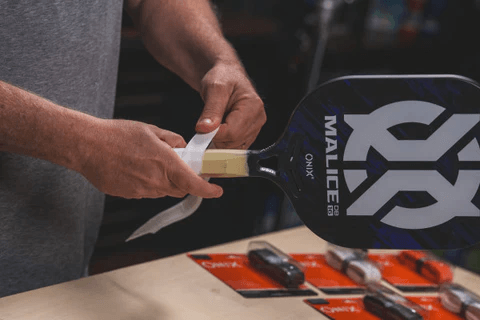
Step 1: Prep the Grip
Peel the plastic backing off and find the tapered end. Most overgrips have a small adhesive strip or angled cut at the starting point.
Step 2: Anchor the Bottom
Stick the tapered adhesive end to the bottom of the butt cap at a slight angle. Hold it tight with your thumb as you begin the first wrap.
Step 3: Pull and Wrap
Keep consistent tension as you wrap around the handle in a spiral. You want it snug, but not stretched to the point where it thins out too much or tears.
Overlap each wrap by about 1/8 to 1/4 inch. Keep that overlap consistent from bottom to top. Uneven overlaps create lumps and dead spots.
Step 4: Finish Clean
When you reach the top of the handle, cut the excess on an angle so it lays flat without a bulky edge. Secure it with the finishing tape that comes in the package.
The Grip Refresh Checklist
Stop playing with a crusty, gray, worn-out wrap. It is gross, it smells, and it can cost you points.
The Look Test
If your white grip is now brown, gray, or visibly worn down, it is done. Change it.
The Feel Test
If your tacky grip feels smooth and slick, or your dry grip feels crusty, stiff, and compressed, it has lost its functional properties.
The Smell Test
If your paddle bag smells like a locker room when you open it, the grip is probably part of the problem. Change it immediately.
The Slip Test
If you catch yourself squeezing the paddle harder than usual to keep control, your grip is failing. Your hand is compensating for what the wrap can no longer do.
For players hitting the courts three to four times per week, expect to change your pickleball overgrip every one to two weeks. Competitive players in hot conditions may change every session.
How Pickleball Overgrips Work with Hesacore
If you use a Hesacore base grip, your overgrip choice matters even more. The whole point of Hesacore is the raised pattern that locks into your fingers and changes how the handle feels.
A thick wrap can mute those ridges and defeat the purpose. You usually want a thin grip, around 0.4mm to 0.5mm, so you can still feel the pattern underneath.
Wrap it snug, but do not pull so tight that you flatten the structure. Let the Hesacore do its job while the overgrip handles sweat, comfort, and surface feel.
Ready to upgrade your grip setup? Spinwave can help!
Spinwave Pickleball Soft & Tacky Overgrip 4 Pack

$9.95
Spinwave Pickleball Premium Overgrip 4-Pack Extra Soft. Extra Tacky. Extra Confidence. Unparalleled Comfort: These overgrips are designed with an extra-soft feel, giving you a luxurious grip that reduces hand fatigue during long matches. Superior Tackiness: Stay in control even in… read more
- Shop pickleball overgrips
- Shop Hesacore grips
- Shop paddle accessories
- Shop pickleball paddles
- Get a free paddle recommendation
- Read more pickleball buying guides
Lock In Your Grip Game
The right pickleball overgrip is inexpensive, but it makes a major difference. It helps you hold the paddle with less tension, manage sweat, protect your handle, and maintain control during fast exchanges.
Choose tacky if your hands are dry or you play mostly indoors. Choose dry absorbent if your hands sweat or you play in heat and humidity. Choose thin if you want more bevel feel and control. Choose thicker if you want more comfort and cushioning.
Overgrips are cheap. Losing points because your paddle slipped is not. Keep fresh wraps in your bag and change them before they become a problem.
FAQs
What is a pickleball overgrip?
A pickleball overgrip is a thin wrap that goes over your paddle handle to improve feel, comfort, sweat control, and grip security. It helps keep the paddle from slipping during play and can make the handle feel better in your hand.
Should I use a tacky or dry overgrip?
Use a tacky overgrip if you have dry hands or mostly play indoors. Use a dry, absorbent overgrip if you sweat a lot, play outside, or play in hot and humid conditions.
What is the best pickleball overgrip for sweaty hands?
The best pickleball overgrip for sweaty hands is usually a dry, absorbent grip. These grips help pull moisture away from your hand and often feel more secure as you start sweating.
How often should I change my pickleball overgrip?
Most players should change their pickleball overgrip every one to two weeks if they play several times per week. Heavy sweaters or tournament players may need to change it every session.
Does overgrip thickness matter?
Yes. Thin overgrips give you better handle feel and more control because you can still feel the bevels of the paddle handle. Thicker overgrips add cushioning and comfort but can make the handle feel rounder and less precise.
Can I use an overgrip with Hesacore?
Yes. If you use a Hesacore grip, choose a thin overgrip so you can still feel the Hesacore ridges underneath. A thick overgrip can mute the shape and make the handle feel too bulky.
Do overgrips help with paddle control?
Yes. A fresh overgrip can help you hold the paddle with less tension, reduce slipping, and improve confidence during fast exchanges. Better grip security can lead to better control.
When do I know it is time to replace my overgrip?
Replace your overgrip when it looks dirty, feels slick, smells bad, loses tackiness, feels crusty, or makes you squeeze the paddle harder than normal to keep control.
How often should I change my overgrip?
For players who hit the courts 3-4 times per week, change your wrap every 1-2 weeks. Heavy sweaters or competitive players in hot conditions may need to change every session. Signs you've waited too long: the grip is discolored, smells, feels slick or stiff, or you find yourself squeezing the paddle harder.
Tacky vs dry — which is better?
Tacky grips lock the paddle into a dry hand and feel sticky out of the package — great for indoor play and dry-handed players. Dry absorbent grips pull moisture away from sweaty hands and stay secure in humidity — better for outdoor and hot-condition play. Match the grip to your sweat level, not to what feels good in the store.
What thickness should I use?
Thin grips (0.4-0.5mm) preserve the paddle handle's bevels for better feel and control at the kitchen line — preferred by advanced players. Thicker grips (0.6mm+) add cushioning, reduce vibration, and feel more comfortable but mute the bevels. If you use a Hesacore base grip, always go thin so you can feel the ridges.
How do you wrap a pickleball overgrip correctly?
Four steps: peel the backing and find the tapered end, anchor it to the butt cap at a slight angle, spiral up the handle with consistent tension and 1/8-1/4 inch overlap, then finish with an angled cut at the top secured by the included tape. Even tension is everything — uneven wraps create lumps and dead spots.
Can I use an overgrip over a Hesacore grip?
Yes, and most players do. The Hesacore handles shape and cushioning while the overgrip handles sweat, comfort, and surface feel. Use a thin wrap (0.4-0.5mm) so the Hesacore ridges still register through your fingers — a thick overgrip flattens the pattern and defeats the purpose.