
Table of Contents
- Let’s Keep This Simple: The Paddle Face Matters
- Why Carbon Fiber Is Still Our Favorite
- The Game Has Moved Past Basic Grit
- What About Fiberglass?
- What About Kevlar?
- The Real Question: How Does It Play?
- What Modern Paddle Surfaces Are Trying to Do
- Newer Paddles We Actually Recommend
- Our Favorite Starting Point: Carbon-Based Modern Performance
- Stop Shopping by Buzzwords
- Final Take: Carbon Fiber Still Wins for Most Players
- Related Spinwave Links
- FAQs
If you want to understand pickleball paddle surface texture and what actually matters when picking a face material, this guide breaks it down — why carbon fiber is still our favorite, where fiberglass and Kevlar fit in, and which modern paddles deliver real performance in 2026.
Pickleball Guides | Paddle Education | Spinwave Pickleball
Let’s Keep This Simple: The Paddle Face Matters
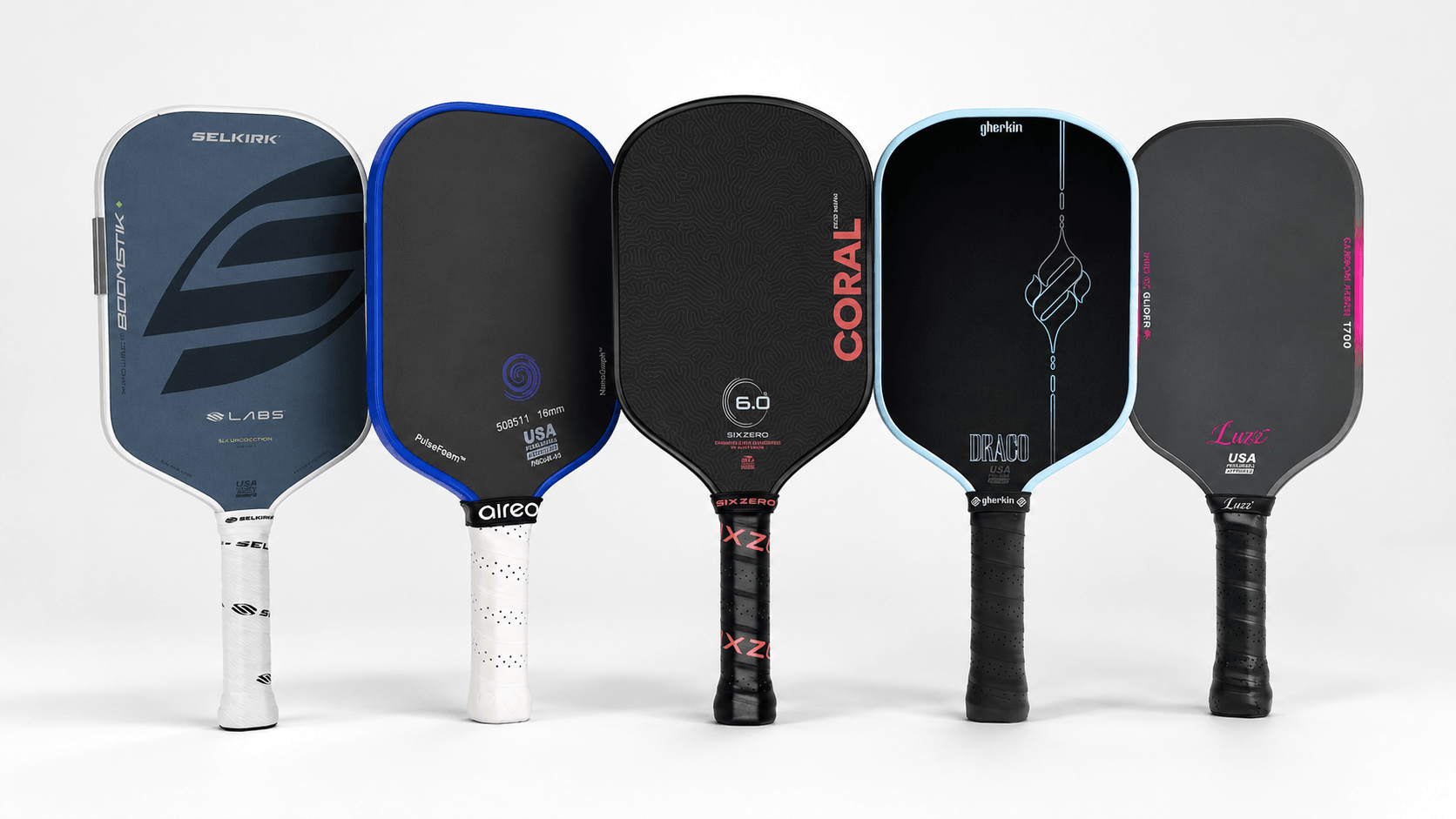
The face of your pickleball paddle is one of the biggest factors in how the ball comes off the paddle. Pickleball paddle surface texture directly affects spin, feel, and control.
It affects how much confidence you have when you roll a drive, reset a hard shot, or speed the ball up at the kitchen.
But the paddle world has gotten noisy. Fiberglass, raw carbon, Kevlar, thermoformed, grit, spray-on texture, foam cores, dwell time, twist weight, swing weight — it can start to sound like a science project.
At Spinwave, we try to keep it practical. We care about how the paddle actually plays. Not just what buzzwords are printed on the product page.
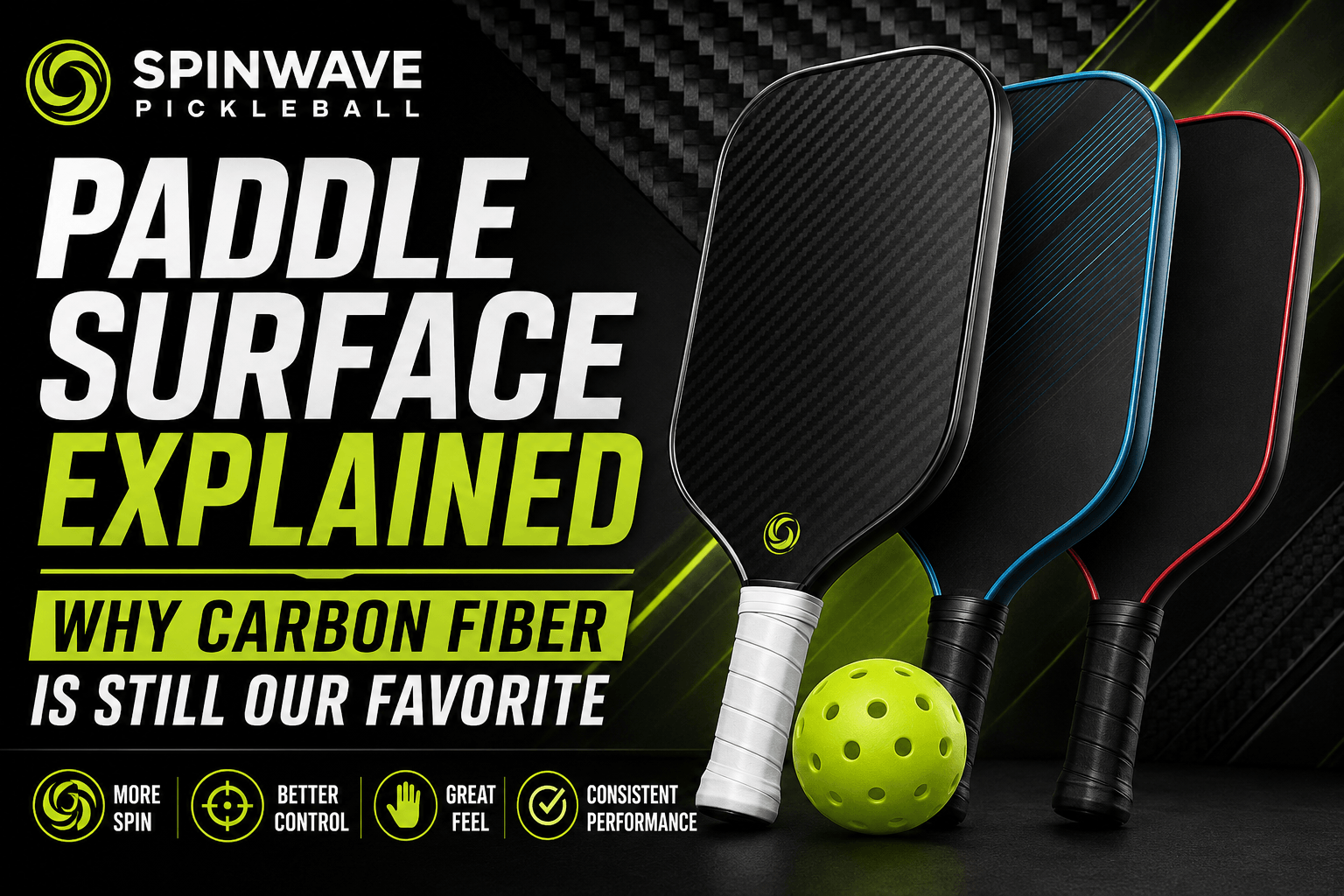
Quick Take: When it comes to pickleball paddle surface texture, carbon fiber is still our favorite face material for most serious players.
Why: It gives the best overall mix of spin, control, feel, consistency, and modern performance.
Shop Premium Pickleball Paddles
Why Carbon Fiber Is Still Our Favorite
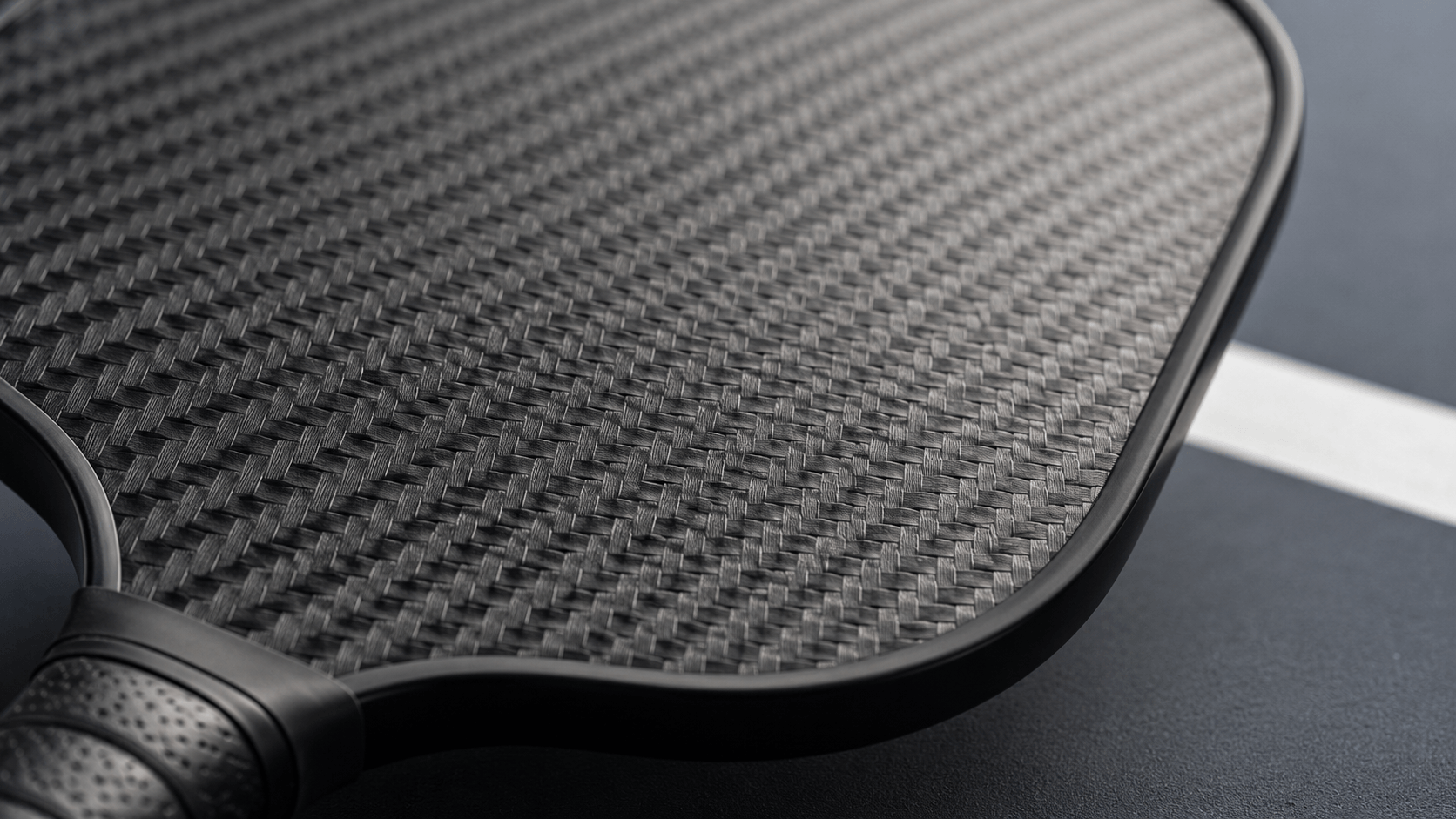
If we had to recommend one paddle face material for most players who are serious about improving, we would still start with carbon fiber.
Carbon fiber as a pickleball paddle surface texture gives players a clean blend of spin, touch, feedback, and control. It does not feel overly bouncy like some older fiberglass paddles, and it usually gives you a more connected response on the ball.
That connected feel matters. When you hit a drop, roll a drive, or counter at the kitchen, you want to feel like the paddle face is doing exactly what your hand tells it to do.
Carbon fiber is also still one of the best foundations for spin. Whether it is raw carbon, textured carbon, or a more advanced engineered carbon surface, the material gives brands a lot of room to create bite on the ball without making the paddle feel sloppy.
That is why so many modern premium paddles still start with carbon as the base. Even when brands are adding foam, new surface finishes, or different core systems, carbon fiber is usually still right in the middle of the conversation.
The Game Has Moved Past Basic Grit
A few years ago, pickleball paddle surface texture was easy to understand. If the face felt rough, players assumed it had more spin. If it felt smooth, they assumed it had less spin.
That is not always true anymore.
Modern paddle companies are finding different ways to create spin and shape. Some paddles use raw carbon texture. Some use advanced surface treatments. Some rely on face construction, dwell time, foam systems, and how the ball interacts with the paddle face.
In other words, the roughest-feeling paddle in your hand is not automatically the best spin paddle on court.
This is why we always tell players to hit with a paddle before judging it. A paddle might not feel like sandpaper, but it can still produce heavy spin if the face, core, and construction are working together.
What About Fiberglass?
Fiberglass had its place in pickleball, especially for players who wanted easy pop and a softer, more forgiving feel.
The issue is that the modern game has moved. Players are looking for more spin, more control, better resets, and a paddle that lets them shape the ball without losing confidence.
Fiberglass can still be fun. It can still give you pop. But for most players shopping for a serious modern paddle, fiberglass is usually not the pickleball paddle surface texture we start the conversation with.
If your goal is long-term improvement, more reliable spin, and a more connected feel, carbon fiber is usually the better starting point.
What About Kevlar?
Kevlar had a big moment. And to be fair, there are still good Kevlar and Kevlar-blend paddles out there.
Kevlar can feel softer and more dampened than carbon. Some players like it because it can be easier on the arm and give a more muted response.
But in our opinion, Kevlar does not feel like the main direction the pickleball paddle surface texture market is heading right now. The newer paddles that are catching our attention are not just relying on Kevlar as the story. They are using better carbon faces, improved surface technology, foam systems, and more refined builds.
So yes, Kevlar can still work. But if someone walks into Spinwave today and asks where paddle tech is going, we are probably talking about modern carbon-based performance first.
The Real Question: How Does It Play?
This is where people get lost. They shop by label instead of feel. Pickleball paddle surface texture matters, but it is only one piece of the puzzle.
A product page can say raw carbon, foam core, thermoformed, 3K weave, T700, Kevlar blend, or advanced surface texture. That information matters, but it does not tell the whole story.
The real question is:
- Can you control the paddle under pressure?
- Can you reset with it?
- Can you generate spin without forcing your swing?
- Does the paddle feel stable when you miss the exact center?
- Does it give you enough power to finish points?
- Does it fit your hand speed and playing style?
That is why we do not recommend buying based on one material label alone. Surface matters, but the full build matters more.
What Modern Paddle Surfaces Are Trying to Do
The best newer paddles and their pickleball paddle surface texture are trying to solve the same problem: how do you give players more offense without making the paddle impossible to control?
That means brands are chasing a few things at the same time:
- More spin without the surface dying too quickly.
- More power without making the paddle feel uncontrollable.
- More forgiveness without making the paddle feel slow.
- Better feel without giving up pop.
- More stability without making the paddle too heavy.
That is why newer paddles feel so different from older generations. It is not just about rough texture anymore. It is about the face, the core, the shape, the weight distribution, the surface technology, and how everything works together.
Newer Paddles We Actually Recommend
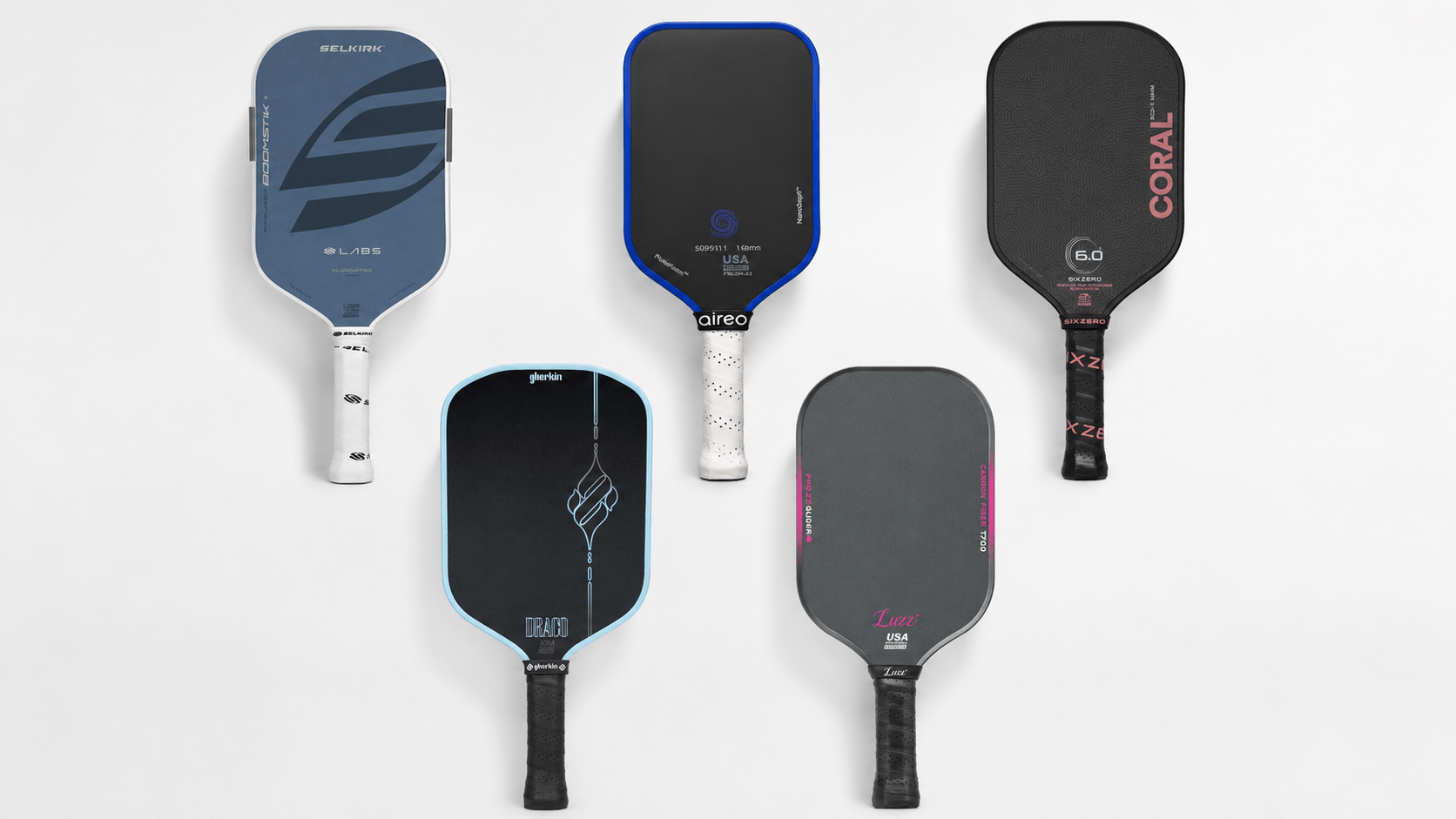
Instead of getting lost in every possible material category, here are a few newer paddles we like right now and why their pickleball paddle surface texture matters.
Selkirk Boomstik
The Selkirk Boomstik is for players who want premium power, stability, and a paddle that feels dangerous in the right hands.
This is not the paddle we would hand to someone who wants soft, slow, beginner-friendly control. This is for aggressive players who want to pressure opponents, attack openings, and finish points.
Six Zero Coral
The Six Zero Coral is one of our favorite newer paddles for players who want a lighter, faster, more playable feel without giving up real performance.
It is a great option for players who care about hand speed, control, and maneuverability, but still want a paddle that feels modern and capable.
Aireo Cyclone 2.0
The Aireo Cyclone 2.0 is part of the newer wave of paddles that feels different from traditional raw carbon options.
It brings a modern surface approach, good spin potential, and a fresh all-court feel for players who want something current without feeling locked into the same paddle everyone else is using.
Gherkin Draco
The Gherkin Draco has quickly become one of the more underrated paddles in the modern power conversation.
It gives players big offense, strong pop, and a forgiving sweet spot. If you want something that can bring heat but still feels usable, the Draco deserves a serious look.
Gherkin USA DRACO 16mm Pickleball Paddle - Hybrid
$179.99
New to Gherkin's lineup? See how this paddle compares to every other Gherkin shape before you commit. Read the complete Gherkin Guide → Gherkin USA DRACO Hybrid Pickleball Paddle The Gherkin USA DRACO Hybrid is built for players who want… read more

LUZZ Glider
The LUZZ Glider is another newer paddle worth watching for players who want something different from the usual big-brand options.
It fits the modern paddle conversation: better feel, better spin, and a more current performance profile than many older-style paddles.
Our Favorite Starting Point: Carbon-Based Modern Performance
If you are overwhelmed by all the pickleball paddle surface texture options and just want a practical starting point, this is our take:
Start with a modern carbon-based paddle.
From there, decide what you need more of:
- Need more power? Look at something like the Selkirk Boomstik or Gherkin Draco.
- Need faster hands and easier playability? Look at something like the Six Zero Coral.
- Want something newer and different? Look at the Aireo Cyclone 2.0 or LUZZ Glider.
- Want help dialing it in? Come demo paddles and let us watch how you actually play.
The right paddle is not just about what surface it has. It is about what that surface does for your game.
Stop Shopping by Buzzwords
Pickleball paddle surface texture matters. But buzzwords can make the buying process more confusing than it needs to be.
Raw carbon, Kevlar, fiberglass, grit, dwell time, foam core, thermoformed construction — all of these things can matter. But none of them tell the full story by themselves.
A paddle can sound amazing on paper and still feel wrong in your hand. Another paddle can look simple on the product page and play lights out on court.
That is why we care more about fit than hype.
Final Take: Carbon Fiber Still Wins for Most Players
Our favorite pickleball paddle surface texture starting point is still carbon fiber because it gives most players the best mix of spin, control, feel, and consistency.
But the best new paddles go beyond basic carbon. They use better cores, smarter surface technology, improved weight distribution, and more refined builds to create performance that actually shows up on court.
If you want to feel where the game is going, try paddles like the Selkirk Boomstik, Six Zero Coral, Aireo Cyclone 2.0, Gherkin Draco, or LUZZ Glider.
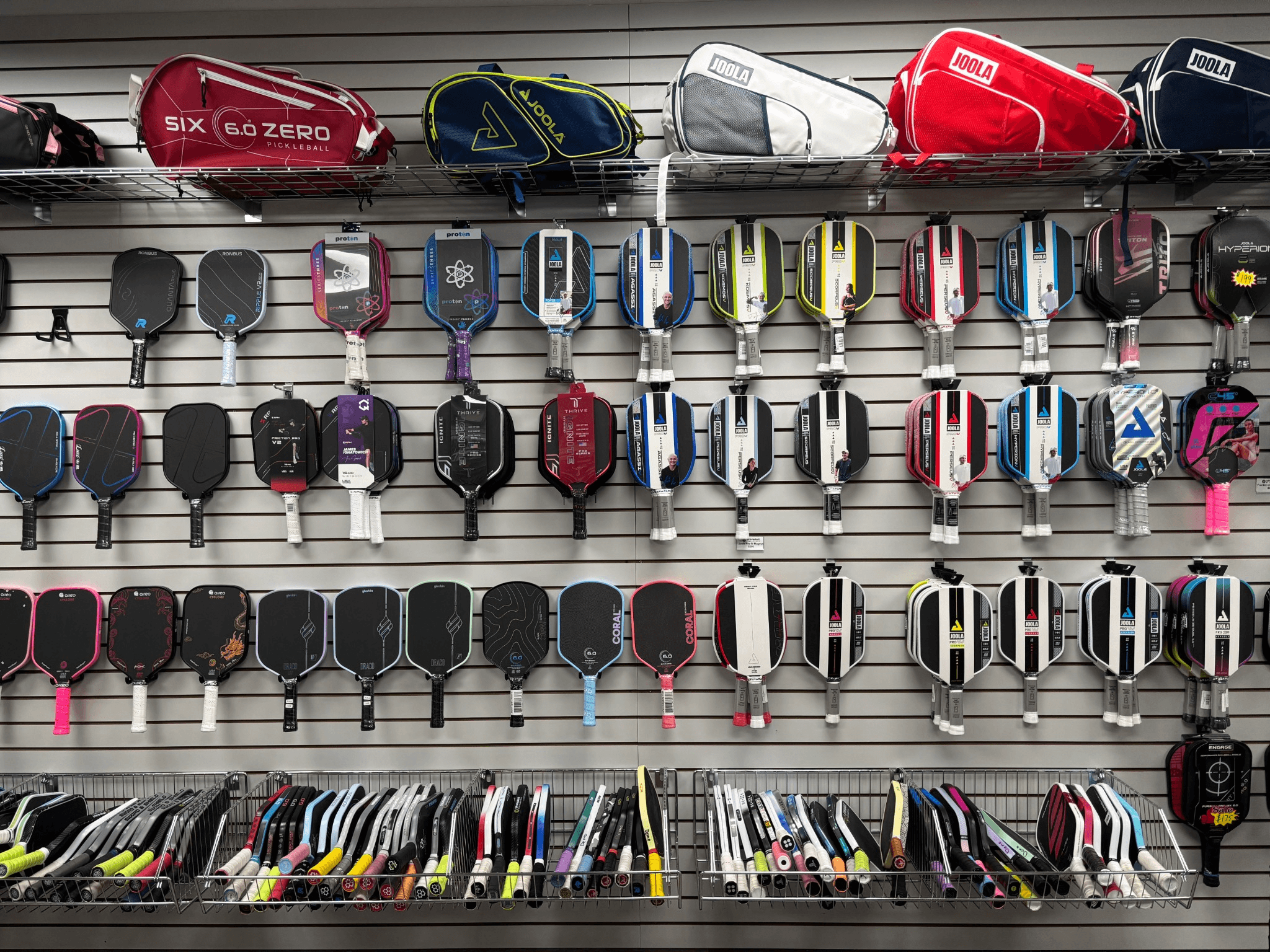
Come see us at Spinwave Pickleball in Great Neck or inside Long Beach Tennis Center, and we’ll help you find the paddle face that actually fits your game.
Find the Right Paddle Face for Your Game
Stop guessing about pickleball paddle surface texture based on buzzwords. Demo the paddles, feel the difference, and find the setup that actually makes you better.
Related Spinwave Links
Want to dig deeper into paddle tech, fit, and care? These Spinwave links can help:
- Shop all pickleball paddles
- Shop power & competitive paddles
- Shop all-court balanced paddles
- Get a free paddle consultation
- Read the pickleball weight placement guide
- Read The Overgrip Bible
- Read the edge guard tape guide
FAQs
Does pickleball paddle surface texture affect spin?
Yes. Paddle surface texture can help create friction on the ball, which can improve spin. But texture is only one part of the equation. The paddle face material, core, dwell time, shape, and overall construction all affect how much spin a paddle can actually produce on court.
Is a rougher pickleball paddle always better for spin?
No. The roughest-feeling paddle is not always the best spin paddle. Some modern paddles create strong spin through raw carbon, engineered surface technology, dwell time, and how the ball interacts with the paddle face. A paddle can feel less gritty in your hand and still produce excellent spin during play.
Is carbon fiber better than fiberglass for pickleball paddles?
For most serious players, we usually prefer carbon fiber. It gives a better mix of control, spin potential, feel, and consistency. Fiberglass can still give easy pop, but carbon fiber usually feels more connected and reliable for players trying to improve their game.
Is Kevlar still good for pickleball paddles?
Yes, Kevlar can still be good, especially for players who like a softer, more dampened feel. But right now, many of the paddles we are most excited about are built around modern carbon faces, engineered surfaces, foam systems, and more refined construction.
What is the best pickleball paddle surface for spin?
Raw carbon fiber, textured carbon fiber, and newer engineered paddle surfaces are usually strong options for spin. But the best spin paddle is not just about the surface. The full build matters, including the core, shape, weight distribution, and how long the ball stays on the paddle face.
Why does Spinwave prefer carbon fiber paddles?
Carbon fiber gives most players a strong balance of spin, control, touch, feedback, and consistency. It does not usually feel overly bouncy, and it gives players a more connected response when hitting drops, drives, resets, and counters.
Should beginners use carbon fiber pickleball paddles?
Many beginners can benefit from carbon fiber, especially if they want a paddle they can grow into. A good carbon fiber paddle can help with control, consistency, and feel. That said, the best paddle still depends on the player’s budget, hand speed, power needs, and comfort level.
What newer paddles does Spinwave recommend?
Some newer paddles we like right now include the Selkirk Boomstik, Six Zero Coral, Aireo Cyclone 2.0, Gherkin Draco, and LUZZ Glider. These paddles fit the modern performance conversation because they focus on spin, power, feel, stability, and better overall playability.
Is carbon fiber better than fiberglass for pickleball paddles?
For most serious players, yes. Carbon fiber as a pickleball paddle surface texture usually offers better control, more reliable spin potential, and a more connected feel than fiberglass. Fiberglass can still be good for easy pop and a softer feel, but it's not usually our first recommendation for modern performance paddles in 2026.
Is Kevlar still good for pickleball paddles?
Kevlar can still be good, especially for players who like a softer, more dampened feel and want something easier on the arm. But the most exciting paddle development right now is happening around modern carbon faces, engineered surface treatments, foam core systems, and refined paddle construction — not Kevlar.
What is the best pickleball paddle surface texture for spin?
Raw carbon, textured carbon, and newer engineered carbon surfaces are usually the strongest pickleball paddle surface texture options for spin. But the best spin paddle is not always the roughest-feeling paddle. The face material, core, dwell time, and overall paddle build all work together to create spin — texture is just one input.
Does rough paddle surface texture mean more spin?
Not always. A few years ago this was a reliable shortcut, but modern paddles have moved past basic grit. Some paddles with relatively smooth-feeling faces produce massive spin because the face construction, dwell time, foam system, and core work together to grip the ball. Always test a paddle before judging spin by feel alone.
What newer paddles does Spinwave recommend?
Some newer paddles we like right now include the Selkirk Boomstik (premium power), Six Zero Coral (lighter, faster, playable), Aireo Cyclone 2.0 (modern all-court feel), Gherkin Draco (underrated power option), and LUZZ Glider (T700 carbon with strong spin). All of them feature modern carbon-based pickleball paddle surface texture as part of their builds.