
Table of Contents
- Quick Answer: Is Pickleball in the Olympics?
- The IOC’s Steep Climb
- The Federation Challenge
- The Global Explosion
- The Brisbane 2032 Path
- The Stepping Stones Before the Olympics
- Why Olympic Pickleball Would Matter
- What Needs to Happen Next?
- Related Spinwave Links
- The Verdict: Will Pickleball Become an Olympic Sport?
- FAQs
- Is pickleball in the 2028 Los Angeles Olympics?
- When could pickleball become an Olympic sport?
- What does pickleball need to do to become an Olympic sport?
- Why isn't pickleball already in the Olympics if it's so popular?
- Will pickleball be in the Special Olympics?
- How would Olympic inclusion change pickleball?
The pickleball Olympics conversation is getting louder, but the sport is not in the Olympic Games yet. Pickleball will not be part of Los Angeles 2028, and the more realistic target is Brisbane 2032 if the sport can meet the requirements for global reach, unified governance, standardized rules, anti-doping compliance, and international competition.
Let’s get the bad news out of the way first: pickleball is not currently an Olympic sport. But if you think the story ends there, you do not understand the force behind the global pickleball movement.
Pickleball’s rise is not just a backyard trend anymore. The game has grown from local parks and rec centers into a global movement with organized competition, national federations, professional tours, sponsors, and rising media attention. The next question is obvious: when could the pickleball Olympics dream actually become real?
The answer is complicated. Getting into the Olympics is not just about popularity. It requires international politics, unified governance, anti-doping compliance, global participation, and a competition format that can work on the world’s biggest sports stage.
Quick Answer: Is Pickleball in the Olympics?
No. Pickleball is not currently an Olympic sport, and it is not expected to be part of the Los Angeles 2028 Olympic program. The earliest realistic target being discussed by many pickleball Olympics observers is Brisbane 2032, but that is not guaranteed.
For pickleball to become an Olympic sport, it needs stronger international governance, broader global participation, standardized rules, anti-doping compliance, and recognition through the Olympic process. The sport has momentum, but there is still work to do.
The IOC’s Steep Climb
The IOC does not add sports simply because they are trending. Olympic inclusion requires international structure, global participation, governance, and the ability to run consistent competition at the highest level.
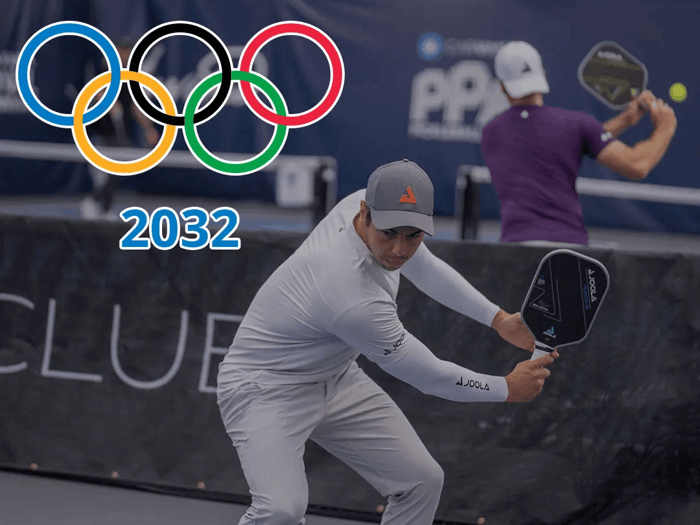
For pickleball, the biggest hurdles are not about whether the game is fun to watch. The bigger hurdles are organizational. The sport needs a clear international federation structure, consistent rules, a global competition calendar, and a system that aligns with Olympic standards.
The IOC also needs confidence that the sport is not only popular in one country. The pickleball Olympics case has to show that the sport is practiced, organized, and competitive across multiple continents and by both men and women.
That is why the 2028 Los Angeles Games are not the real target. The timeline is too tight, and the program is already moving without pickleball. The more realistic conversation is about 2032 and beyond.
The Federation Challenge
One of the biggest issues for the pickleball Olympics push has been fragmented international governance. For a sport to be taken seriously by the Olympic movement, there needs to be one clear global authority that can represent the sport, manage rules, support national federations, and coordinate international competition.
Pickleball has had multiple international organizations working toward influence and legitimacy. That kind of fragmentation can slow Olympic progress because the IOC wants clarity, not competing leadership.
The good news is that pickleball’s international leadership has been moving toward more unification. That matters because unified governance is one of the major stepping stones toward Olympic recognition.
A single, credible international federation would help create consistent rules, formal competitions, development programs, anti-doping compliance, and stronger communication with national Olympic committees.
The Global Explosion
The strongest argument for the pickleball Olympics future is its growth. The sport is no longer only an American phenomenon. It is spreading across North America, Europe, Asia, South America, and Australia.
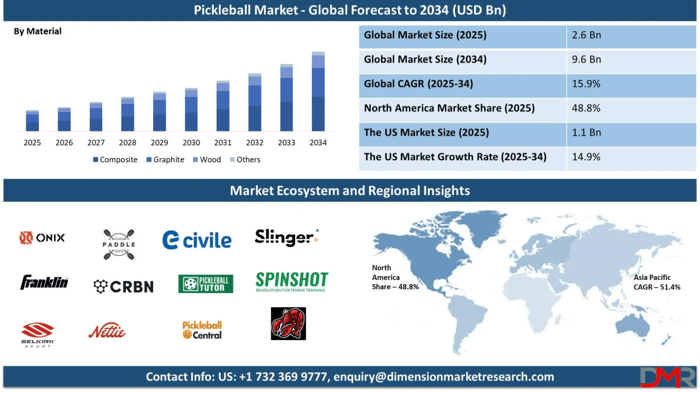
Global growth matters because the Olympics are not built around one-country popularity. A sport has to prove that it belongs on an international stage. That means players, clubs, tournaments, federations, and competitive pathways outside the United States.
Asia is especially important. If pickleball continues growing in large markets like India, Japan, Vietnam, Malaysia, and other parts of the region, the sport’s Olympic case becomes much stronger.
Australia also matters because Brisbane will host the 2032 Summer Olympics. If pickleball keeps growing there, local interest could help make the sport more attractive as a host-city proposal.
The Brisbane 2032 Path
Brisbane 2032 is the most realistic pickleball Olympics target because host cities can propose additional sports with strong local and global appeal. That does not guarantee pickleball a spot, but it creates a possible opening.
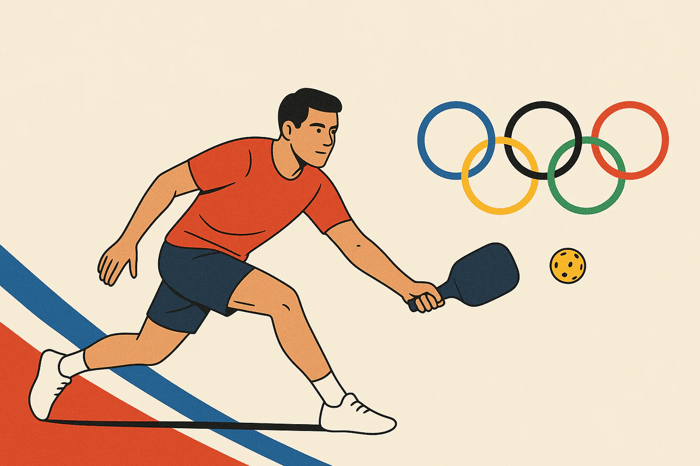
Pickleball would need to show that it has the structure, audience, international depth, and competitive credibility to belong. The sport cannot simply show up with hype. It needs to show that it can run clean, consistent, high-level competition.
If the international federation picture becomes clearer, if participation keeps growing, and if Australia continues building a strong pickleball community, Brisbane 2032 could become a serious opportunity.
Still, it is important to say this clearly: pickleball in Brisbane 2032 is a target, not a promise.
The Stepping Stones Before the Olympics
Before pickleball reaches the Olympics, it needs to prove itself in other major international and multi-sport environments. These events help show that the sport can handle logistics, officiating, competition formats, and global participation.
One important step is the 2026 Special Olympics USA Games in Minnesota, where pickleball is making its debut as an official Special Olympics sport. That kind of inclusion helps show the sport’s accessibility and broad appeal, which strengthens the broader pickleball Olympics narrative.
International team competitions, continental championships, and national federation events also matter. They create the competitive resume pickleball needs if it wants to be taken seriously by Olympic decision-makers.
Media coverage is another piece. The Olympics need sports that can translate to audiences. Pickleball has a fast pace, quick rallies, doubles strategy, and an easy-to-understand scoring rhythm, which could help it work for streaming and broadcast.
Why Olympic Pickleball Would Matter
Olympic inclusion would be massive for pickleball. It would validate the sport internationally, attract more sponsors, drive more youth participation, and give national federations a stronger reason to invest in development.
It would also change the way young players view the sport. Instead of seeing pickleball only as a recreational game or pro tour opportunity, they could see a national-team pathway and an Olympic dream.
For brands, retailers, clubs, and facilities, Olympic recognition would create even more demand. More players would enter the sport, more courts would be built, and more families would take the game seriously.
Free Paddle Consultation

$0.00
Free Paddle Consultation In-store or on a phone call. We’ll match you with the right shape, handle length, grip feel, and optional weighting — in about 10 minutes. Book Free Consult Browse Paddles What You’ll Get 2–3 personalized paddle recommendations… read more
What Needs to Happen Next?
The pickleball Olympics push has the momentum, but momentum alone is not enough. The sport needs to keep professionalizing its international structure.
- Unify global governance under a credible international federation.
- Standardize rules and competition formats worldwide.
- Build stronger national federations across more countries.
- Expand women’s and youth participation internationally.
- Run more credible international championships.
- Maintain anti-doping compliance and Olympic-style standards.
- Continue growing in Australia before Brisbane 2032.
If those pieces come together, the Olympic case gets much stronger.
Related Spinwave Links
Want to get into the sport before it reaches the world stage? These Spinwave links can help:
- Shop pickleball paddles
- Shop all-court pickleball paddles
- Shop beginner-friendly paddles
- Shop power pickleball paddles
- Get a free paddle recommendation
- Read more pickleball buying guides
The Verdict: Will Pickleball Become an Olympic Sport?
The pickleball Olympics dream is real, but it is not there yet. The sport has massive momentum, an expanding global footprint, and a strong case for future inclusion. But the Olympic process is slow, political, and demanding.
The federation picture needs to become clearer, international competition needs to mature, and the sport needs to prove that its growth is not just a U.S. trend.
Brisbane 2032 is the target that makes the most sense right now. Do not bet against the dink, but do not call it official yet. The Olympic dream is alive, and the next few years will decide how real that dream becomes.
FAQs
Is pickleball in the Olympics?
No. Pickleball is not currently an Olympic sport and is not expected to be part of the Los Angeles 2028 Olympic Games.
Could pickleball be in the 2032 Olympics?
Pickleball could potentially target Brisbane 2032, but it is not guaranteed. The sport still needs stronger international governance, broader global competition, standardized rules, and Olympic recognition.
Why is pickleball not in the Olympics yet?
Pickleball is not in the Olympics yet because it still needs to meet Olympic-level requirements for global governance, international participation, standardized rules, anti-doping compliance, and competitive structure.
What does pickleball need to become an Olympic sport?
Pickleball needs unified global governance, recognized international competition
When could pickleball become an Olympic sport?
Brisbane 2032 is the most realistic target being discussed. Host cities can propose additional sports with strong local and global appeal, which creates an opening for pickleball. It's not a guarantee, but if international governance unifies and global participation keeps growing, Brisbane 2032 is the first credible shot.
What does pickleball need to do to become an Olympic sport?
The sport needs unified international governance under one credible federation, standardized rules and competition formats worldwide, stronger national federations across more countries, anti-doping compliance, expanded women's and youth participation, and a track record of credible international championships. The pickleball Olympics case is built on structure, not hype.
Why isn't pickleball already in the Olympics if it's so popular?
Popularity isn't enough. The IOC requires international structure, global participation across multiple continents, unified governance, and consistent high-level competition. Pickleball has the popularity but is still building the institutional foundation the Olympics demand.
Will pickleball be in the Special Olympics?
Yes. Pickleball is making its debut as an official Special Olympics sport at the 2026 Special Olympics USA Games in Minnesota. That kind of inclusion helps demonstrate the sport's accessibility and broad appeal, which strengthens the broader Olympic case.
How would Olympic inclusion change pickleball?
Olympic recognition would unlock major sponsorship money, drive youth participation, give national federations a reason to invest in development, and create national-team pathways for young players. It would also boost retail demand, court construction, and overall sport infrastructure worldwide.