
Table of Contents
- Quick Summary: Pickleball Injuries Are Real
- Why Pickleball Injuries Happen
- Most Common Pickleball Injuries
- Why Knee Injuries Are So Common
- Shoulder and Overuse Injuries
- Pickleball Eye Injuries: Why Protective Eyewear Matters
- The Weekend Warrior Problem
- How to Warm Up Before Pickleball
- Strength and Balance Training for Pickleball
- The Right Shoes and Gear Can Help
- How Your Paddle Setup Affects Injury Risk
- How to Play Safer Without Playing Scared
- Related Spinwave Links
- Final Thoughts
- FAQs
Pickleball injuries are becoming a bigger conversation as more people jump into the sport. Pickleball is fun, social, and beginner-friendly, but it is still a real sport. Quick stops, side-to-side movement, lunges, reaches, overheads, and fast reactions can put stress on your knees, ankles, shoulders, wrists, and eyes.
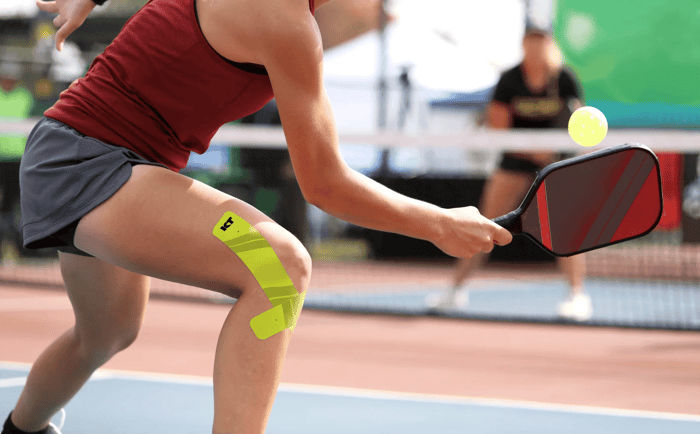
That does not mean players should be afraid to play. It means players should respect the game, prepare their bodies, wear the right gear, and avoid doing too much too soon.
Whether you are brand new to pickleball or playing several times a week, understanding common pickleball injuries can help you stay on the court longer and enjoy the sport more safely.
This post is for general information and is not medical advice. If you have an injury, persistent pain, or a health condition that affects how you move, talk to a medical professional or physical therapist before starting any new activity or training program.
Quick Summary: Pickleball Injuries Are Real
Pickleball may look easy from the outside, but the movement can be demanding. Many pickleball injuries happen when players go from being inactive to playing multiple games or long sessions without giving their body time to adjust.
The biggest injury risks usually come from:
- Doing too much too soon
- Poor warmups
- Weak balance or stability
- Wearing the wrong shoes
- Playing through pain
- Quick twisting movements
- Overuse from repeated play
- Not wearing protective eyewear
The goal is not to make pickleball sound dangerous. The goal is to help players understand that smart preparation matters.
Why Pickleball Injuries Happen
Pickleball injuries often happen because the sport feels easier than it really is. The court is smaller than a tennis court, the paddle is lighter than a tennis racquet, and many beginners can rally quickly. That makes people feel comfortable fast.
But the body still has to handle quick acceleration, sudden stops, lateral movement, reaching, bending, twisting, and reacting to shots at the kitchen line.
For players who have not been active recently, that can be a lot. Your brain may think, "This is just pickleball," but your knees, ankles, hips, shoulders, and calves may not be ready for the workload.
That is why many medical professionals and physical therapists point to the same issue: players are jumping into the sport too quickly and playing too much before their bodies are ready.
Most Common Pickleball Injuries
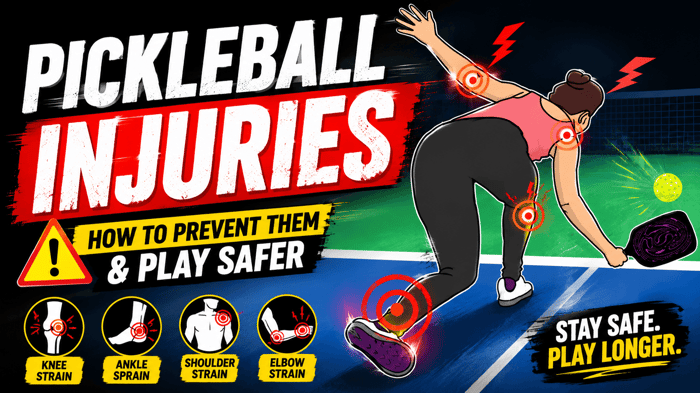
The most common pickleball injuries usually involve the lower body, knees, shoulders, ankles, and overuse-related pain. Eye injuries are also becoming a bigger concern because the ball and paddle can move quickly at close range.
| Injury Area | Common Cause | How to Lower Risk |
|---|---|---|
| Knee | Twisting, lunging, sudden stops, awkward falls | Strength training, balance work, proper shoes, controlled movement |
| Ankle / Foot | Side-to-side movement, poor footwear, rolling the ankle | Court shoes, better footwork, ankle stability exercises |
| Shoulder | Overheads, repeated swinging, poor mechanics | Warmups, mobility, strength work, rest days |
| Elbow / Wrist | Overuse, gripping too hard, paddle setup issues | Better grip setup, relaxed grip pressure, recovery time |
| Eye | Ball or paddle contact at close range | Protective eyewear or sport glasses |
Every player is different, but the pattern is clear: pickleball is safest when players build up gradually, use the right gear, and listen to their body.
Why Knee Injuries Are So Common
Knee injuries are one of the biggest concerns among pickleball injuries because the sport involves a lot of quick direction changes. Players reach for wide balls, twist during reactions, stop suddenly, and sometimes plant their foot while the rest of the body keeps moving.
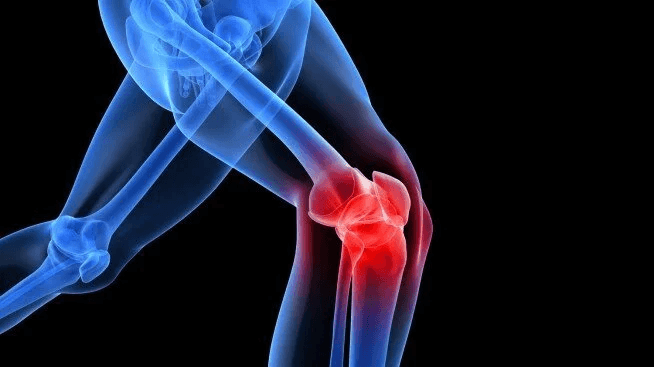
That combination can put stress on the knee, especially if the player has weak hips, poor balance, old injuries, or shoes that do not support lateral movement.
Some players describe knee injuries as freak accidents, and sometimes they are. One awkward step or twist can be enough. But many knee issues are also linked to fatigue, poor movement habits, or jumping into too many games too quickly.
Ways to reduce knee injury risk
- Warm up before playing
- Wear court shoes instead of running shoes
- Build leg and hip strength
- Work on balance and stability
- Avoid lunging wildly for every ball
- Take breaks when tired
- Do not play through sharp knee pain
No gear or exercise can prevent every injury, but better preparation can lower your risk.
Shoulder and Overuse Injuries
Not every pickleball injury happens from one dramatic fall or twist. Many pickleball injuries are overuse injuries. These happen when players repeat the same motion too often without enough strength, mobility, or recovery.
Shoulder soreness is common because players hit serves, drives, volleys, overheads, and defensive shots over and over. If the shoulder is not warmed up or conditioned, it can get irritated.
Overuse can also show up in the elbow, wrist, Achilles, calf, lower back, and hips.
Signs you may be overdoing it
- Pain that gets worse as you play
- Soreness that does not improve after rest
- Sharp pain during specific shots
- Swelling or stiffness after playing
- Loss of range of motion
- Feeling weaker or less stable than usual
If pain keeps coming back, do not ignore it. Rest, reduce your playing volume, and consider checking in with a medical professional or physical therapist.
Pickleball Eye Injuries: Why Protective Eyewear Matters
Eye injuries are one of the most overlooked pickleball injuries. The ball is light, but it can still move fast, especially during hands battles at the kitchen. A ball can deflect off a paddle, come off the edge, or get hit from close range before a player has time to react.
Protective eyewear is one of the simplest safety upgrades a pickleball player can make.
This is especially important because pickleball is often played at close distances. At the kitchen line, players may be only a few feet apart. A deflected ball can reach the face quickly.
Protective eyewear can help protect against:
- Direct ball impact
- Deflections off paddle edges
- Accidental paddle contact
- Side-angle shots near the face
- Unexpected ricochets during fast exchanges
If you wear prescription glasses, ask about sport-friendly or protective options. If you do not need prescription lenses, non-prescription sport glasses can still add important protection.
Brioti FOCOS | Pickleball Eyewear

$199.00
See the pickleball like never before, and protect your vision while you do it. FOCOS eyewear is engineered specifically for pickleball, combining advanced lens technology with enhanced impact protection (Z87+ rated). Built from over a year of R&D and tested… read more
The Weekend Warrior Problem
One of the biggest patterns in pickleball injuries is the "weekend warrior" problem. This happens when someone is mostly inactive during the week, then plays hard for several hours on the weekend.
The body needs time to adapt. Muscles, tendons, joints, balance, and footwork all improve with gradual exposure. If you suddenly go from no activity to multiple long pickleball sessions, your injury risk can rise.
Common weekend warrior mistakes
- Playing three hours after months of inactivity
- Skipping warmups
- Playing through pain
- Wearing running shoes instead of court shoes
- Not drinking enough water
- Playing too many days in a row
- Trying to chase every ball like a tournament point
If you are new or returning after time off, start slow. Play shorter sessions, take breaks, and build up over time.
How to Warm Up Before Pickleball
A good warmup does not have to be complicated. The goal is to raise your heart rate, wake up your legs, loosen your shoulders, and prepare your body for quick movement.
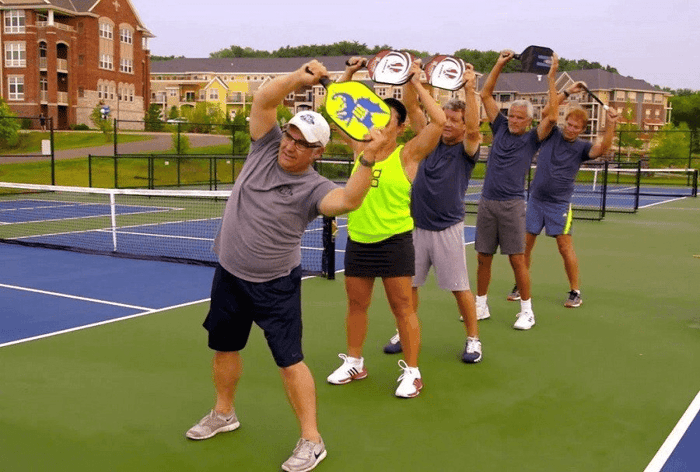
Simple pickleball warmup
- Walk or lightly jog for 3 to 5 minutes
- Do gentle side shuffles
- Practice small lunges
- Do arm circles and shoulder mobility
- Take a few easy swings
- Start with soft dinks before hard drives
- Gradually build up speed
Do not make your first point of the day your fastest movement of the day. Give your body a chance to get ready.
Strength and Balance Training for Pickleball
Strength and balance training can help players move better and feel more stable on the court. You do not need to train like a professional athlete, but a few simple exercises can go a long way toward reducing pickleball injuries.
Helpful areas to train
- Leg strength: Helps with lunges, stops, and recovery steps.
- Hip strength: Supports better lateral movement and knee control.
- Core strength: Helps with balance, rotation, and stability.
- Shoulder strength: Helps with repeated swings and overheads.
- Balance: Helps reduce awkward falls and unstable steps.
Beginner-friendly exercises
- Bodyweight squats
- Step-ups
- Side lunges
- Glute bridges
- Calf raises
- Single-leg balance holds
- Band rows
- Light shoulder external rotations
If you have a history of injury, work with a trainer, physical therapist, or medical professional before starting a new routine.
The Right Shoes and Gear Can Help
One of the easiest ways to reduce avoidable pickleball injuries is to wear the right shoes. Pickleball involves a lot of lateral movement, which means running shoes are usually not the best option.
Running shoes are designed mainly for forward motion. Pickleball shoes or tennis court shoes are designed to support side-to-side movement, quick stops, and hard-court traction.
Good pickleball shoes should offer:
- Lateral support
- Stable base
- Good court traction
- Comfort for long sessions
- Durability on hard courts
- Secure fit during quick movement
Gear will not replace good movement and smart pacing, but the right shoes can help you feel more stable and confident on court.
How Your Paddle Setup Affects Injury Risk
Most pickleball injuries conversations focus on shoes, warmups, and protective eyewear — but your paddle matters too. A paddle that is too heavy, too poppy, too stiff, or sized wrong for your hand can quietly contribute to elbow pain, wrist soreness, and shoulder fatigue over time.
Paddle-related injury risk factors
- Paddle too heavy: Can fatigue the shoulder and elbow during long sessions.
- Paddle too stiff: Sends more vibration into the wrist and elbow on off-center hits.
- Grip size wrong: A grip that is too small can lead to over-gripping and elbow strain. Too large can affect wrist movement.
- Grip too slick: Causes players to grip harder, which fatigues the forearm and wrist.
- Poor weight balance: Affects swing path, control, and shoulder load.
If you are already feeling elbow soreness, wrist fatigue, or shoulder strain, your paddle setup may be part of the problem. A control-oriented paddle with a softer feel and forgiving sweet spot is often easier on the body than a power paddle with a stiff face.
A great forgiving option for players concerned about comfort is the Six Zero Coral Hybrid — it has a softer feel and large sweet spot, which means less stress on the arm during long sessions:
Six Zero Coral Hybrid Pickleball Paddle 16mm

$200.00
Six Zero Coral 16mm Hybrid Pickleball Paddle Balanced control + plush power. Built for all-court confidence. The Six Zero Coral 16mm Hybrid is built for players who want a perfectly balanced all-court paddle—blending plush dwell, stability, and controlled power. It… read more
For an all-court balanced paddle that is easy on the arm without sacrificing performance, the Gherkin Draco 16mm is another strong pick:
Gherkin USA DRACO 16mm Pickleball Paddle - Hybrid

$179.99
New to Gherkin's lineup? See how this paddle compares to every other Gherkin shape before you commit. Read the complete Gherkin Guide → Gherkin USA DRACO Hybrid Pickleball Paddle The Gherkin USA DRACO Hybrid is built for players who want… read more
If you are not sure which paddle setup fits your body and your game, book a free paddle consultation. We can help match weight, grip size, swing weight, and feel to your needs:
Free Paddle Consultation

$0.00
Free Paddle Consultation In-store or on a phone call. We’ll match you with the right shape, handle length, grip feel, and optional weighting — in about 10 minutes. Book Free Consult Browse Paddles What You’ll Get 2–3 personalized paddle recommendations… read more
How to Play Safer Without Playing Scared
The goal is not to make players nervous. Pickleball should be fun. But smart players understand that staying healthy and avoiding pickleball injuries is part of playing well.
Simple safety habits
- Warm up before playing
- Build up gradually if you are new
- Wear court shoes
- Consider protective eyewear
- Take breaks during long sessions
- Stop if you feel sharp pain
- Strength train outside of pickleball
- Work on balance and footwork
- Do not play through injuries
- Choose gear that fits your body and playing style
The players who stay on the court longest are usually not the ones who chase every ball at full speed. They are the ones who move well, recover properly, and know when to back off.
Related Spinwave Links
- Shop pickleball shoes
- Shop protective eyewear
- Shop all pickleball paddles
- Shop beginner & control paddles
- Shop all-court balanced paddles
- Shop pickleball grips & overgrips
- Shop pickleball bags
- Get a free paddle consultation
- Read Best Pickleball Shoes 2026
- Read Static Weight vs Swing Weight
- Read Beginner Pickleball in Long Island
Final Thoughts
Pickleball is fun, social, and easy to start, but it is still a sport. Pickleball injuries can happen, especially when players do too much too soon, skip warmups, wear the wrong shoes, or keep playing through pain.
The good news is that many risk factors are controllable. Warm up. Build up slowly. Strengthen your legs, hips, shoulders, and core. Work on balance. Wear court shoes. Consider protective eyewear. Choose a paddle setup that fits your body. Listen to your body.
You do not need to play scared. You just need to play smart.
Need help finding shoes, paddles, eyewear, grips, or gear that fits the way you play? Visit Spinwave Pickleball or book a free paddle consultation. We can help you choose gear that keeps you comfortable, confident, and ready for your next game.
FAQs
What are the most common pickleball injuries?
The most common pickleball injuries involve the knees, ankles, shoulders, wrists, elbows, calves, and lower body. Eye injuries are also a growing concern because balls can deflect quickly at close range during hands battles at the kitchen line.
Why do pickleball knee injuries happen?
Knee injuries can happen from twisting, sudden stops, lunging, awkward falls, or poor movement mechanics. Weak hips, poor balance, fatigue, and improper shoes can also increase risk. Many knee issues are linked to playing too much too soon.
Can pickleball cause shoulder pain?
Yes. Shoulder pain can happen from repeated serves, overheads, volleys, and swings, especially if a player does not warm up or plays too much without enough recovery. Overuse is one of the most common pickleball injuries.
Should I wear protective eyewear for pickleball?
Protective eyewear is a smart choice for pickleball because the ball can come quickly off paddles, edges, and deflections. Sport glasses can help protect your eyes during fast exchanges, especially at the kitchen line where players are only a few feet apart.
Are running shoes okay for pickleball?
Running shoes are usually not ideal for pickleball because they are built mostly for forward motion. Pickleball requires lateral movement, quick stops, and side-to-side support, so dedicated pickleball or court shoes are usually a better choice.
How can beginners avoid pickleball injuries?
Beginners can lower injury risk by starting slowly, warming up, wearing court shoes, taking breaks, learning proper movement, and avoiding long sessions before their body is ready. Building strength and balance outside of pickleball also helps.
Should I keep playing pickleball if something hurts?
If you feel sharp pain, swelling, instability, or pain that gets worse as you play, it is smart to stop and rest. If pain continues, talk to a medical professional or physical therapist. Playing through pain is one of the most common ways pickleball injuries get worse.