

Table of Contents
- Quick Answer: Why Is Pickleball Being Used in Prisons?
- Why Pickleball Works as Rehabilitation
- The Pioneer: Roger BelAir
- The Birth of PICL
- Breaking Down Barriers Inside Facilities
- The Post-Release Strategy
- The Science Behind the Game
- Why Pickleball Rehabilitation Matters
- Related Spinwave Links
- The Bottom Line
- FAQs
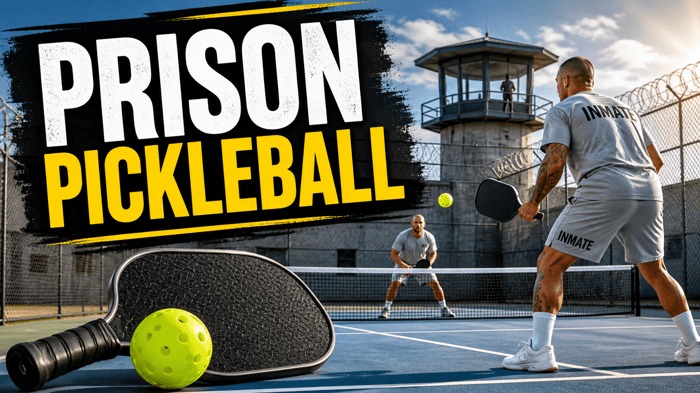
Pickleball in prisons may sound unlikely at first, but the sport is becoming a powerful rehabilitation tool inside correctional facilities. In a place often defined by concrete walls, tension, and limited options, pickleball in prisons offers structure, movement, teamwork, communication, and a rare chance for positive connection.
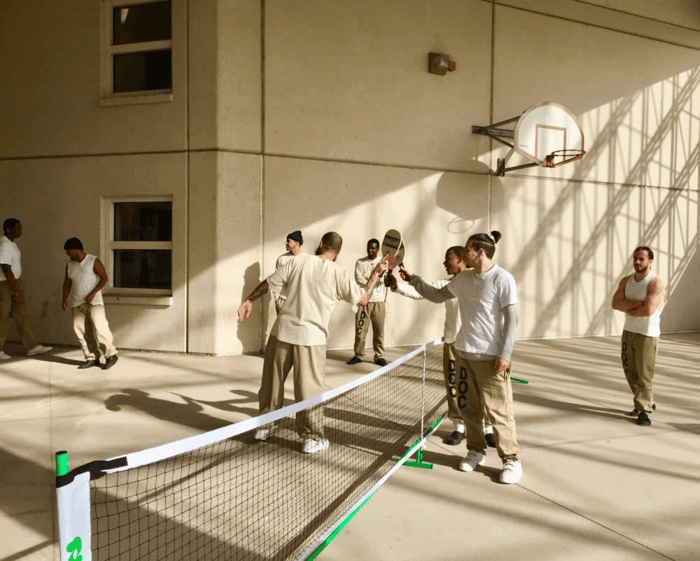
When you think of the American penal system, you probably picture concrete walls, barbed wire, and a tense environment. You probably do not picture a group of incarcerated people laughing, calling out scores, and dinking a plastic ball over a net.
But across the country, from county jails to larger correctional facilities, pickleball in prisons is quietly becoming one of the most surprising recreation and rehabilitation tools in the system.
This is not just a feel-good story about recreation time. Pickleball in prisons can help reduce tension, break down social barriers, teach patience, and create a healthier outlet in environments where stress and conflict are always close to the surface.
Quick Answer: Why Is Pickleball Being Used in Prisons?
Pickleball in prisons is being used because the sport is affordable, easy to learn, social, and structured. The game encourages teamwork, communication, patience, emotional control, and physical activity without requiring elite athletic ability.
That combination makes pickleball rehabilitation programs useful in correctional settings. The sport gives incarcerated individuals a constructive outlet while helping staff create a calmer and more cooperative recreation environment.
Why Pickleball Works as Rehabilitation
Pickleball works in correctional environments because it is simple enough for beginners but strategic enough to keep players engaged. You do not need to be a former athlete to enjoy it, and that matters in a facility where people come from very different backgrounds.
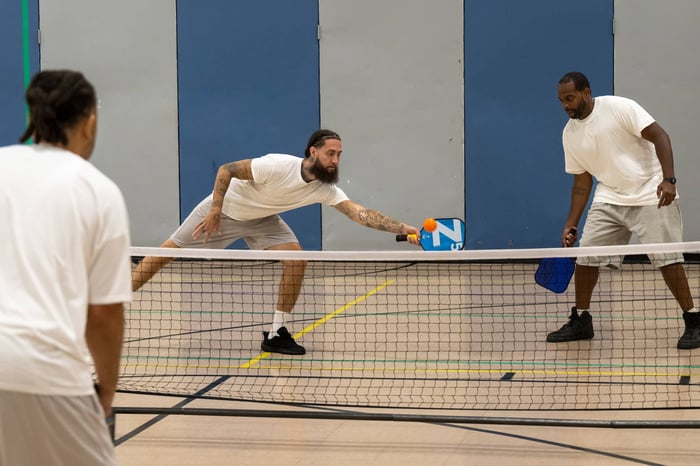
The game forces players to communicate. Doubles partners need to call balls, move together, encourage each other, and manage mistakes. Those small moments teach skills that matter far beyond the court.
Pickleball also requires emotional regulation. Players have to handle bad shots, close games, competitive pressure, and disagreements without letting frustration take over. In a correctional setting, practicing that kind of restraint is valuable, which is exactly why pickleball in prisons has gained traction with both staff and participants.
The sport creates a rare space where people can compete without hostility. It gives participants a goal, a routine, and a way to build trust through shared activity.
AIREO Cyclone 2.0 16mm Pickleball Paddle

$199.00
AIREO Cyclone 2.0 — 16mm Pickleball PaddleNanoGraph Grit Surface • PulseFoam™ Power Core • Pro-Level PerformanceThe Cyclone is back, rebuilt. Version 2.0 pairs AIREO's NanoGraph grit surface with the PulseFoam™ power core for explosive pop that doesn't give up the… read more
The Pioneer: Roger BelAir
The story of pickleball in prisons is closely tied to Roger BelAir, a retired banker and financial expert from California who helped introduce the sport into correctional facilities.
BelAir saw pickleball as more than a game. He recognized that its mix of accessibility, movement, teamwork, and social interaction could work in places where traditional recreation programs often fall short.
The idea was simple but powerful: bring paddles, balls, and a portable net into a correctional facility and see whether the game could create a different kind of energy.
The impact was immediate in many settings. People who might normally avoid each other or stay locked into group divisions could suddenly find themselves sharing the same court, playing as partners, and communicating through the game.
The Birth of PICL
Grassroots efforts eventually helped inspire more organized programs, including the Pickleball for Incarcerated Communities League, often referred to as PICL.
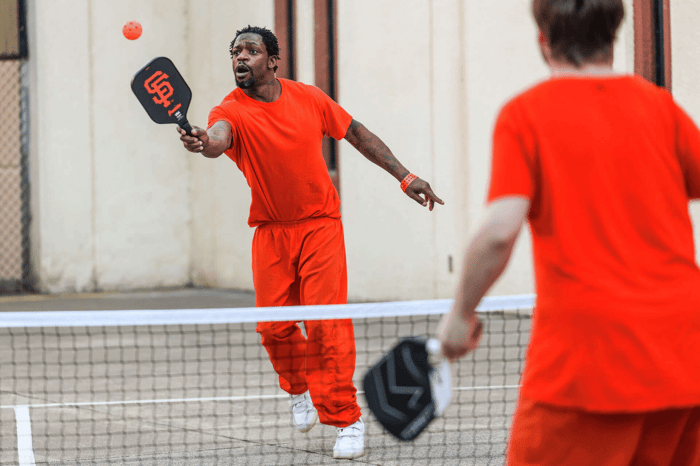
Programs like this do more than drop off equipment. The real value of structured pickleball in prisons programs comes from training, staff buy-in, and giving participants a way to keep playing consistently.
Staff involvement is important because correctional officers and program leaders need to understand the game and the purpose behind it. When staff support the program, pickleball can become more than recreation. It can become a tool for peace, engagement, and routine.
As players improve, leadership can also develop. Skilled participants often help teach newer players the rules, etiquette, and strategy. That creates responsibility, confidence, and mentorship inside the program.
Breaking Down Barriers Inside Facilities
One of the most powerful parts of pickleball in prisons is how the game can break down barriers. In a correctional setting, people are often separated by groups, histories, conflicts, or mistrust. Pickleball creates a neutral space.
On the court, players have to work together. A person who might normally be seen as an enemy, stranger, or authority figure can become a doubles partner or opponent in a controlled, rule-based game.
That does not erase the reality of prison life, but it can create moments of human connection. A rally, a laugh, a good shot, or a close game can shift the energy in a way that ordinary recreation may not.
For correctional staff, these moments matter too. Seeing people cooperate, focus, and compete respectfully can change the tone of a recreation yard or gym.
The Post-Release Strategy
The ultimate goal of any rehabilitation program is not just to create better behavior inside a facility. The bigger goal is to help people build skills and routines they can carry into life after release.
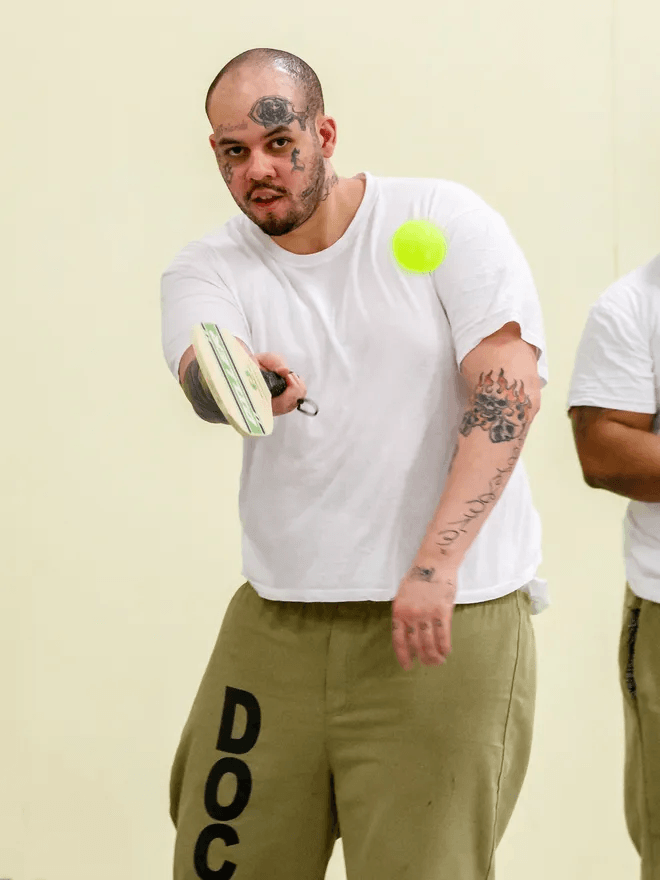
Pickleball can support that goal because it exists outside prison walls. Public courts, clubs, open play sessions, leagues, and community programs give former inmates a healthier place to spend time and meet people.
That matters because reentry can be isolating. A person leaving incarceration may need structure, social connection, physical activity, and positive environments. Pickleball in prisons programs can provide a bridge to all of those in a low-cost and accessible way once a person is released.
A paddle and a list of local places to play may sound simple, but it can represent something bigger: a bridge back into community.
The Science Behind the Game
Pickleball rehabilitation makes sense because the sport combines physical activity with social connection. Exercise is widely associated with stress relief, mood improvement, and better emotional regulation.
The social part matters just as much. Pickleball is interactive. Players talk, rotate, partner up, and react together. That makes the game different from solitary exercise.
The rules and etiquette also help. Calling scores, respecting boundaries, waiting turns, handling mistakes, and accepting outcomes all reinforce structure and sportsmanship.
In a correctional environment, those skills are not small. They are practical tools for communication, conflict resolution, patience, and self-control.
Why Pickleball Rehabilitation Matters
The American prison system is difficult to reform, and no single program can solve every problem. But small, practical tools can still make a difference.
Pickleball in prisons is inexpensive compared with many programs. It does not require a large field, heavy equipment, or advanced training. A portable net, paddles, balls, and a safe playing space can create a program quickly.
It also gives people something positive to look forward to. In a place where time can feel heavy and repetitive, a weekly game, league, or tournament can create structure and motivation.
Most importantly, pickleball creates a space where people can practice being teammates, opponents, leaders, students, and community members. That is why the sport has potential behind bars.
Related Spinwave Links
Interested in getting started with pickleball or supporting someone new to the sport? These Spinwave links can help:
- Shop pickleball paddles
- Shop beginner-friendly paddles
- Shop all-court pickleball paddles
- Shop pickleball grips
- Get a free paddle recommendation
- Read more pickleball guides
The Bottom Line
Pickleball in prisons shows how powerful a simple game can be. The sport is cheap, easy to learn, social, and structured. It teaches communication without a lecture, builds community without forcing it, and gives people a constructive way to compete.
From jail gyms to prison yards, pickleball in prisons is proving that rehabilitation can sometimes start with something as simple as a paddle, a ball, and a net.
The biggest impact of pickleball may not only be in parks, clubs, or pro tournaments. It may also be in the places where connection, patience, and hope are needed most.
FAQs
Why is pickleball being used in prisons?
Pickleball is being used in prisons because it is affordable, easy to learn, social, and structured. It encourages teamwork, communication, emotional control, and physical activity in a safe recreational format.
What is pickleball rehabilitation?
Pickleball rehabilitation refers to using pickleball as part of a correctional or reentry program to support teamwork, stress relief, conflict resolution, confidence, routine, and positive social connection.
Can pickleball reduce tension in prisons?
Pickleball can help reduce tension by giving participants a constructive outlet, encouraging communication, and creating moments of cooperation between people who may not normally interact positively.
Is pickleball easy for incarcerated people to learn?
Yes. Pickleball is relatively easy to learn, does not require elite athletic ability, and can be played in a small space with limited equipment. That makes it practical for many correctional recreation programs.
How can pickleball help after release?
Pickleball can help after release by giving former inmates access to a healthy community, regular physical activity, and a positive social environment through public courts, clubs, open play, and local leagues.
What equipment is needed for a prison pickleball program?
A basic prison pickleball program needs paddles, balls, portable nets, a safe playing area, and trained staff or volunteers who can teach rules, safety, etiquette, and basic strategy.
Who started the pickleball in prisons movement?
Roger BelAir, a retired California banker, is widely credited as the pioneer of pickleball in prisons. He recognized that the sport's accessibility, low cost, and team dynamics made it uniquely suited for correctional rehabilitation programs where traditional recreation often falls short.
What is PICL?
PICL stands for Pickleball for Incarcerated Communities League. It's an organized program that brings structured pickleball into correctional facilities, including equipment, training, staff coordination, and ongoing league play. PICL turns one-time recreation drops into sustained rehabilitation programs.
Does pickleball in prisons actually reduce tension?
Programs that bring pickleball in prisons report reduced incidents during recreation hours, improved cooperation between participants, and stronger staff-inmate communication. The game creates a neutral, rule-based space where social barriers — group divisions, mistrust, hierarchies — break down through doubles play.
How does pickleball help with post-release reentry?
Pickleball exists outside prison walls. Public courts, open play, and community leagues give former inmates a healthy, low-cost place to spend time, meet people, and build routines. For someone reentering society, that bridge to community can be the difference between isolation and integration.
What equipment is needed to start a prison pickleball program?
The startup cost is low. A portable net, a set of paddles (typically beginner-friendly control paddles), pickleballs, and a safe playing space — gym, yard, or converted court — is enough to begin. The bigger investment is staff training and ongoing program structure rather than gear.