
Table of Contents
- Quick Answer: Do You Need Pickleball Edge Guard Tape?
- Why the Edge Is the Most Vulnerable Part of Your Paddle
- Types of Pickleball Edge Guard Tape
- How to Apply Pickleball Edge Guard Tape Without Bubbles or Peeling
- Matching Edge Tape to Your Overgrip
- When to Replace Your Pickleball Edge Guard Tape
- Related Spinwave Links
- Pickleball Edge Guard Tape: The Bottom Line
- FAQs
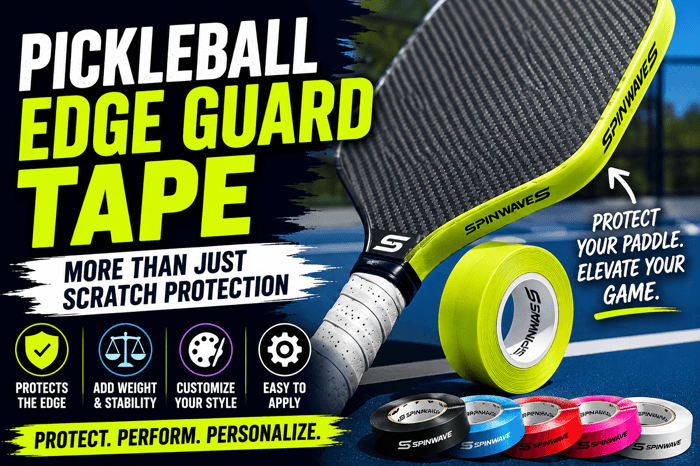
Pickleball edge guard tape is one of the easiest ways to protect your paddle from scratches, chips, court scrapes, and long-term edge damage. If you just spent good money on a premium paddle, protecting the edge is not optional. It is cheap insurance.
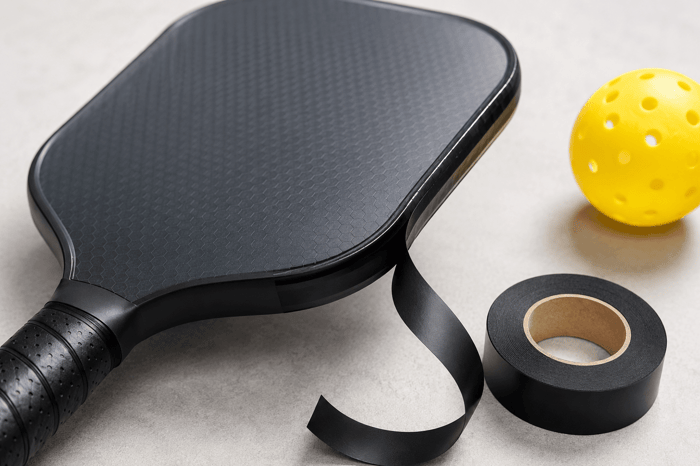
Let’s be real. You just dropped $200 or more on a premium carbon fiber paddle. Scraping it on the concrete while digging out a low dink is a heartbreaking sound. The edge of your paddle is the most vulnerable part of your entire setup.
But edge tape is not just about keeping your paddle looking clean. It can help with paddle protection, weight management, style, and confidence. At Spinwave Pickleball, we install paddle accessories all the time, and pickleball edge guard tape is one of the simplest upgrades players can make.
This guide breaks down why edge tape matters, the different types, how to apply it correctly, when to replace it, and how to match it with your overgrip for a clean custom paddle setup.
Quick Answer: Do You Need Pickleball Edge Guard Tape?
Yes, most players should use pickleball edge guard tape if they want to protect their paddle from court scrapes, chips, and edge wear. It is especially useful for players who dig out low balls, play outdoors, or want to keep a premium paddle in better condition.
Edge guard tape is inexpensive, easy to replace, and can help your paddle last longer. It also gives you an easy way to customize your paddle with color, pattern, or added weight.
Why the Edge Is the Most Vulnerable Part of Your Paddle
Your paddle face is built to handle repeated ball impact. The edge, however, takes a different kind of abuse. Every time you scrape the court, clip the ground, bump another paddle, or slide under a low ball, the edge guard absorbs the damage.
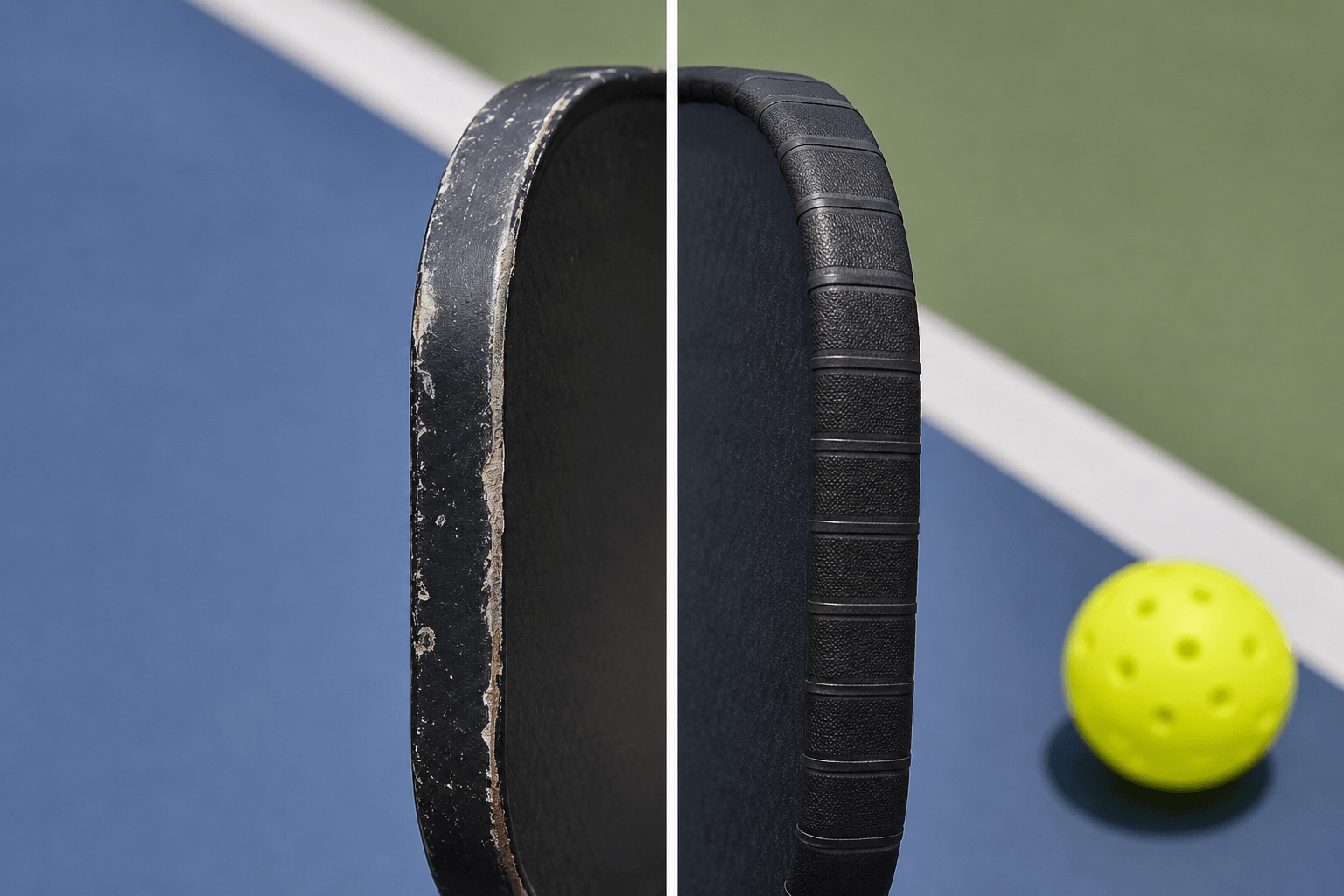
The edge guard helps hold the paddle together around the perimeter. If it cracks, chips, or wears down, the paddle can become more vulnerable to moisture, separation, and long-term structural problems.
A simple strip of tape creates a sacrificial layer. Instead of the court grinding directly into your paddle, the tape takes the hit. When the tape gets chewed up, you replace the tape instead of damaging the paddle.
That is why pickleball paddle protection matters. A few dollars in tape can help protect a paddle that costs hundreds.
Types of Pickleball Edge Guard Tape
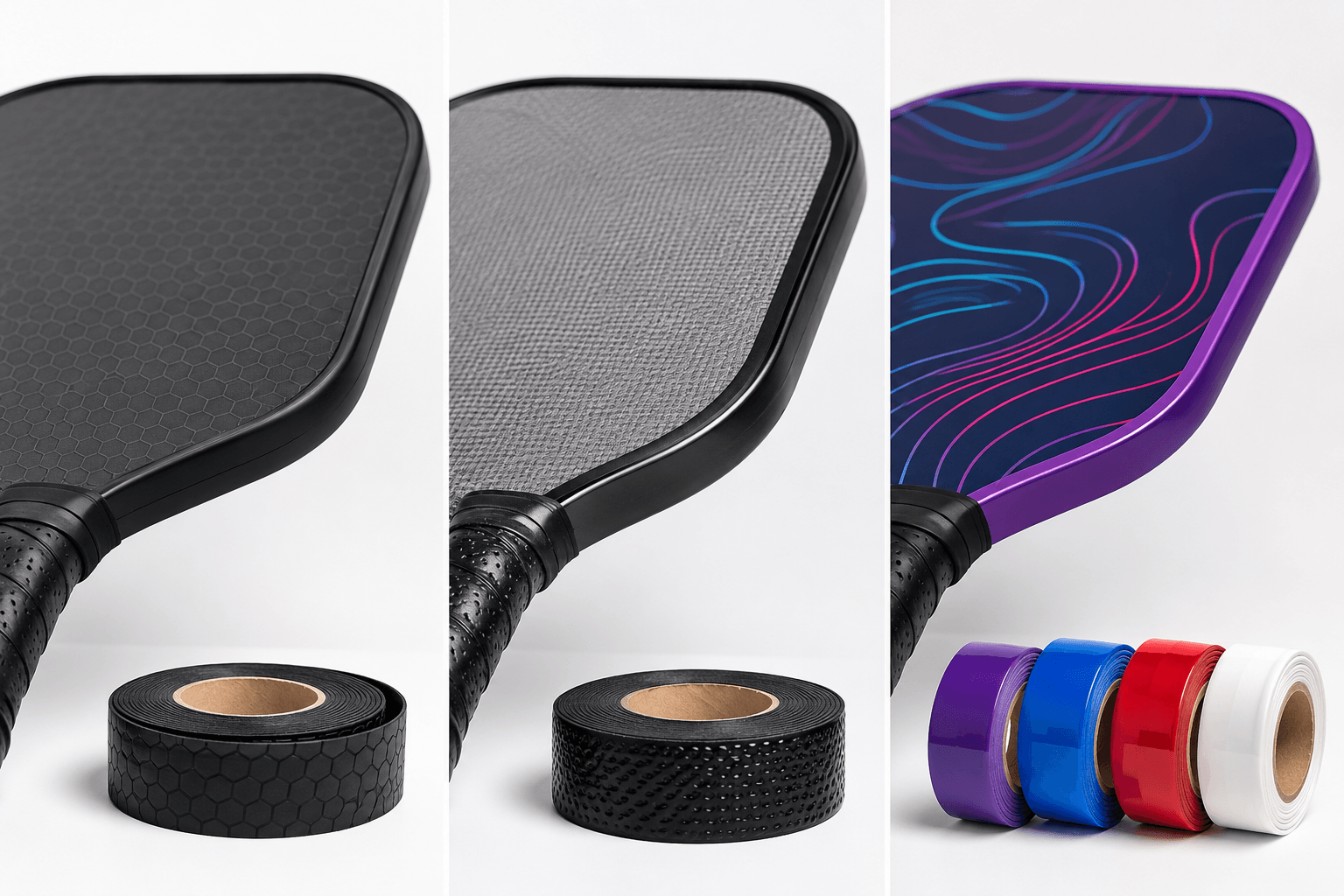
Not all edge tape is the same. Some tape is built mainly for protection. Some adds weight. Some is designed for style and customization. The right choice depends on what you want from your paddle setup.
Protective Edge Tape
Protective tape is the standard option for most players. It is made to cover the outer edge of the paddle and take the abuse from scrapes, bumps, and court contact.
This type of tape usually adds very little weight, but it gives you solid scratch protection. If your main goal is to keep your paddle looking better and prevent edge damage, protective pickleball edge guard tape is the best place to start.
Protective edge tape is especially useful for outdoor players because outdoor courts are rougher and more abrasive than indoor gym floors.
Weighted Edge Tape
Weighted edge tape adds protection while also changing how the paddle plays. Depending on placement, added weight can increase stability, improve twist weight, add plow-through, and make the paddle feel more solid on off-center hits.
This can be helpful if your paddle feels too light, unstable, or easy to twist. Adding weight near the sides of the paddle can improve forgiveness, while weight higher up can add more power and plow-through.
The key is not to overdo it. Too much weight can make the paddle slower in hand battles and more tiring over long sessions. Start small and test before adding more.
Custom and Decorative Edge Tape
Custom paddle tape is where protection meets style. Edge tape comes in different colors, patterns, and finishes, so you can make your paddle look more personal.
Some players match edge tape to their overgrip. Others use a contrast color to make the paddle pop. A black paddle with neon edge tape, a white grip with black edge tape, or a fully matched color setup can make your paddle feel more intentional.
Custom tape will not make you play better by itself, but confidence matters. If your paddle looks clean and feels like yours, that is part of the fun.
How to Apply Pickleball Edge Guard Tape Without Bubbles or Peeling
Applying pickleball edge guard tape looks easy, but doing it cleanly takes a little patience. If you rush, the tape can wrinkle, bubble, lift, or peel after one session.
Step 1: Clean the Edge
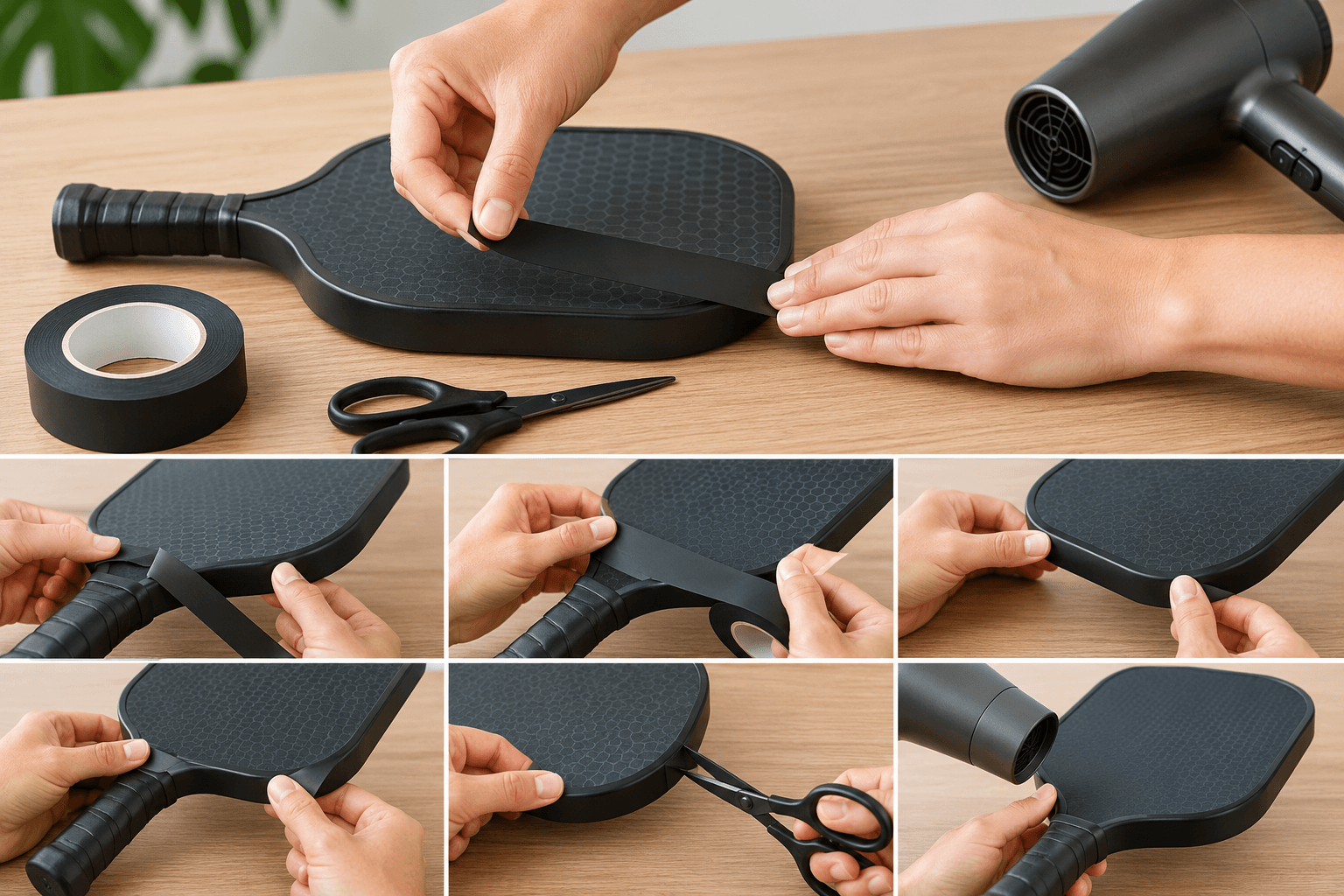
Wipe down the factory edge guard with rubbing alcohol or a clean cloth. Remove dirt, dust, sweat, and old adhesive. If the edge is dirty, the tape will not bond properly.
Step 2: Start Near the Throat
Begin near the throat of the paddle, just above the handle. This keeps the overlap seam in a less visible and less impacted area.
Step 3: Peel Slowly and Apply with Tension
Peel the backing a few inches at a time. Pull the tape slightly taut as you move around the paddle. This helps prevent wrinkles and air bubbles.
Step 4: Press from the Center Out
Press the middle of the tape down first, then smooth outward toward the edges. Work slowly around the curves at the top of the paddle, where bubbles are most likely to form.
Step 5: Heat and Seal
A little heat from a hair dryer can help the adhesive bond better and help the tape mold to the paddle shape. Use medium heat for a few seconds at a time, then press the tape down firmly.
Seal the overlap carefully. That seam is usually the first place tape starts peeling if the install is rushed.
Matching Edge Tape to Your Overgrip
A coordinated paddle setup looks clean and professional. Matching your edge tape to your overgrip is an easy way to make your paddle look custom without changing the paddle itself.
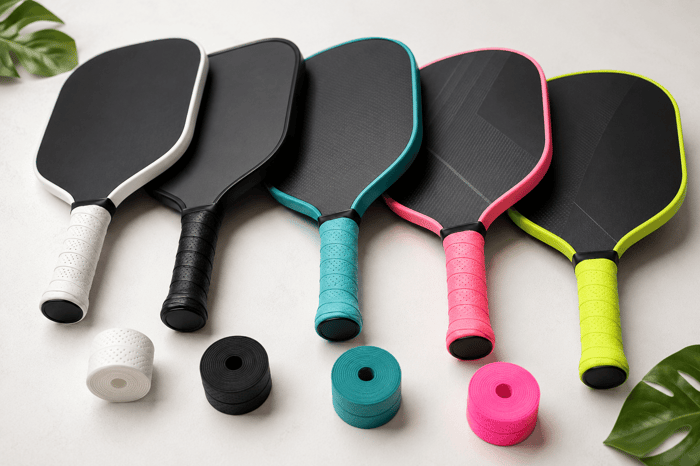
You can keep it classic with black edge tape and a white overgrip, go bold with neon colors, or match your tape and grip for a cleaner setup. Small details make the paddle feel more personal.
This is also a good way to identify your paddle quickly if you play in groups or clinics where several players have similar paddle models.
When to Replace Your Pickleball Edge Guard Tape
Edge tape is meant to be replaced. Its job is to get scraped up so your paddle does not. Once it starts fraying, peeling, tearing, or wearing thin, it is time to change it.
Aggressive players who scrape the court often may need to replace pickleball edge guard tape every few weeks. Casual players may only need to replace it a few times per year.
The key is to replace it before the damage reaches the actual paddle edge. Think of it like changing the oil in your car. It is cheap maintenance that helps prevent more expensive problems later.
Related Spinwave Links
Ready to protect and customize your paddle? These Spinwave links can help:
- Shop pickleball edge guard tape
- Shop pickleball overgrips
- Shop paddle accessories
- Shop pickleball paddles
- Read The Overgrip Bible
- Get a free paddle recommendation
Pickleball Edge Guard Tape: The Bottom Line
Pickleball edge guard tape is more than scratch protection. It helps protect your paddle investment, adds style, and can even change how your paddle feels if you use weighted tape.
If you play regularly, edge tape is one of the easiest and cheapest upgrades you can make. It protects the most vulnerable part of your paddle and gives you a clean way to customize your setup.
Your paddle takes care of your game. Edge tape helps take care of your paddle.
FAQs
What is pickleball edge guard tape?
Pickleball edge guard tape is a protective tape applied around the outside edge of a paddle. It helps protect the paddle from court scrapes, chips, scratches, and edge wear.
Do I need edge guard tape on my pickleball paddle?
Most players should use edge guard tape, especially if they play outdoors, scrape the court often, or want to keep a premium paddle in better condition. It is a cheap way to protect your paddle.
Does edge guard tape affect paddle performance?
Standard protective edge tape usually adds very little weight and has minimal impact on performance. Weighted edge tape can change paddle feel by adding stability, swing weight, or plow-through depending on where it is applied.
How often should I replace pickleball edge guard tape?
Replace edge guard tape when it starts peeling, fraying, tearing, or wearing thin. Aggressive players may need to replace it every few weeks, while casual players may only need to replace it a few times per year.
Can edge tape prevent paddle damage?
Edge tape can help prevent scratches, chips, and surface wear on the edge guard. It cannot prevent all paddle damage, but it acts as a sacrificial layer that takes abuse before the paddle edge does.
What is weighted edge guard tape?
Weighted edge guard tape is tape that adds weight while also protecting the paddle edge. It can improve stability and forgiveness, but too much weight can make the paddle feel slower.
How do you apply pickleball edge guard tape?
Clean the edge first, start near the throat of the paddle, peel the backing slowly, apply with light tension, smooth out bubbles, and seal the overlap. A little heat from a hair dryer can help the adhesive bond better.
Can I match edge tape with my overgrip?
What's the difference between protective and weighted edge guard tape?
Protective tape is built for scratch and chip prevention with minimal weight added. Weighted edge tape adds protection plus mass to improve stability, twist weight, and plow-through. Choose protective if you just want to keep the paddle clean; choose weighted if your paddle feels too light or unstable.
How do you apply pickleball edge guard tape without bubbles?
Clean the edge with rubbing alcohol, start near the throat just above the handle, peel and apply a few inches at a time with light tension, press from the center outward, and finish by heating with a hair dryer on medium to help the adhesive bond. Seal the overlap carefully — that seam is where peeling usually starts.
How often should I replace edge guard tape?
Aggressive outdoor players who scrape the court often may need to replace pickleball edge guard tape every few weeks. Casual indoor players may only need to replace it 2-3 times per year. Replace it before the tape wears through to the actual paddle edge — that's the whole point of the sacrificial layer.
Can edge guard tape change how my paddle plays?
Yes, weighted edge tape can. Adding weight near the sides increases twist weight and forgiveness on off-center hits. Adding weight higher up adds plow-through and power. Standard protective tape adds only a few grams and won't noticeably change feel. Start with small adjustments — too much weight slows hand speed.
What color edge tape should I get?
Match your edge tape to your overgrip for a clean, coordinated look. Black tape with a white grip is the classic choice. Neon colors make the paddle pop. Some players use contrasting tape to quickly identify their paddle in clinics or group play. It won't make you play better — but confidence matters and a paddle that looks like yours feels like yours.