
Table of Contents
- Quick Answer: What Gear Changes for Indoor vs Outdoor Pickleball?
- How Temperature and Environment Affect Your Paddle
- Indoor vs Outdoor Pickleball Balls
- Grip Solutions for Indoor vs Outdoor Pickleball
- Paddle Face Texture Considerations
- Indoor vs Outdoor Pickleball Shoes
- General Tips for Transitioning Between Indoor and Outdoor Pickleball
- Related Spinwave Links
- Indoor vs Outdoor Pickleball: The Bottom Line
- FAQs
- What's the difference between indoor and outdoor pickleball balls?
- Do I need different shoes for indoor vs outdoor pickleball?
- Should I use a different paddle indoors vs outdoors?
- What grip should I use for indoor vs outdoor pickleball?
- Does spin work differently indoors vs outdoors?
- How long does it take to adjust when switching between indoor and outdoor pickleball?
Indoor vs outdoor pickleball can feel like two different games. The ball bounces differently, your paddle reacts differently, your shoes grip differently, and your hands sweat differently. If you use the exact same setup for both environments, you may be making the transition harder than it needs to be.
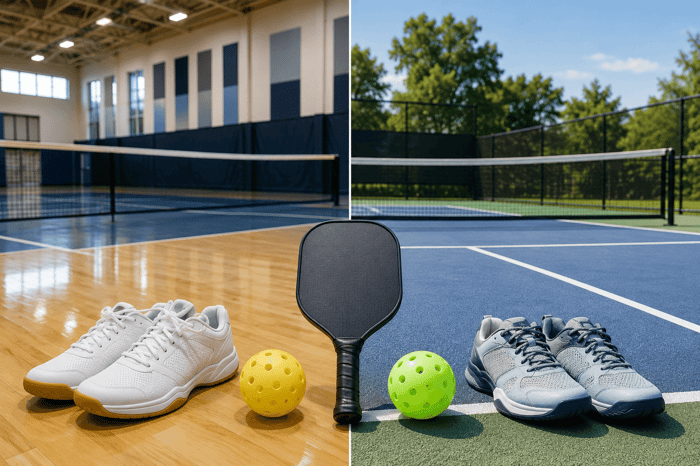
Playing pickleball inside a gym is a completely different experience than playing outside on a windy, 90-degree day. Indoor courts usually play smoother, slower, and more controlled. Outdoor courts usually play faster, lower, and more affected by wind, heat, sun, and court texture.
At Spinwave Pickleball, we see players struggle with this transition all the time. Someone dominates outdoors all summer, then walks into an indoor facility in November and cannot figure out why everything feels off. The answer is usually gear, timing, and environment.
This indoor vs outdoor pickleball guide breaks down the full difference in equipment, including paddles, balls, grips, shoes, paddle texture, temperature, and setup tips.
Quick Answer: What Gear Changes for Indoor vs Outdoor Pickleball?
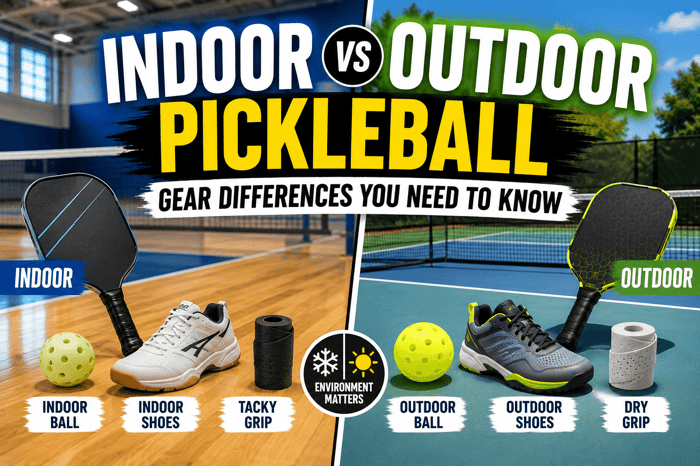
The biggest indoor vs outdoor pickleball gear differences are balls, shoes, grips, and paddle setup. Outdoor play usually requires heavier balls, more durable court shoes, and absorbent grips for heat and humidity. Indoor play usually works better with softer indoor balls, gum-rubber shoes, tackier grips, and paddles with strong spin texture.
If you play both indoors and outdoors, keep separate balls, consider different shoes, carry both tacky and dry overgrips, and understand that your paddle may feel different depending on temperature and court conditions.
How Temperature and Environment Affect Your Paddle
Your paddle core is more sensitive to temperature than many players realize. Most modern paddles use a polymer core or advanced core material that can feel different depending on heat, cold, and indoor climate control.
When you play outdoors in summer heat, the paddle can feel softer and more responsive. The ball may sink into the face a little more, creating extra dwell time and easier power. That is one reason drives can feel hotter outdoors in July.
When you play indoors or in colder outdoor conditions, the paddle can feel firmer and more boardy. The ball may pop off the face faster with less dwell time, which can make control feel different.
This is why some serious players prefer different paddle setups depending on the season. A thicker 16mm paddle can help add control and forgiveness indoors, while a thinner or more explosive paddle may feel better outdoors when heat already gives the ball and paddle more life.
Indoor vs Outdoor Pickleball Balls
This is the most obvious gear difference, but it is also one of the most important. Using the wrong ball for your environment can throw off your timing, bounce reads, and control.
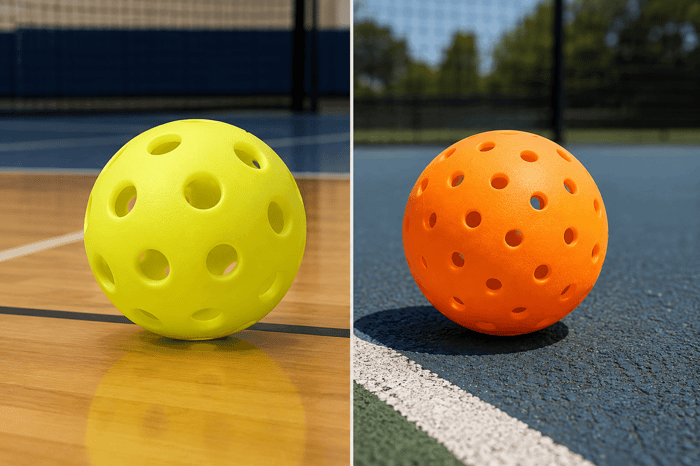
Outdoor Pickleball Balls
Outdoor balls are usually heavier, harder, and built with smaller holes. They are designed to cut through wind and survive rougher outdoor court surfaces like concrete or asphalt.
Outdoor balls tend to play faster, stay lower, and skid more off the court. Popular outdoor balls include tournament-style balls used for competitive outdoor play.
Indoor Pickleball Balls
Indoor balls are usually lighter, softer, and built with larger holes. They are made for smoother gym floors and indoor sport court surfaces.
Indoor balls usually bounce higher, float more, and feel easier to control. Rallies can feel longer because the ball does not skid as fast as it does on an outdoor court.
If you use an indoor ball outside, wind can destroy the flight path. If you use an outdoor ball inside, it may skid, feel too hard, and bounce unpredictably on smooth surfaces.
Grip Solutions for Indoor vs Outdoor Pickleball
Your grip is your only physical connection to the paddle. If it slips, you lose control. The grip that works perfectly outdoors may not be the right choice indoors.
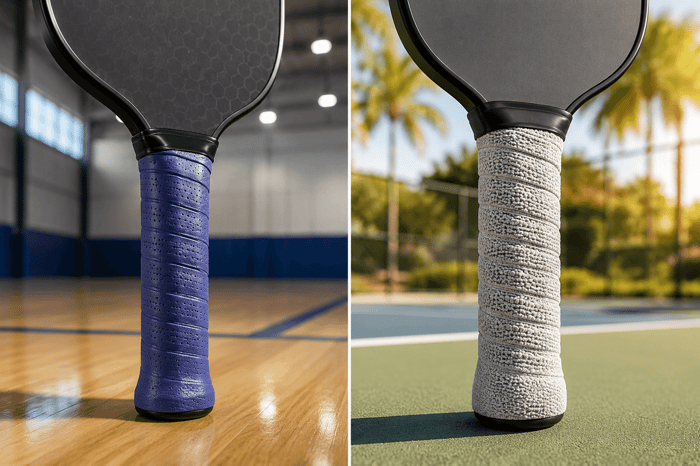
Outdoor Play: Hot and Humid Conditions
For outdoor play in heat and humidity, many players need a dry, absorbent overgrip. When your hands are sweating, a tacky grip can sometimes become slick because moisture sits on top of the sticky surface.
A dry overgrip absorbs sweat and can actually feel more secure as your hands get wetter. This is especially important for summer play, tournament days, and long outdoor sessions.
Indoor Play: Dry and Climate-Controlled Conditions
Indoor facilities are usually air-conditioned or heated, which means your hands may stay drier. In that environment, a tacky overgrip can feel better because it locks the paddle into your palm without needing moisture to activate the grip.
The smartest move is to keep both types of overgrips in your bag. Swap based on where you are playing that day. It takes two minutes and can make a major difference.
Paddle Face Texture Considerations
Spin generation can also change between indoor vs outdoor pickleball. Outdoor courts are rougher, and the court surface can scuff the ball during play. That scuffed ball may grab the paddle face better and make spin easier to generate.
Indoor gym floors are smoother, so the ball may stay cleaner and slicker. Because the ball is not getting roughed up by the court, your paddle face has to do more of the work.
If you are looking for the best paddles for indoor play, prioritize raw carbon fiber faces, textured composite surfaces, or paddles with strong grit. A paddle that spins well outdoors may feel flatter indoors if the indoor ball stays too smooth.
Indoor vs Outdoor Pickleball Shoes
Shoes are one of the most overlooked parts of indoor vs outdoor pickleball. Do not assume one pair works perfectly for every court.
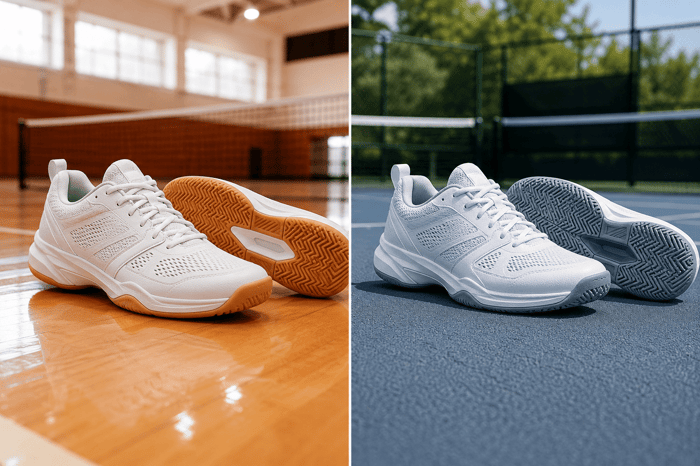
Outdoor Court Shoes
Outdoor pickleball shoes need durable rubber outsoles built for hard courts. Outdoor surfaces are abrasive, so you need tread and support that can handle quick lateral movement without wearing down immediately.
Outdoor shoes should provide strong lateral stability, reinforced toe protection, and enough durability for concrete, asphalt, or tennis-style court surfaces.
Indoor Court Shoes
Indoor pickleball shoes usually need softer gum-rubber outsoles, similar to volleyball, squash, badminton, or indoor court shoes. These provide better traction on smooth gym floors and are less likely to leave marks.
Wearing outdoor shoes on a polished indoor floor can make you slide. Wearing indoor shoes outdoors can destroy the softer rubber quickly.
General Tips for Transitioning Between Indoor and Outdoor Pickleball
The biggest tip when switching environments is to give yourself time to adjust. The timing is different. The bounce is different. The speed is different. You are not suddenly a worse player. Your muscle memory just needs time to recalibrate.
When Moving Indoors
Expect the ball to sit up higher and float longer. Be patient on attacks. Wait for the ball to drop into your strike zone instead of reaching too early. Slow down your swing speed and focus more on placement.
When Moving Outdoors
Expect the ball to stay lower, skid faster, and react more to wind. Get your paddle down early, prepare for shorter rallies, and learn to use the wind instead of fighting it.
Always warm up for at least 10 minutes when switching settings. Your hands, feet, eyes, and timing need a few rallies to settle in.
Related Spinwave Links
Need the right gear for indoor vs outdoor pickleball? These Spinwave links can help:
- Shop pickleball paddles
- Shop indoor and outdoor pickleball balls
- Shop pickleball shoes
- Shop pickleball grips and overgrips
- Shop all-court pickleball paddles
- Get a free paddle recommendation
- Read The Overgrip Bible
Indoor vs Outdoor Pickleball: The Bottom Line
Indoor vs outdoor pickleball is not just a court-location change. It changes your ball, paddle feel, grip needs, shoe traction, spin production, and timing.
If you play in both settings, do not rely on one setup for everything. Keep the right balls in your bag, use the right shoes for the surface, change your overgrip based on sweat and humidity, and understand how temperature affects your paddle.
The better prepared you are, the easier the transition feels. The goal is simple: walk onto any court, in any condition, and know your gear is helping you instead of holding you back.
FAQs
What is the main difference between indoor and outdoor pickleball?
Indoor pickleball usually plays smoother, slower, and more controlled because there is no wind and the surface is often smoother. Outdoor pickleball usually plays faster, lower, and more unpredictably because of wind, sun, heat, and rougher court surfaces.
Are indoor and outdoor pickleball balls different?
Yes. Outdoor pickleball balls are usually harder, heavier, and made with smaller holes to handle wind and rougher court surfaces. Indoor pickleball balls are usually lighter, softer, and made with larger holes for gym floors and indoor sport courts.
Can I use outdoor pickleball balls indoors?
You can, but it is not ideal. Outdoor balls can feel too hard, skid unpredictably, and bounce differently on smooth indoor floors. Indoor balls are better for gym floors and indoor sport court surfaces.
Do I need different shoes for indoor and outdoor pickleball?
Ideally, yes. Outdoor pickleball shoes are built with durable outsoles for abrasive hard courts. Indoor pickleball shoes usually use softer gum rubber for traction on smooth gym floors. Using the wrong shoes can cause slipping or wear the outsole down faster.
Does my paddle feel different indoors and outdoors?
Yes. Temperature and court environment can change how your paddle feels. Heat can make the paddle and ball feel softer and more powerful, while cold or climate-controlled indoor conditions can make the paddle feel firmer and less plush.
What grip should I use for indoor vs outdoor pickleball?
For outdoor heat and humidity, a dry absorbent overgrip is usually better because it helps manage sweat. Indoors, where your hands often stay drier, a tacky overgrip may feel more secure and comfortable.
Is indoor pickleball easier than outdoor pickleball?
Indoor pickleball can feel easier because there is no wind, sun, or weather to deal with. But the smoother surface, different ball bounce, and shoe traction can still make indoor play feel very different from outdoor play.
What gear should I keep in my bag if I play both indoors and outdoors?
Keep indoor balls, outdoor balls, tacky overgrips, dry absorbent overgrips, a towel, and the right court shoes if you play both settings often. Having the right gear makes the transition much easier.
Do I need different shoes for indoor vs outdoor pickleball?
Yes. Outdoor pickleball shoes need durable rubber outsoles for abrasive concrete and asphalt. Indoor shoes use softer gum-rubber outsoles for traction on smooth gym floors. Wearing outdoor shoes indoors makes you slide; wearing indoor shoes outdoors burns through the soft rubber in weeks.
Should I use a different paddle indoors vs outdoors?
You can use the same paddle, but it will feel different. Heat outdoors softens the core and gives more dwell time and power. Indoor or cold conditions make the paddle feel firmer and quicker off the face. Serious players sometimes switch to a 16mm paddle indoors for more control, and a thinner or more explosive paddle outdoors.
What grip should I use for indoor vs outdoor pickleball?
Use a tacky overgrip indoors where your hands stay dry — the sticky surface locks the paddle into your palm. Use a dry absorbent overgrip outdoors where you sweat — it pulls moisture away and stays secure. The simplest move: keep both in your bag and swap based on the day.
Does spin work differently indoors vs outdoors?
Yes. Outdoor courts scuff the ball, which makes it grab the paddle face better and easier to spin. Indoor floors keep the ball smoother and slicker, so your paddle face does more of the work. If you play mostly indoors, prioritize paddles with strong grit — raw carbon fiber faces or textured composite surfaces.
How long does it take to adjust when switching between indoor and outdoor pickleball?
Give yourself at least 10 minutes of warm-up rallies when switching environments. Your timing, bounce reads, and footwork need time to recalibrate. Moving indoors, expect higher bounces and slower play — wait longer before attacking. Moving outdoors, expect lower skids and wind — prepare your paddle earlier and use the wind instead of fighting it.