
Table of Contents
- Why Pop, Not Power, Decides Your Game
- The Top 5 Beginner Pickleball Paddles at a Glance
- A Note on Shape
- Honorable Mention: Spartus Spitfire Elongated
- 5. Six Zero Coral Pro ("CoPro")
- 4. Joola Pro V (16mm Variants)
- 3. RPM Q2 (16mm Variants) — The Hot Take
- 2. 11SIX24 Jelly Bean 2
- 1. Honolulu CR Series (Crystal Blue Endurance)
- Final Thoughts on Beginner Pickleball Paddles
- FAQs
Why Pop, Not Power, Decides Your Game
For a while now my advice on beginner pickleball paddles was simple: stay away from power paddles. I've changed my mind. After testing deeper into the high-firepower end of the market and watching lower-rated players adjust just fine to paddles like the Boomstik and the Aireo Cyclone, I don't believe power is the trait that makes or breaks a beginner's game anymore. Pop is.
Pop — the response you get off a short swing — is the real decider of whether a new player thrives with a paddle or fights it. A short backswing with a high-pop paddle can still send a dink or a reset sailing, which is exactly the kind of thing that gets beginners into trouble at the kitchen. Power on full swings is far more forgivable, especially for players who struggle to generate their own pace.
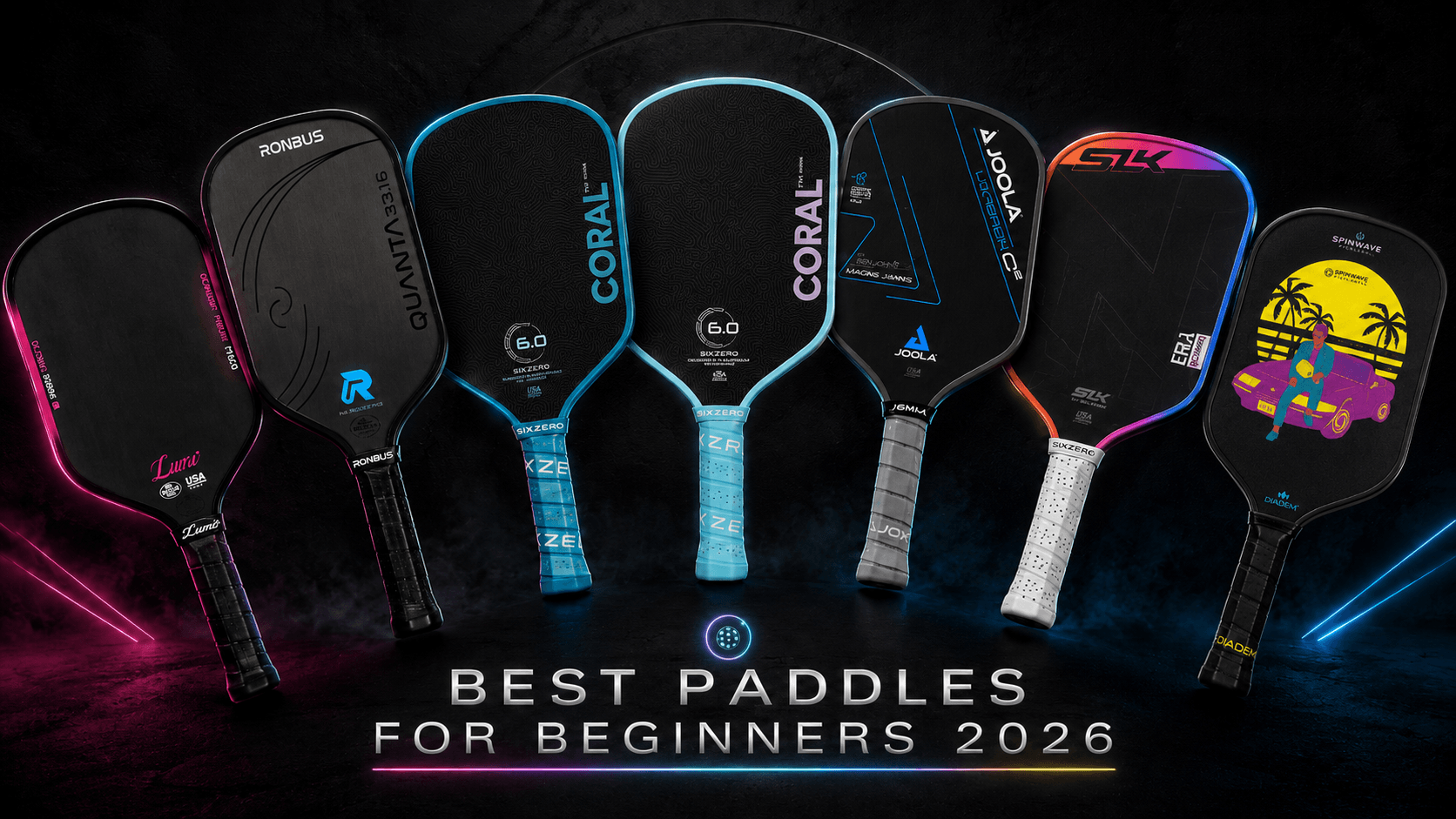
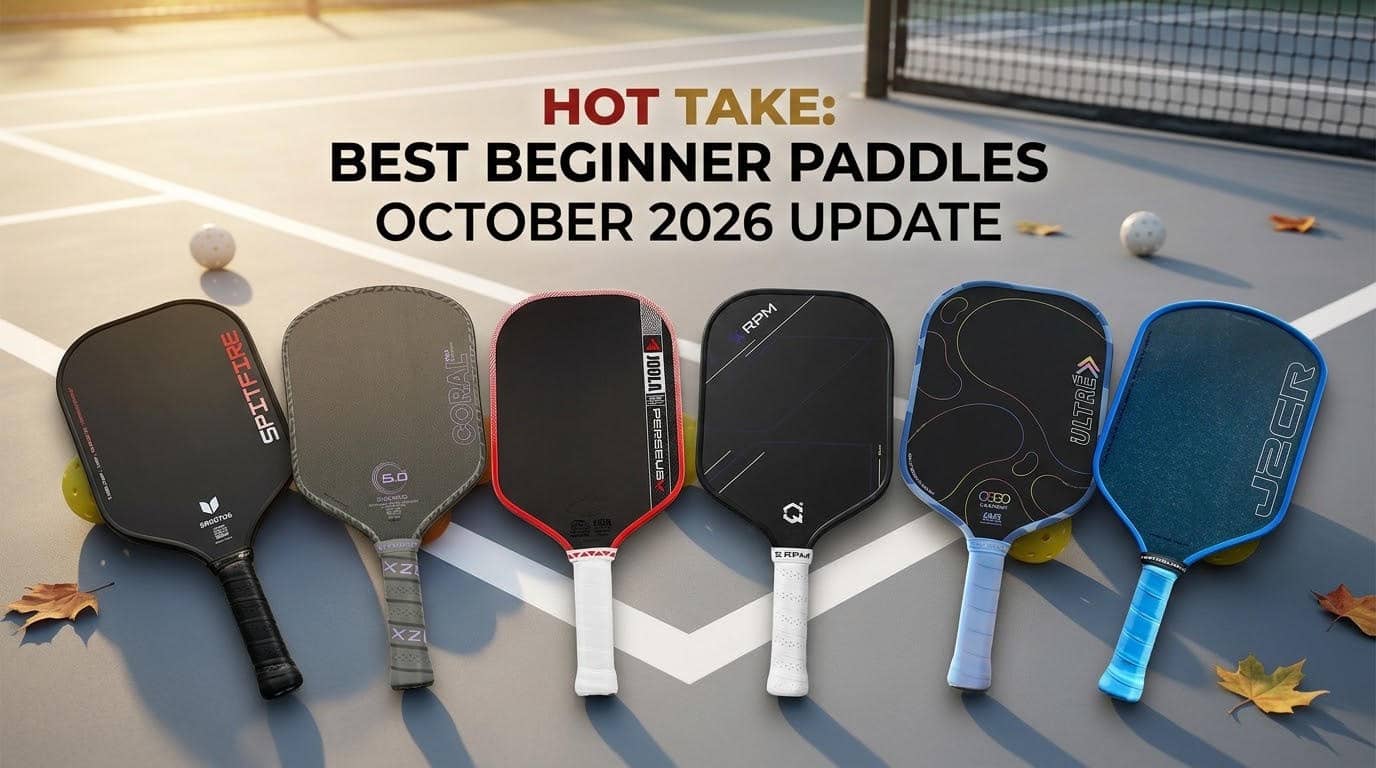
That shift changed this list. Here are my top five beginner pickleball paddles for October 2026, counted down, with the reasoning behind every pick — including one that might surprise you.

The Top 5 Beginner Pickleball Paddles at a Glance
- Honolulu CR Series (Crystal Blue Endurance) — my No. 1 pick: approachable power, an oversized sweet spot, and proven tier-1 spin.
- 11SIX24 Jelly Bean 2 — by far the easiest paddle to control on this list.
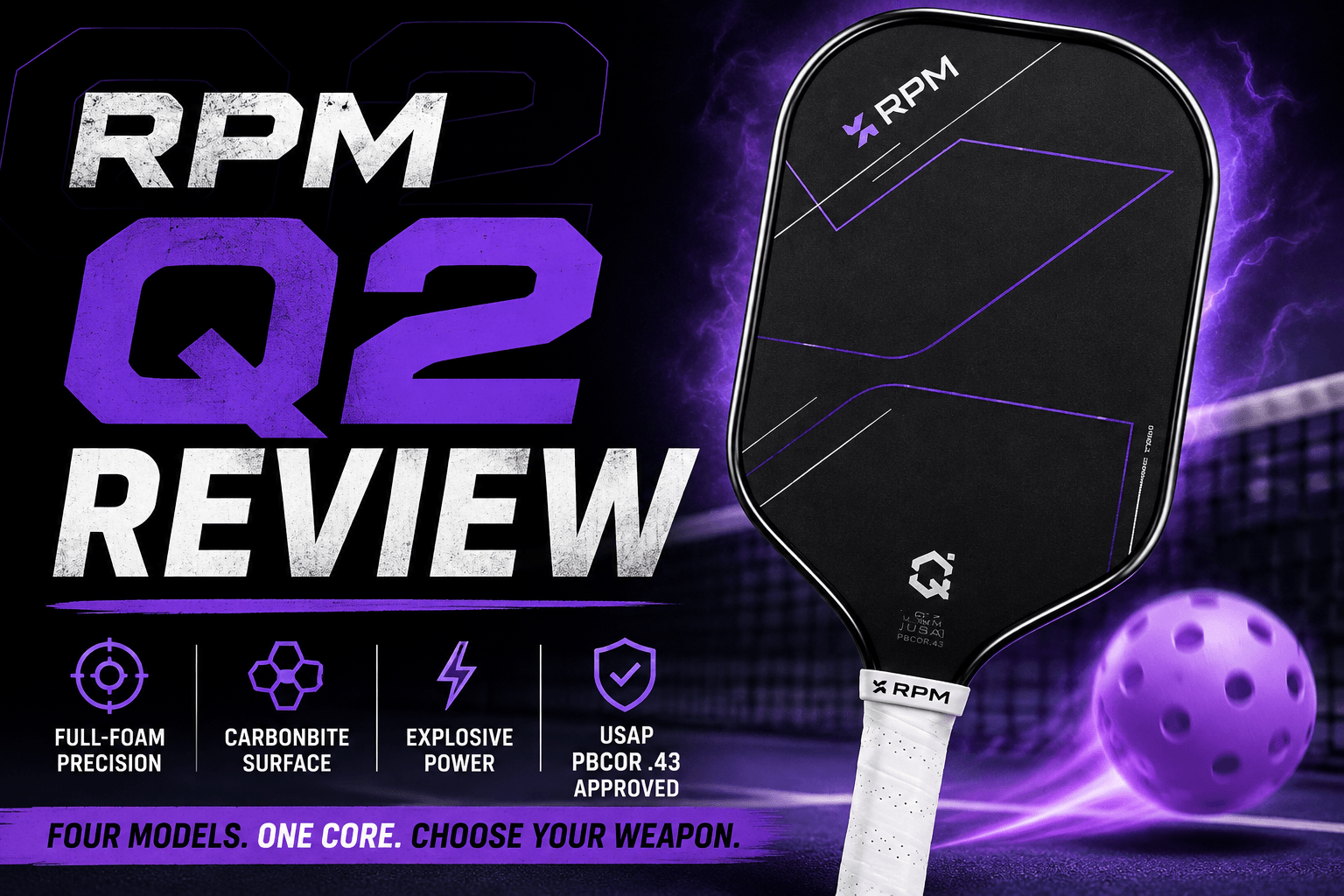
- RPM Q2 (16mm variants) — the hot take: great power for pace-starved players and one of the biggest sweet spots on the market.
- Joola Pro V (16mm variants) — honeycomb feedback that full-foam paddles can't replicate, plus strong shape options.
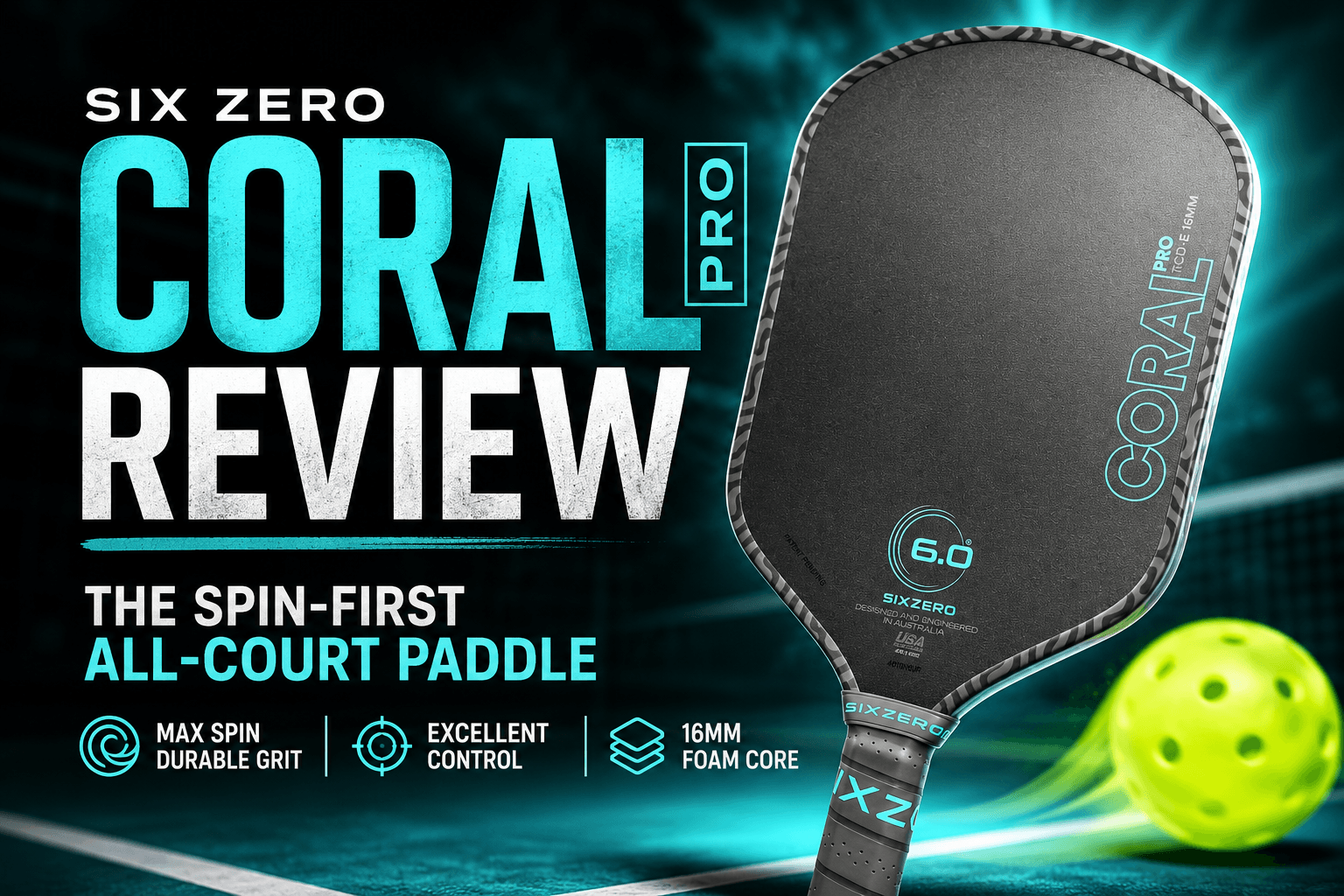
- Six Zero Coral Pro ("CoPro") — an elite all-court paddle with proven tier-1 spin.
Honorable mention (budget): the Spartus Spitfire Elongated — $110 before code, with spin that's elite out of the box.
A Note on Shape
If you already know your shape, stick with it — play profiles stay fairly consistent across the shape options within each of the beginner pickleball paddles below. If you're a beginner who doesn't know your shape yet, I steer almost everyone toward a widebody. The forgiving nature and lower swing weights make it the easiest entry point, regardless of what sport background you're coming from.
Honorable Mention: Spartus Spitfire Elongated
The Spitfire Elongated — with a widebody version coming soon to Spinwave — could easily sit at number 3 on this list of beginner pickleball paddles for players who struggle to generate their own pace.
At $110 before code, this is a great option for beginners on a budget who need help generating their own pace. Add a decent sweet spot, spin that's elite out of the box and longer-lasting than most (though not proven tier-1 yet), and pop levels at the lower end of the power category that only ask for a minor adjustment in your soft game, and the Spitfire becomes an easy recommendation.
The reason it doesn't crack the top five: limited shape options right now, and in my opinion the Q2 simply outperforms it for players who struggle to generate pace. But if budget is the deciding factor, don't sleep on this one. Full breakdown in my Spartus Spitfire Elongated review.
5. Six Zero Coral Pro ("CoPro")
Don't let the five spot fool you — the CoPro is an elite all-court paddle. It delivers proven tier-1 spin, middle-of-the-road pop to keep your soft shots in check under pressure, and accessible power on full strokes when it's time to put a ball away.
The reason it sits at five and not higher comes down to sweet spot. It isn't a bad sweet spot by any stretch — it just isn't as good as the rest of the beginner pickleball paddles on this list. That, combined with a more muted feedback profile, can make it a little trickier for a beginner to find their footing with. Still a genuinely great choice, which is exactly why it's here.
4. Joola Pro V (16mm Variants)
The Pro V 16mm lineup has a very similar play profile to the CoPro — good power on full strokes, dampened pop on short ones. What edges it ahead of the CoPro on this list comes down to two things: the honeycomb core and the shape options.
This one could have gone either way. The CoPro actually beats the Pro V line on spin. But the more time I spend going back and testing Gen-3 paddles, the more I understand why so many players stay married to that feel — honeycomb delivers feedback on your shots that full-foam paddles like the CoPro simply can't replicate. The shape lineup helps too, including the flat-top hybrid everyone's been talking about this year. Between the feedback and the shape options, the Pro V 16mm variants take the four spot.
3. RPM Q2 (16mm Variants) — The Hot Take
I used to believe no beginner should touch a power paddle. Testing deeper into that category — and watching lower-level players adjust just fine to paddles like the Boomstik and the Aireo Cyclone — changed my mind.
If you're a newer player who struggles to generate your own pace, the Q2 16mm variants can hand you that power without the elite-tier pop that gets players into trouble. To be clear: the 16mm Q2 has noticeably lower pop than the 14mm variants, which I'd call elite-tier — and nowhere close to all-court. Stay away from the 14s as a beginner, full stop.
The 16mm variants earn this spot for three reasons: great power for players who can't generate their own pace, top-tier spin to keep full swings in the court, and one of the biggest sweet spots on the market to make the pop adjustment manageable and predictable. I'd also argue the Q2 has one of the most honeycomb-esque feedback profiles of any full-foam lineup out there. If you're genuinely a pace-starved player willing to adjust to the pop, the Q2 16mm is a paddle I'd recommend to a beginner without hesitation.
2. 11SIX24 Jelly Bean 2
11SIX24 Hurache-X Jelly Bean 2 16mm Pickleball Paddle
$169.99
Heads up: UPA-A approved, NOT USAP approved. If your league or tournament runs USAP equipment rules, this one isn't legal there. Need USAP? Look at the original Vapor Jelly Bean. 11SIX24 Hurache-X Jelly Bean 2 16mm The Jelly Bean 2… read more

In complete contrast to the Q2, the Jelly Bean 2 is a low all-court paddle — high all-court power on full swings, with pop levels at the low end of all-court bordering on the high end of the basically-extinct control category.
Before I rethought how beginners can handle firepower, this might have been my number one recommendation among beginner pickleball paddles. It's by far the easiest paddle to control on this list. My honest conclusion after testing: this is what the Coral Pro was supposed to be — elite spin and easy control, with just enough juice to hang in today's market. Call it the anti-banger paddle. At all levels, it takes pace off a hard shot like nothing else out there, which is a massive advantage for players who struggle dealing with pace.
Two minor knocks, which may not matter to everyone: it trends a touch heavy on swing and static weight, and the sweet spot is comparable to the CoPro — good, but not the oversized sweet spot you'll find elsewhere on this list. If you want an instant upgrade to your soft game under pressure, the Jelly Bean 2 is an easy recommendation.
1. Honolulu CR Series (Crystal Blue Endurance)
Honolulu Pickleball Sword & Shield J2CR Crystal Blue Endurance Surface™
$195.00
HONOLULU Pickleball Company J2CR Pickleball Paddle The J2CR is Honolulu's next-generation hybrid power paddle, built for players who want explosive pop, heavy spin, quick hand speed, and a large, confidence-inspiring sweet spot. Featuring Core Reactor™ with Dynamic PowerFlex Technology™, Control… read more

My revised thinking on beginner pickleball paddles — opening up to more firepower than I used to recommend — lands squarely on the CR series with Crystal Blue Endurance grit as my number one beginner pick.
The firepower here is approachable: full-swing power at the low end of the power category, arguably the high end of all-court, with pop in the middle-to-high end of all-court. That makes it much easier to control than the Q2, while still giving players enough juice to be aggressive and finish points. Add in an oversized sweet spot, proven tier-1 spin, surprisingly good feedback for a foam paddle, and a light stock swing weight that leaves room to customize, and you've got an easy pick for beginners.
These paddles are also built to last — the full-foam core and tier-1 grit mean the firepower sticks around as players develop into intermediate and advanced territory, so you're not buying something you'll outgrow in six months.
Final Thoughts on Beginner Pickleball Paddles
My advice on beginner pickleball paddles used to be simple: avoid power. Now it's more nuanced — it's pop, not power, that actually gets new players into trouble. Power is forgivable. Pop isn't, unless it comes with a sweet spot and response profile that makes it predictable.
Know your shape? Go with it — the play profiles above hold fairly steady across shape options. Don't know yet? Start with a widebody. It's the most forgiving entry point into the sport, full stop.
Shop all five at Spinwave Pickleball (or browse our full lineup of beginner pickleball paddles) and use code JDPB at checkout to save 10%.
Questions? Find me at @threefiveforever on Instagram. See you on the courts.
FAQs
What's the best pickleball paddle for a true beginner in 2026?
The Honolulu CR series with Crystal Blue Endurance grit tops this list — approachable power, an oversized sweet spot, and tier-1 spin that makes it easy to control while still giving you enough firepower to be aggressive.
Should beginners avoid power paddles?
Not anymore. The real trait to watch is pop, not power. High pop on short swings is what causes pop-ups on dinks, resets, and drops — power on full swings is far easier for a beginner to adjust to.
What shape paddle should a beginner buy?
If you already know your shape, stick with it. If you don't, start with a widebody — it's the most forgiving shape with lower swing weights, regardless of your sports background.
Is the RPM Q2 a good beginner paddle?
The 16mm variants, yes — especially for players who struggle to generate their own pace. The massive sweet spot makes the pop more predictable. Avoid the 14mm variants as a beginner; that pop is elite-tier and not forgiving.
What's the easiest paddle to control for a new player?
The 11SIX24 Jelly Bean 2. It's the lowest-pop, most controllable paddle on this list — a strong pick for anyone who struggles with handling pace from opponents.