
Table of Contents
- Wide Size vs. Wide Toe Box: Not the Same Thing
- What Pickleball Movement Actually Demands From a Shoe
- Best Pickleball Shoes for Wide Feet: Our Current Picks
- Best true wide width: Skechers Viper Court Pro 2.0 Wide
- Best wide toe box without a wide size: DAPS DESI Low and Mid
- Best cushioning for foot pain and long sessions: Babolat SFX 4
- Best low-to-ground option: Mizuno Wave Exceed Court AC
- Best for outdoor courts: JOOLA FUNKSH1n_PB R4LLy
- Also worth a look: Babolat Jet Mach 4
- Fit Comparison at a Glance
- Pickleball Shoes and Plantar Fasciitis: What Footwear Can and Can't Do
- The Five-Minute Fit Test
- When an Insole Helps — and When It Makes Things Worse
- When to Replace Your Court Shoes
- Get Fitted in Person, or Ask Us First
- FAQs
If your forefoot spills over the edge of the footbed, your pinky toe goes numb by game three, or your first steps out of bed hurt more than they used to, the shoe is usually part of the problem. The best pickleball shoes for wide feet fall into two very different categories, and most buying guides blur them together: shoes built on a genuinely wider last (a true D or 2E width), and shoes built on a standard last with a roomier toe box. Those solve different problems. Pick the wrong one and you either get a sloppy shoe that lets your foot slide on lateral cuts, or a snug shoe that pinches exactly where you need room.
This guide sorts that out, ranks the pickleball shoes for wide feet we actually stock and fit in person, and gives you a five-minute fit test you can run at the shop or in your living room.
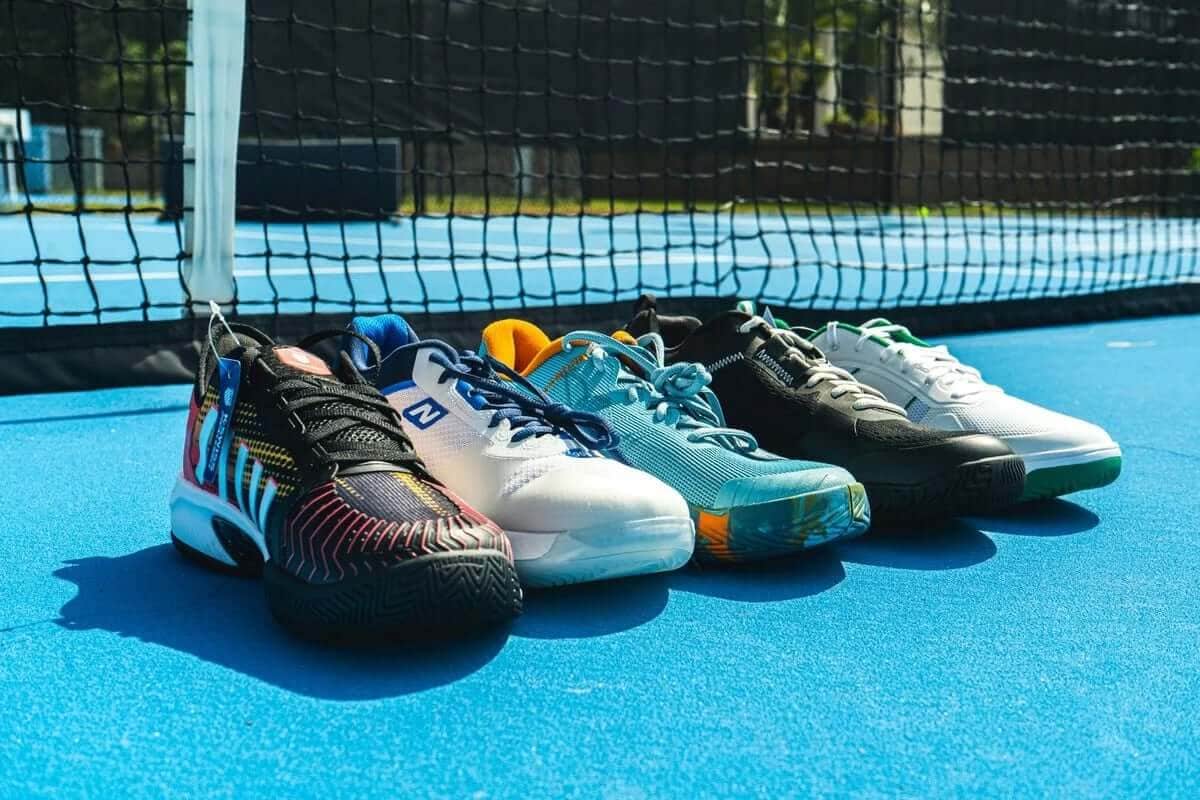
Short answer — what are the best pickleball shoes for wide feet? If you need a true wide width, the Skechers Viper Court Pro 2.0 Wide is the only genuinely wide-lasted court shoe we stock, and its Arch Fit insole comes out for orthotics. If your midfoot is normal but your forefoot needs room, the DAPS DESI Low or Mid pairs a medium midfoot with a noticeably roomier toe box. For maximum underfoot cushioning with a generous forefoot, look at the Babolat SFX 4. For a low-to-the-ground relaxed forefoot, the Mizuno Wave Exceed Court AC. Full breakdown of every option below, plus who each one is wrong for.
Wide Size vs. Wide Toe Box: Not the Same Thing
This is the single most useful distinction when shopping for pickleball shoes for wide feet, and it's the one almost nobody explains.
A width size — D or 2E in men's, D in women's — means the shoe is built on a different last. The whole internal shape changes: the ball of the foot is wider, but so is the midfoot, and often the heel. Width is measured across the ball of the foot, and a true wide model is a separate mold, not the same shoe with more material.
A wide toe box is a shape change at the front only. The last stays medium through the arch and heel, and the forefoot is drawn with more volume and a squarer, less tapered profile. Your toes get room to splay; your midfoot still gets held.
Why it matters: most court shoes are produced in exactly one width. Brands accommodate wider feet through toe-box geometry rather than by tooling separate wide lasts, because the volume isn't there to justify it. So most pickleball shoes for wide feet are, technically, standard-width shoes with generous forefoot shaping. If you've been searching for wide pickleball sneakers and coming up empty, that's why — the options exist, they're just not labeled "wide."
Which one do you actually need?
Before you shop pickleball shoes for wide feet, figure out which of these three describes you. It changes the answer completely.
- You need a true wide last if: you get lace pressure across the top of your foot, your midfoot feels compressed, or you already wear 2E/4E in your everyday shoes. Width sizing solves a volume problem, not just a forefoot problem.
- You need a wide toe box if: your midfoot and heel feel fine but your fifth toe rubs the side wall, you have a bunion, or your toes go numb after 30 minutes. This is the more common case by a wide margin.
- You may need neither if: your foot is sliding forward on hard stops and jamming into the front. That's a heel-hold problem masquerading as a width problem, and a wider shoe will make it worse.
What Pickleball Movement Actually Demands From a Shoe
Pickleball is not running. The loading pattern is short, repeated, and almost entirely lateral: split step, push off, hard stop, reset, drag the toe at the kitchen line, repeat. That creates a real tension when you're evaluating pickleball shoes for wide feet, because room and control pull against each other.
Lateral containment. When you cut hard to your backhand side, your forefoot loads the outside edge of the footbed. If there's too much room, your foot slides across the insole instead of moving with the shoe. That's what produces blisters on the outside of the big toe, bruised toenails, and the feeling that you're "rolling off" the shoe. Extra width is not free.
Torsional stiffness. Grab a shoe by the heel and toe and twist. A court shoe should resist. Running shoes are built to flex and roll forward; that flexibility is a liability when you're planting sideways. Shanks — carbon fiber in the DAPS DESI and JOOLA R4LLy — exist specifically to stop the midfoot from twisting under load.
Heel hold. A locked heel keeps your foot back in the shoe where the width is designed to be. Lose the heel and your forefoot migrates into the taper. Most "these run narrow" complaints are actually heel-slip complaints.
Outsole durability. Outdoor concrete eats herringbone. If you play outdoors more than twice a week, tread compound matters more than any comfort spec, because a shoe that's lost its grip changes how you plant — and that's where foot and knee problems tend to start.
Keep those four demands in mind as you read the picks. The best pickleball shoes for wide feet are the ones that give you forefoot room without giving up any of them.
Best Pickleball Shoes for Wide Feet: Our Current Picks
Best true wide width: Skechers Viper Court Pro 2.0 Wide
This is the only genuinely wide-lasted model among the pickleball shoes for wide feet in our footwear lineup, and we currently carry it in women's. It's not the standard Viper with a different sticker — it's built on a wide last, so the forefoot volume and toe-box shape both change.
The features that matter here beyond width: the Arch Fit insole is removable, which is the single most important spec if you use custom orthotics or an aftermarket support. The ULTRA GO foam midsole is on the softer, more cushioned end of the court-shoe spectrum, and the Goodyear Gold rubber outsole holds up well outdoors.
Tradeoffs, honestly: it's a heavier shoe — comfort-first, not performance-first. And a wide last only helps if you're actually wide. If you're a standard width who just wants toe room, this will feel loose through the midfoot and you'll lose lateral precision. Buy it for volume, not for forefoot shape alone.
Skechers Viper Court Pro 2.0 Shoe - Men's - White/Black
$99.00
$109.00
Skechers Viper Court Pro 2.0 Pickleball Shoe FEATURES Stability Goodyear rubber outsole brings tacky traction for stability while changing direction. Upper Synthetic mesh upper offers breathability and moisture control when you break a sweat. Midsole Ultra Flight foam midsole balances… read more

Best wide toe box without a wide size: DAPS DESI Low and Mid
The DESI is the shoe we point most wide-footed players toward, because it threads the needle described above: a medium-width midfoot with a distinctly roomier toe box. DAPS doesn't offer a dedicated wide size, and we won't pretend otherwise — but for most people searching for pickleball shoes for wide feet, the forefoot geometry is the thing that actually solves the problem, and the midfoot still holds you through a cut.
It's also the deepest size run we carry. Men's goes to a 16, which matters, because a lot of players with wide feet have been sizing up two sizes in other brands just to buy width — and ruining the length fit in the process.
Underfoot: an ETPU midsole (holds its rebound longer than standard EVA), a carbon fiber shank for torsional stability, an AchillesLock collar that genuinely locks the heel, and a removable Blumaka insole. Two heights — the Low is faster and better if you play a lot of singles, the Mid adds collar support for players who pivot hard or want more ankle coverage.
Sizing note: true to size for most players. If you want more forefoot room, go up a half size — that's DAPS' own guidance and it's consistent with what we see in the shop.
Tradeoff: it's a grippier, more planted shoe than most. If you like to release and slide on bigger movements, it may feel sticky.
DAPS DESI Low – Black – Women’s Pickleball Shoes
$159.99
Quiet confidence. Bold performance. The DAPS DESI Low in Black is designed exclusively for women—not adapted from a men’s shoe. Built for precision, comfort, and control, its low-profile design supports quick footwork while maintaining superior balance and stability. The ETPU… read more

DAPS DESI Low – Black – Men’s Pickleball Shoes
$159.99
All business, all performance. The DAPS DESI Low in Black delivers a balance of speed, stability, and control for players who demand precision in every rally. Designed specifically for pickleball—not retooled from tennis—the DESI Low’s low-profile design enhances agility without… read more

Best cushioning for foot pain and long sessions: Babolat SFX 4
The SFX line is Babolat's comfort platform, and the SFX 4 is the one to look at if underfoot cushioning is what you're chasing. It runs noticeably roomier in the forefoot than Babolat calls "regular width," with a thick Extra Cush midsole and an OrthoLite insole. Among pickleball shoes for wide feet, this is the pick for players with bunions or feet that swell over a long session.
Two things to know. The arch profile is low — which suits low arches naturally, and suits everyone else fine if you're planning to drop in your own support. And it runs slightly short, so don't reflexively size down the way Babolat's chart sometimes suggests; try the length before committing.
It's a heavier shoe. That's the price of the cushioning stack.
Babolat SFX 4 All Court Womens Tennis Shoe - White/Grey
$79.00
$99.00
Designed for performance-focused players who prioritize comfort and stability, the Babolat SFX 4 Women’s Tennis Shoes deliver on every level. With a wider fit and rocker geometry, these shoes cushion every step, featuring EVA foam under the heel to absorb… read more

Best low-to-ground option: Mizuno Wave Exceed Court AC
Worth being precise here, because Mizuno's lineup causes more fit confusion than any other brand when players shop pickleball shoes for wide feet. The Wave Exceed Tour models run genuinely narrow — testers with wide feet consistently can't wear them. The Wave Exceed Court AC is a different animal: Mizuno built it with a deliberately wider forefoot for a relaxed, accommodating fit, and in some markets it's spec'd as an E width.
You get ENERZY NXT foam, a D-Flex Groove for lateral stability, and an X10 rubber outsole that wears well. It sits lower to the ground than the Skechers or the SFX 4, which is what you want if you dislike feeling perched and prefer court feel over plush.
Tradeoff: less cushioning than the comfort-first options. If your foot pain is impact-related, this is the wrong direction.
Mizuno Wave Exceed Tour 7 AC Men's - White/China Blue
$119.00
$139.95
Built for speed-first players who still want a stable, supportive platform. The Wave Exceed Tour 7 AC feels light, quick, and explosive—so you can attack every point with confidence. Quick Take: Fast cuts, smooth slides, and secure support—powered by MIZUNO ENERZY… read more

Best for outdoor courts: JOOLA FUNKSH1n_PB R4LLy
This one doesn't belong on a list of pickleball shoes for wide feet and we're including it deliberately, because a lot of players who think they need width actually need lockdown. The R4LLy is a medium width, true to size shoe built around containment: a carbon fiber shank, a Dynamic Fit Sleeve through the midfoot, Qubit Foam cushioning, and a Cordura upper with a reinforced toe cap that survives kitchen-line toe drag better than mesh.
If your complaint is "my foot slides and my toes jam into the front," this solves it. If your complaint is "the sides of my forefoot hurt," it won't.
JOOLA FUNKSH1n_PB: R4LLy Women's Pickleball Shoe - White/Bright Red
$180.00
Matches are longer. Rallies are faster. The game has evolved, but pickleball shoes haven't—until now. Enter JOOLA's revolutionary FUNKSH1n_PB: R4LLy, the first performance shoe designed top-down for pickleball players by pickleball innovators.Built on an incredibly light yet stable platform, R4LLy… read more

Also worth a look: Babolat Jet Mach 4
The Jet line has historically been Babolat's narrow, speed-focused platform. The Mach 4 moved meaningfully toward more cushioning, more structure, and more forefoot room than the Mach 3 — enough that players who found the previous version too tight often get along with this one. Still a performance last, though. Consider it medium, not wide.
Babolat Jet Mach 4 All Court Men's Shoe - Cream/Dark Blue
$135.00
Babolat built the Jet Mach 4 for one job: getting to the ball first. It's their lightest, fastest all-court shoe — the ride for players who live on the baseline and chase down everything. If your game is speed, quick… read more

Fit Comparison at a Glance
Use this to narrow the pickleball shoes for wide feet above down to two candidates, then run the fit test below on both.
| Shoe | Fit / Width | Best For | Removable Insole |
|---|---|---|---|
| Skechers Viper Court Pro 2.0 Wide | True wide last | High-volume feet, orthotic users | Yes (Arch Fit) |
| DAPS DESI Low / Mid | Medium midfoot, roomy toe box | Wide forefoot, normal midfoot; big sizes | Yes (Blumaka) |
| Babolat SFX 4 | Roomy for "regular"; runs short | Max cushioning, low arches, swelling | Yes (OrthoLite) |
| Mizuno Wave Exceed Court AC | Relaxed, wider forefoot | Low-to-ground feel with toe room | Yes |
| JOOLA R4LLy | Medium, true to size | Foot sliding, outdoor durability | Yes |
Pickleball Shoes and Plantar Fasciitis: What Footwear Can and Can't Do
Let's be clear about the limits. A shoe is not a treatment. Persistent heel pain, arch pain, or morning pain that lasts more than a couple of weeks deserves an evaluation from a podiatrist or sports medicine provider — not a shopping decision. Anyone selling you pickleball shoes for plantar fasciitis as a cure is overselling, and the same goes for anyone promising that pickleball shoes for wide feet will fix a heel that hurts every morning.
What footwear can reasonably do is reduce the load your foot absorbs during play. The features that tend to matter:
- A firm heel counter. Squeeze the back of the shoe. If it collapses easily, the heel isn't being controlled. That control is more relevant than plush foam for most people with heel pain.
- Torsional rigidity. A shoe that twists like a dishrag lets the arch collapse through the midfoot on every lateral push. Shanked shoes resist that.
- A removable insole. This is the one to insist on. If you've been prescribed orthotics or you get relief from an aftermarket support, the shoe has to accept it. Every model above has a removable footbed.
- Adequate, not extreme, cushioning. Very soft midsoles feel great for the first twenty minutes and then let the foot sink and pronate. Supportive beats squishy.
- A midsole that isn't dead. The most common contributor we see isn't the wrong shoe. It's the right shoe, 400 hours too late.
Two habits worth changing alongside the shoe: don't walk barefoot on hard floors between sessions, and don't play in worn-out shoes because the uppers still look fine. Uppers outlast midsoles by a wide margin.
The Five-Minute Fit Test
Run this on any pair before you commit. It's the same sequence we use when fitting pickleball shoes for wide feet in the shop, and it catches problems that a walk around the store misses.
- Try them on late in the day, in your play socks. Feet swell over a day and swell more during a session. A morning fit in thin dress socks is a fantasy fit.
- Pull the insole out and stand on it. This is the test almost nobody runs and it's the most revealing one. Your forefoot should sit on the footbed, not hang over the edges. If it overhangs, no amount of lacing will fix it — you need a wider last or a wider toe box.
- Check length: about a thumb's width of room. Roughly 3/8 to 1/2 inch between your longest toe and the end. Remember your longest toe isn't always your big toe.
- Split-step in place. Feet shoulder width, knees soft, weight forward. Now push off laterally, both directions. You're feeling for pressure at the fifth metatarsal — the bony knuckle at the outside of your forefoot. Pressure there is the classic wide-foot warning sign.
- Rise onto your toes. If your heel lifts out of the heel cup, you have a hold problem, and a wider shoe will make it worse. Try a runner's loop lacing through the top eyelet before you conclude the shoe is wrong.
- Twist the shoe. Heel in one hand, toe in the other. It should resist. Easy twisting means it will let your arch collapse under lateral load.
Any pair that passes all six is a candidate. If you're buying pickleball shoes for wide feet online, order from somewhere with real exchanges and try them on a clean indoor surface before you take them outside.
When an Insole Helps — and When It Makes Things Worse
Insoles change two things at once: support and volume. That second one is where people go wrong when shopping for pickleball shoes for wide feet.
A thick aftermarket insole raises your foot higher in the shoe, which effectively narrows it — you're now sitting on the part of the last where the walls start curving in. If a wide shoe suddenly feels tight after you swap insoles, that's why. Conversely, if a shoe is close but slightly roomy, a thicker supportive insole can take up volume and improve the fit rather than hurting it.
Practical guidance:
- Wide shoe + thick insole: often a mistake. Go low-profile.
- Slightly roomy shoe + supportive insole: often the fix.
- Custom orthotics: bring them with you and fit the shoe around them. Never buy first and hope.
- Stock insoles are not disposable. The Skechers Arch Fit and DAPS Blumaka footbeds are real components, not filler. Try the shoe as built before replacing anything.
We don't carry aftermarket insoles, so this is advice rather than a pitch. What we do carry that pairs well with any of the pickleball shoes for wide feet above: Comrad compression socks, which help with the swelling side of the problem over long sessions and change fit less than you'd think.
Comrad Allies Ankle Compression Socks (Black)
$20.00
The Comrad Allies are ankle compression socks built for movement and athletic performance. True graduated compression (15–25 mmHg) supports your arch and keeps blood moving, so your feet stay energized through long pickleball matches, runs, and workouts. True graduated compression… read more

When to Replace Your Court Shoes
Most players who put in four to six hours a week are looking at roughly six to twelve months, and that holds true across the pickleball shoes for wide feet listed here. Outdoor players on concrete are on the short end of that. Indoor-only players stretch it.
The signals that matter, in order of usefulness:
- Outsole tread smoothed at the pivot points — the ball of the foot and the medial forefoot go first. If the herringbone is polished flat there, you're done, regardless of how the rest looks.
- Midsole creasing. Deep horizontal wrinkles in the foam mean it's compressed and not coming back.
- New hot spots. A shoe that never blistered you and now does has changed shape.
- Fatigue arriving earlier. If you're sore after 90 minutes when you used to be fine at three hours, check the shoes before you blame yourself.
Rotating two pairs — especially if one is indoor and one is outdoor — meaningfully extends the life of both, because midsole foam recovers between sessions.
Get Fitted in Person, or Ask Us First
Width and toe-box shape are the two hardest things to buy online, which is exactly why pickleball shoes for wide feet are worth trying on. If you're anywhere near us, come do that:
- Long Beach Tennis Center Pro Shop — 899 Monroe Blvd. Five dedicated indoor demo courts, which means you can actually split-step and cut in the shoes instead of walking a carpeted aisle. This is the one to visit if fit is the issue.
- Great Neck — 138a Middle Neck Rd. Our main location and deepest in-stock inventory.
- Boca Raton, FL — retail with an on-site court.
Not local? Tell us your everyday shoe size, what width you wear in street shoes, and where the pain shows up — outside forefoot, top of the foot, heel, or arch. That's enough for us to narrow it to two models. Email info@spinwavepickleball.com and we'll answer honestly, including telling you when nothing we carry is the right answer.
Ready to browse the pickleball shoes for wide feet we stock right now? Start with the full pickleball shoe collection, or narrow by men's and women's. If you'd rather not spend $180 finding out what fits, our sneakers clearance section is a lower-risk place to test a brand's last before committing to a full-price pair.
FAQs
Should pickleball shoes have a wide toe box?
For most players, yes — a toe box that lets your toes splay improves balance during lateral pushes and prevents the toe jamming that causes bruised nails and blisters. But room in the forefoot has to be paired with a secure midfoot and heel. A shoe that's roomy everywhere lets your foot slide on hard cuts, which creates more problems than it solves.
Are tennis shoes good for plantar fasciitis?
Court shoes in general are usually a better choice than running shoes for pickleball, because they resist torsion and hold the heel rather than encouraging a forward roll. Whether a specific shoe helps depends on the heel counter, midsole condition, and whether you can fit your own support inside it. Persistent heel or arch pain should be evaluated by a podiatrist or sports medicine provider rather than managed by shoe shopping alone.
Should court shoes fit tightly?
Snug through the midfoot and heel, with room at the toes. You want about a thumb's width between your longest toe and the front, no heel lift when you rise onto your toes, and no pressure on the bony knuckle at the outside of your forefoot. Tight anywhere is wrong; loose in the midfoot is also wrong.
Can pickleball shoe insoles be replaced?
Yes on every model in this guide — Skechers Arch Fit, DAPS Blumaka, Babolat OrthoLite, Mizuno and JOOLA footbeds all come out. Just remember that swapping an insole changes internal volume as well as support, so a thick aftermarket insole can make a wide shoe feel narrow. If you wear custom orthotics, bring them to the fitting.
Which brands offer true wide sizes in pickleball shoes?
Very few. Skechers builds a genuinely wide-lasted version of the Viper Court Pro 2.0, which is the only true wide-width court shoe we currently stock. Most other brands, including DAPS, Mizuno and Babolat, accommodate wider feet through toe-box shape and forefoot volume rather than separate width sizing.
What's the difference between a wide size and a wide toe box?
A wide size is a different last — the shoe is wider through the ball of the foot and usually the midfoot too, solving a volume problem. A wide toe box only changes the shape at the front, leaving the midfoot standard. If your midfoot feels compressed or you get lace pressure across the top of your foot, you need width. If only your toes feel cramped, you need toe-box shape.
How often should I replace pickleball shoes?
Players putting in four to six hours a week typically get six to twelve months. Outdoor concrete play shortens that considerably. Check the outsole tread at the pivot points rather than judging by the uppers — uppers routinely outlast the parts that matter.
Do wide feet mean I should size up?
No, and this is a common and costly mistake. Sizing up to buy width ruins the length fit, which lets your foot slide forward on hard stops and jams your toes into the front. Buy your correct length, then solve width with the right last or toe-box shape.