
Table of Contents
- The October 2026 rule change you need to know about first
- Quick rankings: the best durable grit pickleball paddles right now
- What "durable grit" actually means
- The uncomfortable truth about grit and spin
- Surface transparency: which brands tell you what's on the face
- Spin retention by paddle: what we can and can't tell you yet
- How fast does raw carbon actually wear?
- Does cleaning restore spin?
- Are enhanced grit paddles tournament legal?
- When does grit loss justify replacing your paddle?
- How we'll rank the best durable grit pickleball paddles
- Where to start
- FAQs
Most pickleball paddle grit lasts somewhere between 40 and 150 hours of play before spin noticeably drops, and no manufacturer publishes a real number. That's the honest starting point for any conversation about the best durable grit pickleball paddles — the range is enormous, it depends heavily on how and where you play, and almost every "durable grit" claim you'll read traces back to marketing copy rather than testing.
This guide does three things instead of pretending otherwise. It is a buying guide to durable grit pickleball paddles that leads with what nobody knows. It explains what actually wears and why. It grades the major brands on whether they'll tell you what's on the face of the paddle you're buying. And it flags a rule change nine weeks out that will reshape this entire category.
Start with the rule change, because it affects which durable grit pickleball paddles you should buy this month.
The October 2026 rule change you need to know about first
On October 1, 2026, USA Pickleball implements a new Spin Rate Test. Rather than measuring surface grit indirectly through roughness readings, the new procedure measures actual RPM using a dual-camera high-speed imaging system called PaddleVision, built by Image Systems in Sweden. Paddles certified after that date must come in under 2,100 RPM.
Three consequences worth understanding before you buy any of the durable grit pickleball paddles in this guide:
- Paddles certified before October 1 stay legal under the standard they were certified against. Certification is tied to the rules in effect at the time. A paddle approved this summer doesn't retroactively fail because the test changed.
- There's a window closing. Paddles that pass the current surface roughness and coefficient of friction tests can still be added to the approval list right up until October 1. After that, new certifications go through the RPM test.
- Expect the market to shift. When the measurement method changes, manufacturers redesign toward the new metric. The surfaces on 2027 paddles will likely look different from the surfaces on the durable grit pickleball paddles selling today.
Verify before you enter anything. We're reporting USA Pickleball's announcement to manufacturers. Dates and thresholds on equipment standards move. Check the official USA Pickleball approved paddle list for your exact model before any sanctioned event, not once at purchase.
Quick rankings: the best durable grit pickleball paddles right now
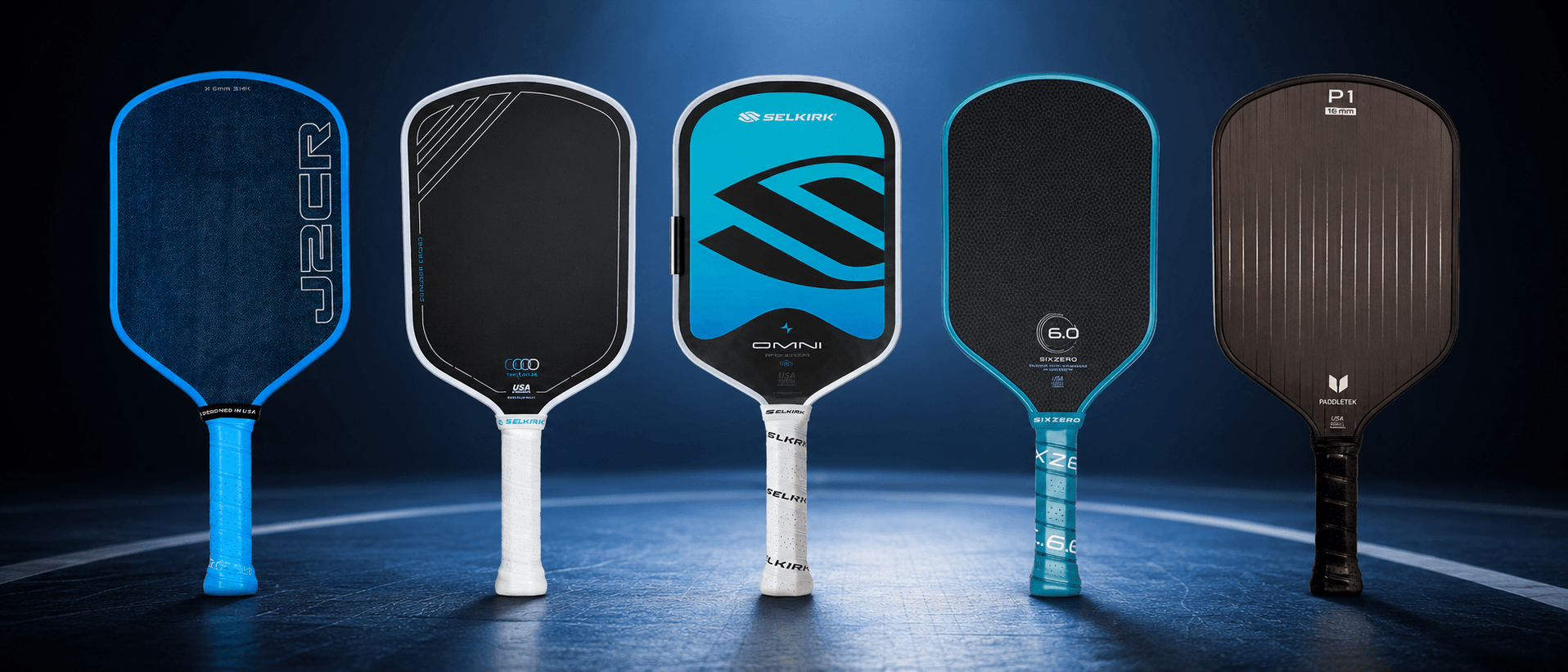
Read the column headers carefully. This table ranks by surface construction and manufacturer disclosure — not by measured wear, because measured wear data doesn't exist yet for these models. Anyone publishing a spin-retention leaderboard for durable grit pickleball paddles today is either testing in a lab they haven't described or repeating a press release.
Franklin C45° Anna Leigh Waters Signature Aurelius Pickleball Paddle
$229.99
Franklin C45 Anna Leigh Waters Aurelius ALW Pickleball Paddle Built for players who want pro-level speed, pop, and a fast traditional shape, the Franklin C45 Anna Leigh Waters Aurelius ALW is made to feel quick in hand battles while still… read more

| Paddle | Surface | Disclosure | Price |
|---|---|---|---|
| Honolulu J2CR / J6CR | Crystal Blue Endurance Surface™ (Blue Grit™) | Named, durability-positioned; method not published | $195 |
| Six Zero Coral Pro | Double Diamond Tough™ | Named; method not published | $220 |
| Six Zero Coral | Diamond Tough™ raw carbon | Named; method not published | $200 |
| Franklin C45 Tempo | Carbon fiber | Publishes certification status explicitly | $229.99 |
| Gherkin USA DRACO | Raw carbon | No proprietary claim made | $179.99 |
| Luzz Glider 2026 | T700 raw carbon | Standard material, no proprietary claim | $119 |
Honolulu Pickleball Sword & Shield J6CR Crystal Blue Endurance Surface™
$195.00
HONOLULU Pickleball Company J6CR Pickleball Paddle The J6CR is Honolulu's next-generation power paddle. Featuring Core Reactor™ with Dynamic PowerFlex Technology™ and an industry-first Control Joint Technology™, the J6CR delivers the most power in our lineup, with increased pop while retaining… read more

"No proprietary claim" is not a knock. A paddle that says "raw carbon" and nothing else is being more honest than one selling you a trademarked surface it won't describe. Among durable grit pickleball paddles, plain raw carbon is a known quantity — you can predict how it ages because thousands of players already have.
What "durable grit" actually means
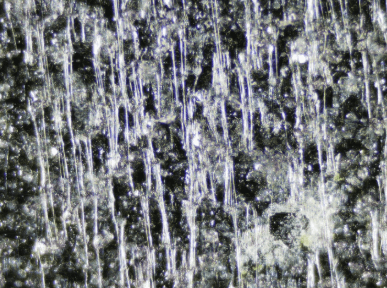
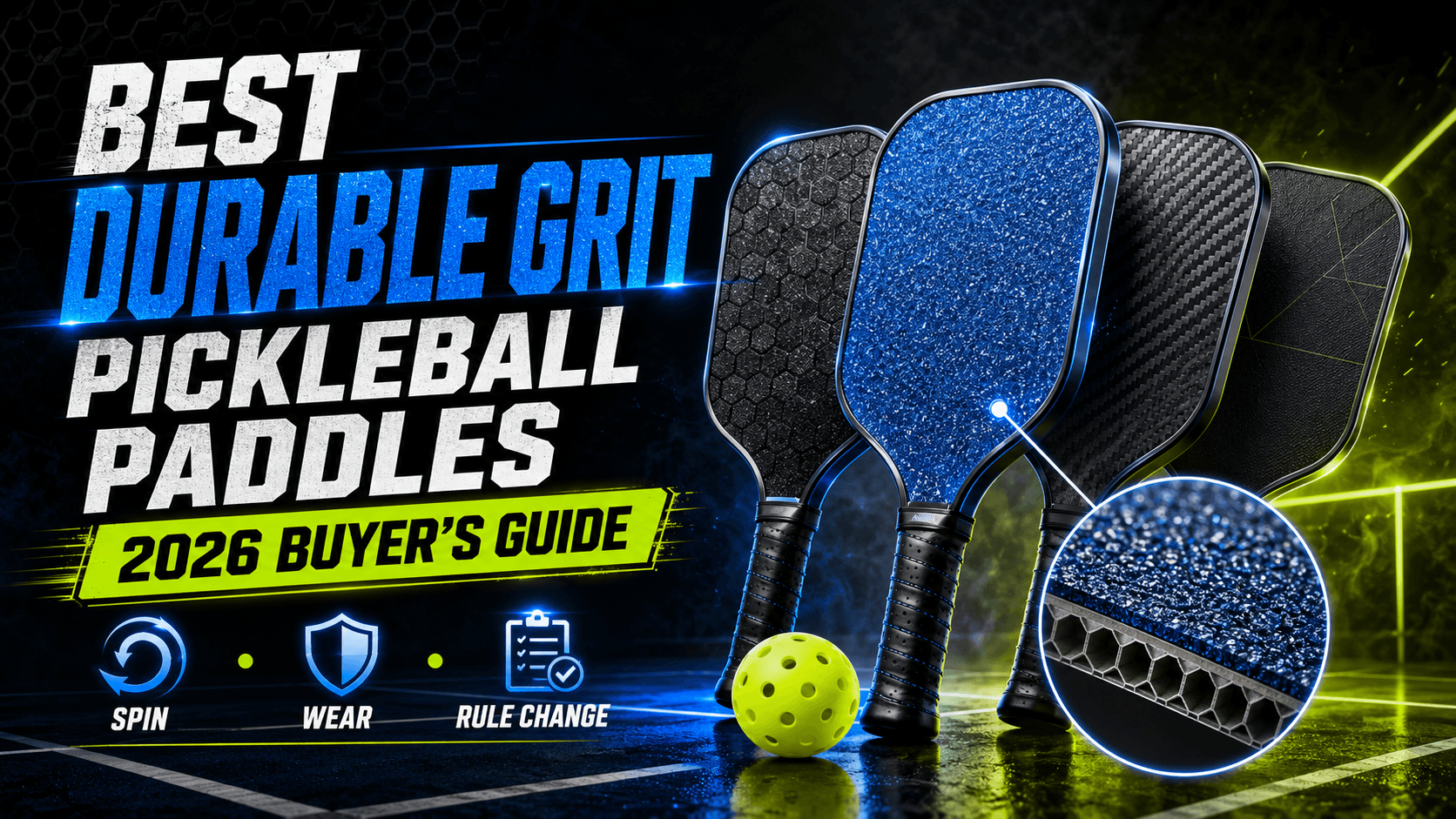
Durable grit refers to a paddle face texture engineered to resist wearing smooth, so the paddle keeps generating spin longer than a standard surface would. It's the marketing umbrella over nearly all durable grit pickleball paddles, and the phrase covers at least three different manufacturing approaches that age in completely different ways, and brands rarely tell you which one you're getting.
Spray-on and applied texture
Texture is applied to the finished face as a coating or textured paint. This produces strong spin numbers straight out of the box and is the cheapest way to make a paddle feel grippy on the shelf. It's also the least durable approach — applied layers abrade off, and once the coating goes, the surface underneath is smooth. Applied texture is why some durable grit pickleball paddles feel spectacular for a month and ordinary by month three.
Note that USA Pickleball explicitly prohibits paint textured with sand, rubber, vinyl compounds or similar materials used to create extra spin. Legal applied textures exist, but this is the category where compliance questions cluster.
Peel-ply raw carbon
The most common construction in premium durable grit pickleball paddles today. A woven peel-ply layer is pressed against the carbon during curing and then stripped away, leaving the weave pattern impressed into the resin. The texture is part of the face rather than a layer on top of it.
Peel-ply wears gradually and predictably. You don't get a cliff — you get a slow decline over months. Most raw carbon paddles you've played are this.
Embedded and integrated texture
Texture built into the face material itself, sometimes with harder particles or a modified weave, so wear removes material uniformly instead of stripping a distinct layer. This is what most "endurance surface" and "tough" branding is gesturing at, though brands are vague about the specifics.
In principle it's the most durable of the three. In practice, without published testing, you're taking the manufacturer's word for it — which is exactly the problem this guide exists to name.
The uncomfortable truth about grit and spin
Here's the part that undercuts most marketing around durable grit pickleball paddles: beyond a certain point, more grit doesn't produce more spin.
Friction between ball and face has a ceiling. Once friction is sufficient to stop the ball sliding across the face, additional roughness adds nothing — the ball is already gripping. Research on pickleball impact physics has shown that on shots struck above roughly a 45-degree angle, which is most real shots, paddles with substantially different surface roughness produce essentially the same spin. The rougher paddle only pulls ahead on very oblique, glancing contacts that make up a small share of what you actually hit in a game.
Two things follow from that, and both matter when you're choosing between durable grit pickleball paddles:
- A paddle doesn't need to stay at 100% of its factory grit to keep producing full spin. It needs to stay above the threshold where the ball stops sliding. That's a lower bar, and it's why plenty of players notice their paddle looks worn long before their spin actually suffers.
- Technique moves spin far more than surface does. Racket-head speed and contact angle are the dominant variables. A worn paddle in the hands of someone brushing up properly out-spins a fresh one held flat.
None of which makes grit durability irrelevant. It means the useful question when comparing durable grit pickleball paddles isn't "which has the most grit" but "which stays above the threshold longest" — and those are not the same ranking.
Surface transparency: which brands tell you what's on the face
Since nobody publishes wear testing, the next best signal is disclosure. If a brand is confident in its surface, it should be willing to describe it. Here's how the market actually breaks down.
Honolulu Pickleball Company markets the Crystal Blue Endurance Surface™, also called Blue Grit™, on the J2CR and J6CR. The name is explicitly a durability claim and the surface is visually distinctive, which at least makes wear easy to see. What Honolulu doesn't publish is how the texture is created or any retention data behind the "endurance" positioning.
Six Zero runs Diamond Tough™ on the Coral and Double Diamond Tough™ on the Coral Pro, with the Pro positioned as the higher-spin option. Same situation: named technology, durability implied by the name, no published method or testing. The Coral platform is one of our steadiest sellers and we've had no pattern of surface complaints on it, which is worth something — but it's an absence of evidence, not evidence.
Six Zero Coral Pro 16mm Pickleball Paddle
$220.00
The Six Zero Coral Pro takes the award-winning Coral platform and turns the spin dial all the way up. With the new Double Diamond Tough™ surface — 2X the diamonds, 2.5X the texture, and 8X the durability of standard raw carbon… read more

Franklin takes a different and, in our view, better approach on the C45 Tempo by publishing its certification status directly on the product — UPA-A Pro Certified and USAP PBCoR .43 Certified. That's not a durability claim, but it's a verifiable one, and verifiable beats evocative. More brands should do this.
Franklin C45 Tempo 16mm Pickleball Paddle
$229.99
Franklin C45° Tempo Carbon Fiber Pickleball Paddle UPA-A Pro Certified | USAP PBCoR .43 Certified The Franklin C45° Tempo is engineered for players who want quick hands, precision, and spin at the kitchen line. Compact yet powerful, it blends advanced… read more

Gherkin and Luzz make no proprietary surface claims at all. The DRACO is raw carbon, the Glider 2026 is T700 raw carbon, and both brands leave it there. If you want predictability over marketing, unbranded raw carbon is the most understood surface in the sport.
Luzz Glider 2026 16mm Hybrid Pickleball Paddle
$119.00
Luzz Glider 2026 Hybrid Paddle Introducing the Luzz Glider 2026 Hybrid Paddle, the upgraded Gen 3 successor to the popular Glider 2024. Built around a soft 16mm polypropylene honeycomb core and finished with an aerospace-grade 984-Aero™ carbon face, the Glider… read more

Our overall read on durable grit pickleball paddles: no brand currently earns full marks. Several name a surface technology; none publish how it's made or how long it lasts. Treat every "endurance" and "tough" label as a hypothesis until someone tests it.
Spin retention by paddle: what we can and can't tell you yet
This is the section every guide on durable grit pickleball paddles should include and almost none do honestly.
What we can tell you. Across our two shops we see a high volume of used paddles come through the Certified Pre-Owned intake, which means we handle worn faces constantly and grade them for condition. Patterns are visible: applied-texture surfaces show wear as visible patchiness in the contact zone; raw carbon dulls more evenly and shows a polished band where the ball lands most; the sweet-spot area on every construction wears before the edges do.
What we can't tell you. We have not run controlled spin measurement at fixed play intervals on these models. We don't have a PaddleVision rig or a ball machine logging hours. So we will not publish an "RPM after 40 hours" table, because we'd be making it up, and a made-up number is worse than an honest gap.
What's coming. We're building a controlled protocol — fixed paddles, fixed ball type, logged court hours, measured intervals, photographed surfaces — and this page becomes the living table once it produces results. The methodology gets published alongside the data so you can judge whether the testing is any good.
How fast does raw carbon actually wear?
ProDrive Ghost Raw Carbon Pickleball Paddle 16mm - Spinwave Pickleball Collaboration
$50.00
Limited Edition collaborative release between Spinwave Pickleball and Prodrive. Introducing the Prodrive Ghost Carbon Fiber Pickleball Paddle - the latest addition to the world-class Prodrive Paddles collection. This top-of-the-line paddle features an all-new aerodynamic curved-shaped design and a 16mm (0.62)… read more

Across raw carbon and most durable grit pickleball paddles, the range players report runs roughly 40 to 150 hours before a noticeable spin drop — and the spread is driven less by the paddle than by conditions:
- Outdoor play is far harder on a face than indoor. Outdoor balls are harder, courts are grittier, and windblown dust acts as an abrasive. Outdoor-heavy players sit at the low end of that range.
- Ball choice matters more than people expect. Harder balls scour the surface faster.
- Scraping the court is the fastest way to kill a face. One hard drag on a low dig does more damage than a week of clean contact.
- Sunscreen, sweat and skin oil transfer to the face and fill texture. Some of what feels like wear is contamination, which is fixable.
Rough heuristic for competitive players: a heavily used paddle at 6–10 hours a week will show meaningful surface change within four to six months. Recreational players at two hours a week may go a year or more.
Does cleaning restore spin?
Partially, and only when the problem is contamination rather than wear. This is the single most useful maintenance fact for owners of durable grit pickleball paddles, because a lot of "my paddle lost its grit" is actually a dirty face.
What works: a microfiber cloth with warm water and mild soap, or a purpose-made paddle cleaner, wiped across the face and dried. Do this every few sessions, not once a season. If your paddle regains bite afterward, it was dirty, not worn.
What doesn't work, and what will get you disqualified: sanding, scuffing, abrasive pads, solvents, or anything else that alters the surface. A modified face is illegal regardless of what the approved list says about the model, and it's also an excellent way to destroy a $250 paddle. If cleaning doesn't bring the bite back, the texture is gone, and that's true of all durable grit pickleball paddles no matter what the surface is called.
Modifi Pickleball Paddle Cleaner
$15.99
MODIFI Pickleball Paddle Cleaner — 150ml Keep your paddle face clean, grippy, and game-ready. MODIFI Paddle Cleaner is a foaming formula made for carbon friction surfaces and other textured paddle faces. It helps lift built-up dirt, dust, and oils so… read more

Are enhanced grit paddles tournament legal?
Yes, when the specific model is on the USA Pickleball approved list — "enhanced grit" is a marketing term, not a regulatory category. Every certified paddle, whatever the brand calls its surface, has already passed the same surface tests.
The current standards a paddle face must meet:
- Surface roughness: average Rz no greater than 30 micrometers and average Rt no greater than 40 micrometers, measured in six directions across the face.
- Coefficient of friction: kinetic COF no greater than 0.1875.
- Gloss: no more than 80 gloss units at a 60-degree angle.
- No textured paint using sand, rubber, vinyl compounds or similar materials to create extra spin.
- From October 1, 2026: newly certified paddles must also pass the Spin Rate Test under 2,100 RPM.
Two practical notes. Certification is granted per model, thickness and construction — a brand can't quietly change the surface on a production run and keep the same approval. And a legal paddle becomes illegal if it delaminates or is modified, which applies to all durable grit pickleball paddles exactly as it applies to everything else.
When does grit loss justify replacing your paddle?
Replace durable grit pickleball paddles when performance changes, not when the face looks worn. Specific triggers:
- Your slice and topspin stop biting after a proper cleaning. Cleaning first is the whole point — most people replace too early.
- You're missing serves and third-shot drops you normally make because the ball isn't dropping the way you expect.
- You can feel a polished, slick patch in the sweet spot with your thumb.
- Any delamination, soft spot, crack or rattle. This is a safety and legality issue, not a performance one. Stop using it.
Cosmetic scuffing on the edges, faded graphics and a dull-looking face are not reasons to replace anything.
If you go through faces fast, buy accordingly. A player replacing a paddle every six months is better served by a $120–$180 paddle than a $300 one. The Certified Pre-Owned program is built for exactly this — every unit is inspected and graded in-house at Great Neck, with surface condition assessed as part of the grade, so you know what you're getting.
How we'll rank the best durable grit pickleball paddles
Published methodology, so you can decide whether to trust the eventual results.
What this page is today: a construction and disclosure guide. Rankings reflect what each surface is made of, what the manufacturer is willing to state, and what we observe handling worn paddles through Certified Pre-Owned intake at volume. It is not measured data and it isn't presented as any.
What the protocol will measure: identical paddles logged across fixed court-hour intervals, consistent ball type, spin measured at each interval under the same conditions, surface photographed at each checkpoint, and feel changes logged separately from measured spin — because players usually report feel shifting before numbers do, and we want to know if that's real.
What we won't do: publish manufacturer claims as findings, rank paddles we don't stock, take payment for placement, or fill a column with a number we didn't measure. Every paddle here is one we sell, which is a bias worth stating rather than hiding.
When results exist, this page updates and the date changes. Until then, the gaps stay visible.
Where to start
If you want the short version on durable grit pickleball paddles: buy for construction and price, not for the durability label. Raw carbon from Gherkin or Luzz if you value predictability and don't want to pay for marketing. Honolulu or Six Zero if you want a named surface and are comfortable that the claim is currently untested. Clean the face every few sessions either way — it's the highest-return maintenance habit in the sport and it's free.
Gherkin USA DRACO 16mm Pickleball Paddle - Elongated
$179.99
New to Gherkin's lineup? See how this paddle compares to every other Gherkin shape before you commit. Read the complete Gherkin Guide → Gherkin USA DRACO Elongated Pickleball Paddle The Gherkin USA DRACO Elongated is built for players who want… read more

And if you're buying before October, know that you're buying under the outgoing standard. That's not a problem, but it's worth knowing.
Browse the full paddle collection or new arrivals, or come hit a few at our Long Beach pro shop where every paddle in this guide is on the demo rack. We'd rather you find the right surface for how you play than sell you the one with the best adjective.
FAQs
Which paddle has the longest-lasting grit?
Nobody can answer this honestly right now, because no manufacturer or reviewer publishes controlled long-term spin testing. Brands with durability-positioned surfaces — Honolulu's Crystal Blue Endurance Surface and Six Zero's Diamond Tough among them — market longevity but don't publish method or retention data. Plain raw carbon is the most predictable option simply because thousands of players have already documented how it ages.
Does pickleball paddle grit wear off?
Yes, on every paddle and every surface type. Applied or sprayed textures wear as visible patchiness in the contact zone. Raw carbon dulls more evenly and develops a polished band where the ball lands most. Outdoor play, harder balls, and scraping the court all accelerate it substantially.
Can you restore grit to a paddle?
You can restore performance lost to dirt, not performance lost to wear. Clean the face with a microfiber cloth and warm soapy water or a purpose-made paddle cleaner — a lot of "lost grit" is just contamination from sweat, sunscreen and court dust. Sanding, scuffing or using abrasives is illegal under USA Pickleball rules and permanently ruins the paddle.
Are enhanced grit paddles legal?
Yes, provided the specific model is on the USA Pickleball approved list. "Enhanced grit" is a marketing phrase, not a regulatory category — every certified paddle has passed the same surface roughness, friction and gloss tests regardless of what the brand calls its face.
What is the 2,100 RPM rule?
From October 1, 2026, USA Pickleball measures spin directly using a dual-camera imaging system rather than inferring it from surface roughness. Paddles certified after that date must come in under 2,100 RPM. Paddles certified before then remain legal under the standard they were certified against.
How often should a competitive player replace a paddle?
Judge by performance, not appearance. A player putting in 6–10 hours a week typically sees meaningful surface change within four to six months; recreational players at two hours a week often go a year or more. Replace when your spin doesn't return after a proper cleaning, or immediately if there's any delamination, soft spot or rattle.
Do raw carbon paddles have more spin than textured ones?
Not necessarily, and past a threshold it stops mattering. Friction between ball and face has a ceiling — once the ball stops sliding, extra roughness adds nothing. On shots struck above roughly a 45-degree angle, which covers most real shots, paddles with very different roughness produce essentially the same spin.