
Table of Contents
- The Patch Reef Pickleball Court Setup
- Best Times for Patch Reef Pickleball
- Covered Courts vs. Outdoor Courts
- Life Time vs. Franklin X-40 Balls in Florida Heat
- Power Paddles in Florida Heat
- Florida Heat Gear
- Signing Up and Reserving Courts
- Amenities at Patch Reef
- Tips Before Your First Patch Reef Pickleball Visit
- FAQs
If you play pickleball in Boca Raton, sooner or later you're going to end up at Patch Reef — and Patch Reef pickleball is unlike any other public setup in South Florida.
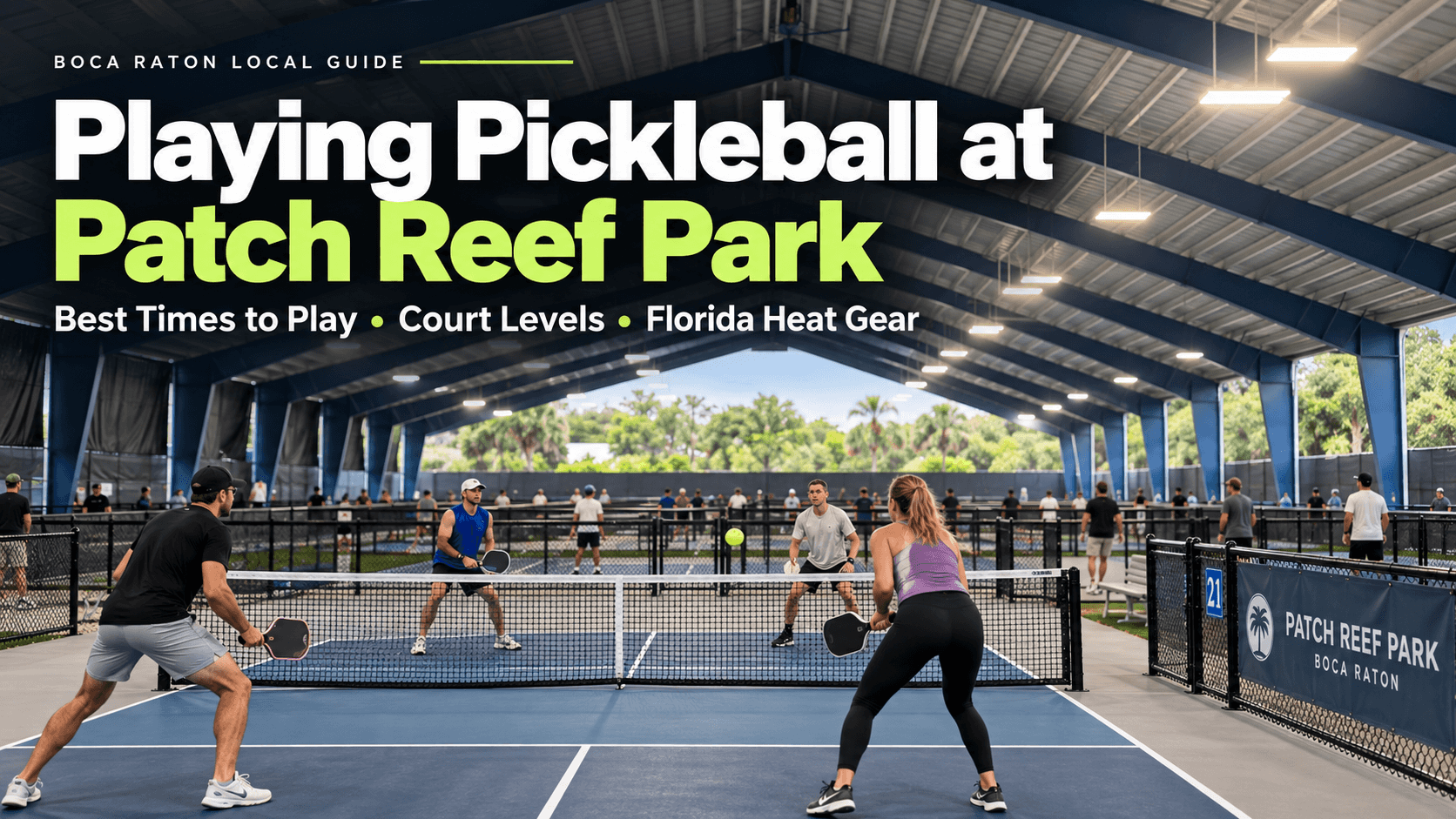
Patch Reef Paddle & Racquet Club has become one of the biggest public pickleball destinations in South Florida, with 18 covered pickleball courts plus 15 outdoor courts. There's morning open play, packed evening sessions, private court reservations, lessons, drilling, and enough different skill levels that almost anyone can find a game.

But knowing that Patch Reef has a lot of courts doesn't tell you what it's actually like to play there.
For that, we talked to Justin, a local player who plays at Patch Reef about five evenings a week, usually on the challenge courts. Here's what he thinks players should know before showing up — including when to play, where each level plays, what ball works best in Florida heat, why power paddles make more sense when temperatures climb, and what to pack if you don't want to spend the entire session soaked.
The Patch Reef Pickleball Court Setup
The first thing to understand about Patch Reef pickleball is that it's big
The facility officially lists 18 covered pickleball courts and 15 outdoor pickleball courts, in addition to its tennis courts. Parking is free.
During the covered-court open-play sessions Justin normally attends, he describes the layout like this:
- First 8 courts: roughly 3.0+ and developing/intermediate open play
- Middle 2 courts: challenge courts
- Back 8 courts: roughly 3.7+ advanced play
Court assignments and programming can change, so check the current session when you arrive, but this setup makes Patch Reef much easier to navigate than an open play where every level is mixed together.
If you're new, don't automatically jump onto the highest-level court because it has an opening. Start where your level fits and move up when the games tell you you're ready.
Patch Reef also staffs open play with monitors. According to Justin, they're active rather than decorative — helping players find the correct level, keeping queues organized, stopping people from cutting the rotation and generally making sure the session keeps moving.

That makes Patch Reef pickleball easy to jump into, even if you show up alone.
Best Times for Patch Reef Pickleball
The best time depends on what kind of session you're looking for.
Patch Reef currently lists weekday pickleball open play from 7:30 AM to 11:45 AM and again from 4:45 PM to 10 PM. Weekend open play is currently listed from 7:30 AM to 1 PM. Programs and hours can change, so check PlayByPoint before heading over.
Morning Open Play
If you're an early bird, morning open play is probably the smartest option during much of the Florida year.
You still get the level-based open-play format, but you avoid some of the worst midday temperatures.
Once morning open play ends, more of the Patch Reef pickleball courts become available…
Midday Drilling and Reservations
Midday can be a good time to reserve a court, drill or organize a private game.
But if you're planning on playing on the fully outdoor courts, understand what you're signing up for.
Justin's description is simple: "Brutal."
South Florida heat, humidity and direct sun can change both how your body feels and how your equipment plays. This is when hydration, clothing, grip choice, ball selection and even paddle choice start to matter more.
Evening Open Play
Weekday evening open play starts around 4:45 PM, and this is Justin's usual session.
It also gets packed.
If you want competitive games and a lot of players to rotate through, evening is hard to beat. If you hate waiting, however, understand that prime-time Patch Reef pickleball is not exactly a secret.
On the challenge courts, Justin says the wait can reach around 40 minutes during busy sessions.
Challenge Court Play
The two middle courts are where things get interesting.
Justin normally plays challenge court with a group of friends, and the evening format he sees is winner stays on. Games are played to 11, win by one.
During crowded evenings, the queue can get long enough that losing means a substantial wait before your next shot at the court.
That creates a very different atmosphere from regular recreational open play. You're not just playing one game and casually rotating. There's an incentive to stay on the court, and the games can get competitive quickly.
For normal Patch Reef open play, the facility also publishes a four-on, four-off format, with games to 11, win by one. Challenge-court procedures can differ by session, so follow the monitors and the posted system when you arrive.
Covered Courts vs. Outdoor Courts
For Patch Reef pickleball, Justin strongly prefers the covered courts if he has the choice.
A roof removes a huge amount of direct sun and helps make wind and changing weather less disruptive. That produces more consistent conditions than completely exposed outdoor courts.
There is one tradeoff.
Justin finds the covered courts can look a little dim during the daytime. It isn't bad enough to make the courts unplayable, but the ball can sometimes be harder to track than you expect.
That becomes particularly relevant depending on the ball you use.
Life Time vs. Franklin X-40 Balls in Florida Heat
This might be the most interesting equipment takeaway from playing regularly in South Florida.
The Franklin X-40 is essentially a reference point for outdoor pickleball. Players know how it feels and it's used everywhere.
But Justin prefers Life Time balls in Florida conditions.
His experience: Life Time balls play faster and are more durable.
Franklins give you the familiar standard feel, but Justin finds that they soften, deform and crack too frequently when they're subjected to heavy use and Florida temperatures.
That matters because hotter, softer-feeling balls can make an already physical outdoor game feel noticeably slower.

The downside to the Life Time ball comes on the covered courts: visibility. Depending on the lighting and your eyes, the ball can be more difficult to pick up.
Justin's solution is performance eyewear with a lens designed to increase contrast and make the ball easier to track.
It also gives you something we think more pickleball players should be thinking about anyway: eye protection.
Power Paddles in Florida Heat
Here's another thing Justin changes when temperatures climb: his paddle.
He prefers power.
When a pickleball gets warm and begins feeling softer, the game can lose some pace. A softer ball generally gives you less of that crisp rebound players associate with cooler conditions.
That means a paddle with easy acceleration and rebound can become much more useful.
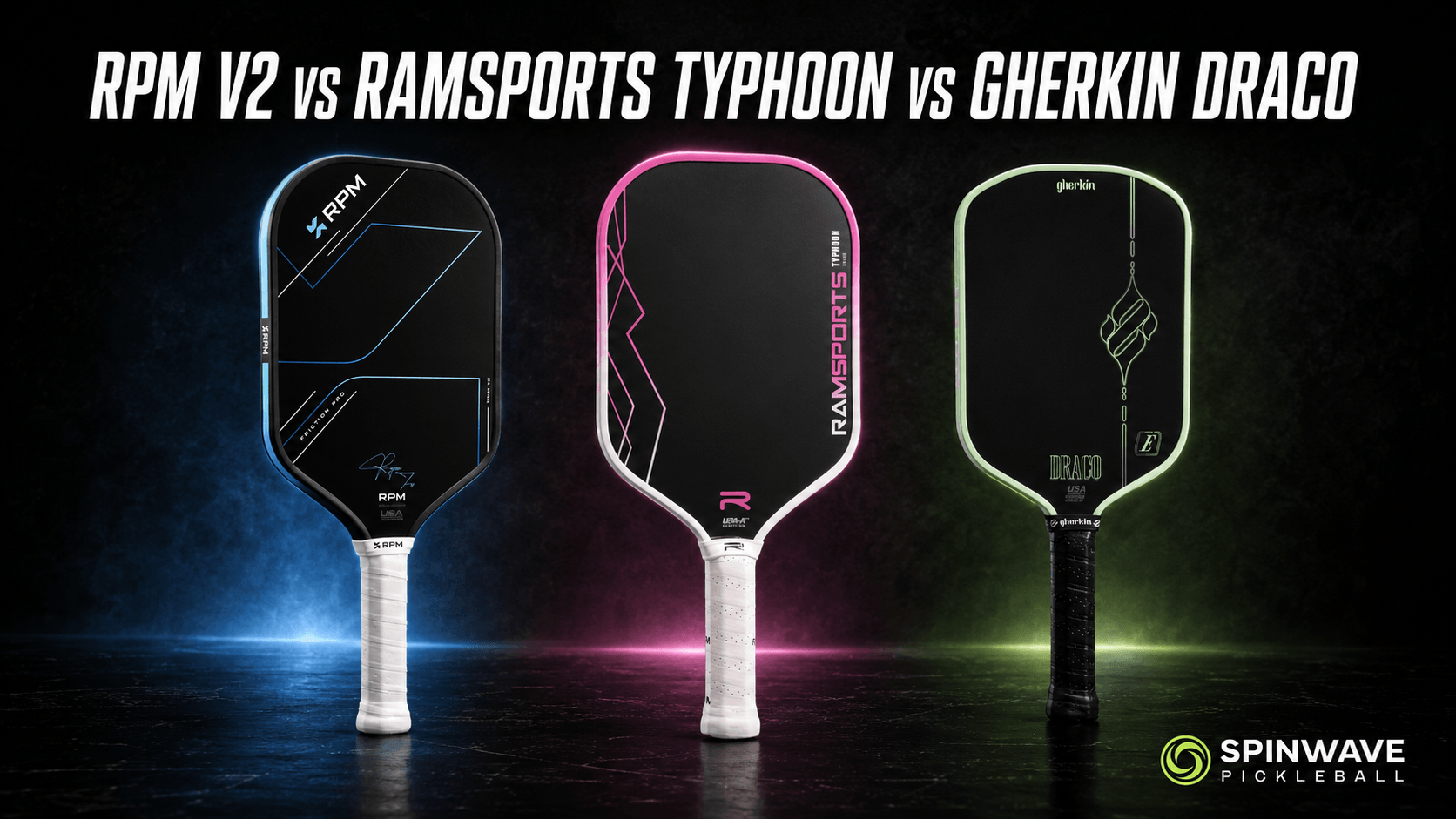
Justin's two recommendations for those conditions are Boomstik paddles and RPM power paddles.
The idea isn't that every South Florida player suddenly needs the hardest-hitting paddle on the market. It's that equipment has to be considered together.
Hot weather + a softer ball + outdoor conditions can make the game feel noticeably slower.
A power-oriented paddle can help put some pace back into serves, drives, counters and overheads.
Players who normally worry that a power paddle is "too much" may actually like one more once the temperature and ball start taking speed out of the game.
Florida Heat Gear
You can obsess over paddle weight and ball speed all you want, but none of it matters if you're cooked after three games.
Justin's biggest piece of advice is to prepare for how much you're going to sweat.
Water and Electrolytes
Bring both.
For long sessions, especially outdoors, don't rely entirely on grabbing a few sips from a fountain between games.
Patch Reef does have drinking fountains and an ice machine around the covered-court area, which is a huge plus.
Dry Overgrips
This one matters more in South Florida than most players realize.
When your hands are sweating heavily, a traditional tacky grip can start to feel slick fast. Losing confidence in your grip affects everything from resets to hard counters because you start worrying about the paddle moving in your hand.
For extreme heat and humidity, Justin recommends using a dry-style overgrip designed for sweaty hands.
One option we like for Florida conditions is the MODIFI Gator Grip, a dry-feel overgrip that helps maintain control when your hands are soaked.
If you sweat heavily, keep several in your bag. Overgrips are inexpensive, easy to replace, and in South Florida they're closer to a necessity than an accessory.
Sun Protection
If you're playing outside before evening, Justin recommends covering up.
Arm sleeves can help keep direct sun off your skin, and a bucket hat or other good sun hat can make a big difference during longer sessions.
Protective and Contrast Eyewear
Good pickleball eyewear serves two purposes here.
First, it protects your eyes. Second, a high-contrast lens may help you see certain ball colors better under the covered roof and changing light.
Extra Shirts and Shoes
Bring at least one extra shirt. You may think you won't need it. You probably will.
Justin sweats enough during long sessions that he sometimes wants to change his shoes entirely too. If you're the same way, leaving a second pair in your car isn't crazy.
Wet shoes and socks aren't exactly a recipe for great footwork.
Balls, Bags and Other Essentials
Justin strongly recommends bringing your own balls.
Patch Reef gets crowded, games mix together and balls migrate from court to court quickly. Mark yours. And bring more than one.
There's nothing worse than spending half your session figuring out whether the yellow ball three courts away is yours.
A well-packed Florida pickleball bag should include:
- Water
- Electrolytes
- Extra pickleballs
- Dry overgrips such as MODIFI Gator Grips
- Protective eyewear
- Sun protection
- Extra shirt
- Towel
- Extra socks
- Optional second pair of shoes
Signing Up and Reserving Courts
Patch Reef uses PlayByPoint for all Patch Reef pickleball reservations and programming.
New users can create a PlayByPoint account, add Patch Reef Paddle & Racquet Club and register for available open-play sessions or reservations.
You do not have to be a member or pass holder to play.
Current adult open-play pricing is:
- Pass holder: Free
- Palm Beach County resident: $10
- Non-resident: $20
Patch Reef asks players seeking resident pricing to verify Palm Beach County residency.
The city also currently offers annual and semiannual passes to both residents and non-residents, with lower pricing for residents.
For private court reservations, current city rules say pass holders may reserve two days in advance after 1 PM, while non-pass holders may reserve one day in advance after 1 PM.
Justin's advice is simple: don't wait until the last minute. Busy sessions fill up.
Amenities at Patch Reef
One reason Patch Reef pickleball works so well is that the basics are taken care of.
Justin points out:
- Lots of parking
- Two clean, air-conditioned bathrooms
- Three water fountains
- An ice machine by the covered courts
- Open-play monitors who actually circulate through the courts
The facility also offers lessons and clinics, plus opportunities for private games and drilling.
That combination makes Patch Reef work for very different types of players. You can be learning how to keep score one month and waiting for a spot on the challenge court a year later — without changing facilities.
Tips Before Your First Patch Reef Pickleball Visit
A few things can make your first Patch Reef session much easier.
- Hydrate more than you think you need to. Florida heat and humidity can drain you quickly.
- Use a dry overgrip. If your hands sweat heavily, something like a MODIFI Gator Grip can make a huge difference in keeping control of your paddle.
- Protect yourself from the sun. Sleeves, a hat and appropriate sun protection are worth having if you're outside.
- Consider protective eyewear. The right lenses can also make the ball easier to track under the covered courts.
- Bring extra clothes. At minimum, throw another shirt in your bag.
- Bring your own balls — and mark them. Patch Reef can get extremely busy.
And if you're planning a long summer session, throw another pair of sneakers in the car.
You might laugh at that advice at 5 PM. You probably won't be laughing at 8 PM.
FAQs
How many pickleball courts does Patch Reef have?
Patch Reef has 18 covered pickleball courts and 15 outdoor pickleball courts, making it one of the larger public pickleball facilities in the Boca Raton area.
What level of players can play at Patch Reef?
There are options for a wide range of skill levels. During the covered open-play sessions Justin attends, the first eight courts are generally used for approximately 3.0+ and developing players, the middle two are challenge courts, and the back eight are generally for 3.7+ advanced players.
Court assignments can change, so follow the posted setup and directions from the open-play monitors.
What is the best time to play pickleball at Patch Reef?
Morning open play is a good choice if you want to avoid the worst South Florida heat.
Evening open play is typically much busier and offers plenty of competitive games, but wait times can be longer.
Midday is useful for reservations, lessons or drilling, although outdoor conditions can be extremely hot.
Do you have to be a member to play at Patch Reef?
No. Non-members can register for open play and eligible court reservations through PlayByPoint.
Resident and non-resident pricing differs, and passes are also available for players who use the facility frequently.
How do the Patch Reef challenge courts work?
During the evening sessions Justin plays, the two challenge courts operate on a winner-stays format.
Games are played to 11, win by one. When evening open play gets crowded, waits can reach around 40 minutes.
What pickleball performs best in Florida heat?
Justin prefers Life Time pickleballs because he finds they play faster and hold up better in hot conditions.
The Franklin X-40 remains a common outdoor standard, but in Justin’s experience it can soften, deform or crack more frequently during heavy play in Florida heat.
Are power paddles better in hot weather?
They can be.
Hot conditions can make some pickleballs feel softer and slower. A power-oriented paddle can help restore pace on drives, serves, counters and overheads.
Justin likes Boomstik and RPM power paddles for hot South Florida conditions.
What kind of overgrip works best in Florida humidity?
Players who sweat heavily should consider a dry overgrip instead of relying only on a tacky grip.
Justin recommends Spinwave Gator Grips for South Florida conditions because the dry feel helps maintain paddle control when hands get sweaty.
What should I bring to Patch Reef?
At minimum, bring water, electrolytes, your own pickleballs, a dry overgrip, protective eyewear, sun protection and an extra shirt.
For longer sessions in the summer, an extra pair of socks and even a second pair of shoes can be worthwhile.
Can you show up alone for open play?
Yes.
Patch Reef's level-based open play makes it relatively easy to arrive without a group and find games. Open-play monitors also help keep players organized and direct people toward the appropriate courts
Should I bring my own pickleballs?
Yes.
Patch Reef can get crowded, and balls can easily migrate between courts. Bring several and put your name or identifying mark on them.