
Table of Contents
- Does the Type of Pickleball Ball Really Make a Difference?
- Indoor vs Outdoor Pickleball Balls: A Side-by-Side Comparison
- How Playing Surface Affects Ball Performance
- Can You Use an Outdoor Ball Indoors (or Vice Versa)?
- Best Indoor Pickleball Balls
- Best Outdoor Pickleball Balls
- Which Pickleball Ball Is Right for You?
- Related Spinwave Links
- Final Thoughts
- FAQs
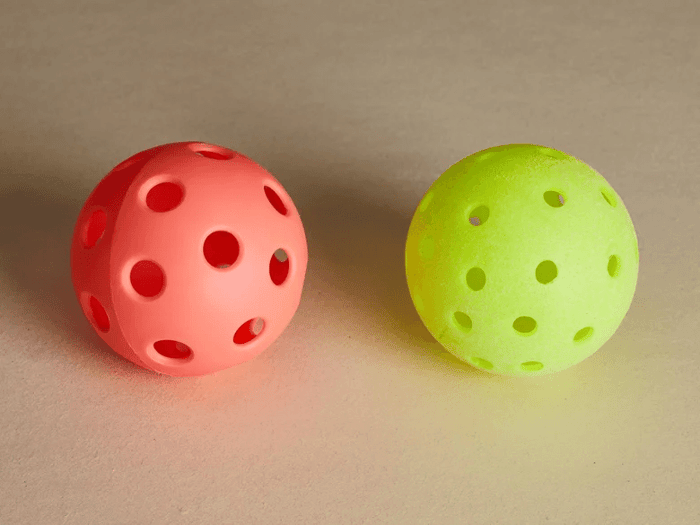
If you have ever wondered why your shot felt completely different the last time you switched from a gym to a tennis court, the answer is almost always the ball. The indoor vs outdoor pickleball balls debate isn't just a small detail — it's one of the biggest reasons your game can feel inconsistent from venue to venue.
This guide breaks down the real differences between indoor vs outdoor pickleball balls: hole count, hardness, bounce, durability, and which one you should actually be using. Whether you play casually in a rec center or compete on outdoor courts, picking the right ball matters more than most players realize.
Does the Type of Pickleball Ball Really Make a Difference?
Yes — and the difference is bigger than most beginners think. Pickleball balls are engineered specifically for either indoor or outdoor play because each environment has completely different demands.
Indoor balls are softer, have fewer (and larger) holes, and are designed for smooth gym floors. They give you a slower, more controllable feel with longer dwell time on the paddle. Outdoor balls are harder, denser, and have more (smaller) holes to cut through wind. They play faster, bounce higher off rough surfaces, and stand up better to abrasive concrete.
Use the wrong ball and you'll either feel like you can't generate any pace (outdoor ball on a slick gym floor) or you'll be fighting wild bounces and wind drift (indoor ball outdoors). The indoor vs outdoor pickleball balls distinction exists for a reason — it's not marketing.
Indoor vs Outdoor Pickleball Balls: A Side-by-Side Comparison
Here's the fastest way to understand the indoor vs outdoor pickleball balls split at a glance:
| Feature | Indoor Ball | Outdoor Ball |
|---|---|---|
| Hole Count | 26 larger holes | 40 smaller holes |
| Hardness | Softer plastic | Harder, denser plastic |
| Bounce | Lower, controlled | Higher, livelier |
| Weight | ~0.81–0.86 oz | ~0.88–0.935 oz |
| Best Surface | Gym floors, wood, sport court | Concrete, asphalt, hard outdoor courts |
| Durability | Long (soft surfaces are easy on plastic) | Short (rough surfaces crack outdoor balls) |
| Wind Resistance | Poor (drifts easily) | Built for it (cuts through wind) |
| Feel | Slower, more dwell time | Faster, harder feedback |
Hole Count: Why 26 vs 40 Holes Changes Everything
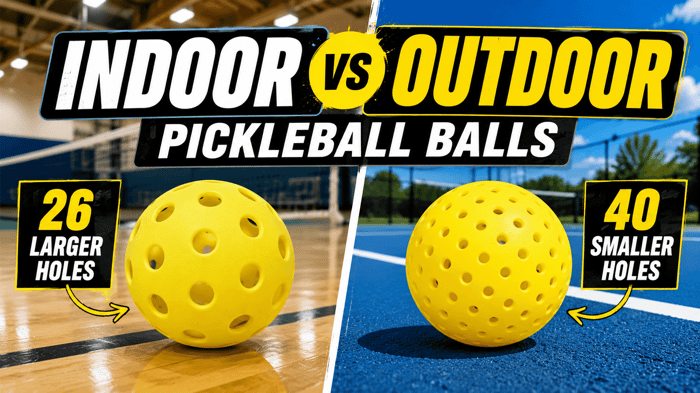
The most visible difference in the indoor vs outdoor pickleball balls comparison is hole count. Indoor balls have 26 large holes. Outdoor balls have 40 smaller holes. The difference isn't cosmetic — it's aerodynamic.
Outdoor balls have more (smaller) holes so they can cut through wind without floating or drifting. The smaller hole pattern reduces wind interference and helps the ball travel in a more predictable arc. Indoor balls don't have to worry about wind, so their larger holes prioritize softer, slower air resistance for a more controlled feel.
Ball Hardness: Soft vs Firm Construction
Indoor balls are made from a softer plastic that compresses slightly on contact with the paddle. That softness gives you longer dwell time, more control on dinks, and a quieter sound profile (gyms can be noisy enough already).
Outdoor balls are harder. They have to be — concrete and asphalt are brutal on plastic, and a soft ball would crack within a session. The harder construction also means more pop off the paddle and a more aggressive feel during drives, drops, and counters.
Bounce Height and Court Feel
Outdoor balls bounce higher than indoor balls. Part of this is the harder plastic, part of it is the rough court surface acting like a launchpad. The combination makes outdoor pickleball noticeably faster-paced than indoor pickleball at the same skill level.
Indoor balls bounce lower and feel more "dead." This is actually a feature, not a bug — it means longer rallies, more control, and easier resets. Many doubles players love indoor balls for exactly this reason.
Durability and How Long Each Ball Lasts
Indoor balls can last weeks or even months of regular play because gym floors are smooth and easy on plastic. Outdoor balls typically last 3–10 sessions before cracking, especially on concrete. Cold weather makes outdoor balls even more brittle.
If you play outdoors year-round, expect to go through balls regularly. Buying a 3-pack or 6-pack is usually more economical than buying singles. We always recommend keeping a few extras in your bag.
How Playing Surface Affects Ball Performance
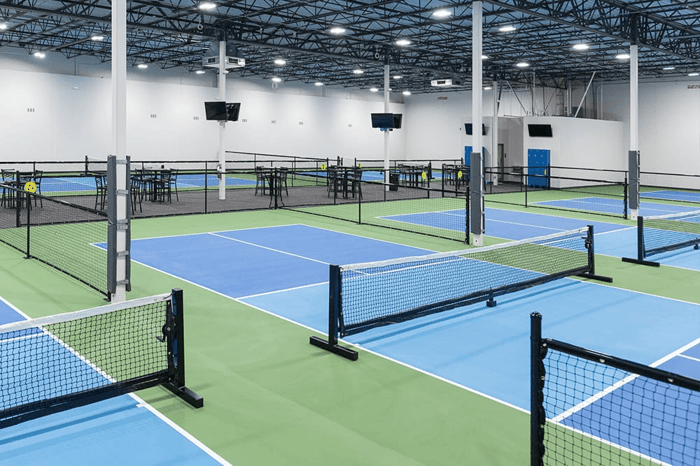
Court surface is the other half of the indoor vs outdoor pickleball balls story. The ball is engineered to work with the surface — not against it.
Gym Floors vs Concrete and Asphalt Courts
Gym floors (wood, sport court, polyurethane) are smooth and consistent. They don't scuff balls, they don't add unpredictable bounce, and they don't crack plastic. Indoor balls are tuned for this — they roll predictably, bounce evenly, and last forever on these surfaces.
Concrete and asphalt are the opposite. They're rough, abrasive, and unpredictable. They chew through balls fast and add wild bounce variation. Outdoor balls are engineered to push through this — harder shell, smaller holes, denser construction.
Wind and Weather: Why Outdoor Balls Are Built Differently
Wind is the biggest reason outdoor balls have 40 small holes instead of 26 large ones. Smaller holes mean less surface area for wind to push against. A 5 mph crosswind that would knock an indoor ball halfway across the court has minimal effect on a properly designed outdoor ball.
Temperature matters too. Cold weather makes outdoor balls firmer and more prone to cracking. Hot weather can make them feel softer and slower. Most serious outdoor players keep multiple balls in rotation during long sessions to balance temperature effects.
Can You Use an Outdoor Ball Indoors (or Vice Versa)?
Technically, yes. Practically — not recommended. Here's the honest indoor vs outdoor pickleball balls truth: you can swap them, but you'll hate the experience.
Outdoor ball indoors: The harder plastic and lively bounce make the ball feel hot off the paddle. Hand battles get faster, dinks feel poppier, and resets become harder to control. Some players actually like this for indoor training — it forces sharper hands. But it's loud, fast, and unforgiving on gym floors.
Indoor ball outdoors: The softer plastic gets shredded fast on concrete. The larger holes catch wind and the ball drifts unpredictably. The slower bounce feels dead. Within a session or two, the ball will be cracked or unplayable.
Bottom line: use the right ball for the right court. The minor inconvenience of having two ball types in your bag is worth the better play experience.
Best Indoor Pickleball Balls
When it comes to indoor vs outdoor pickleball balls, these are the top indoor picks:
Franklin X-40 Indoor
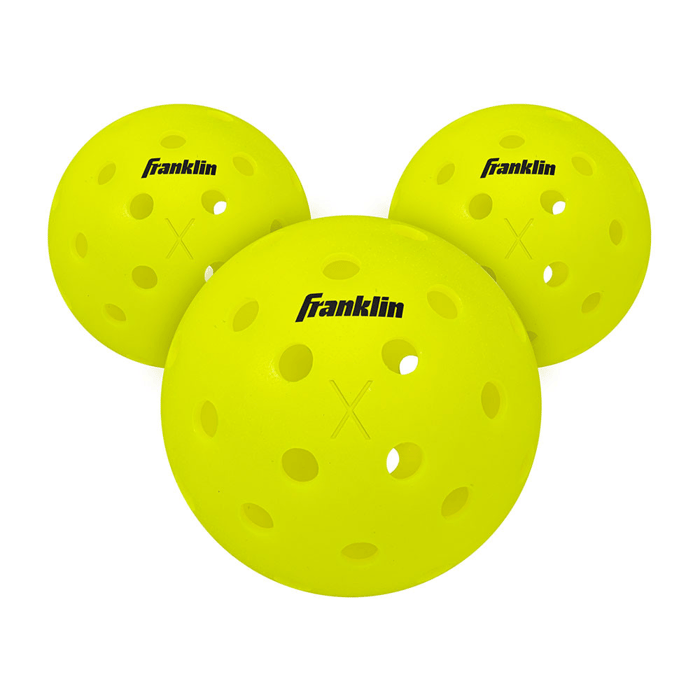
The Franklin X-40 Indoor is one of the most consistent indoor balls on the market. USA Pickleball-approved, official PPA Tour ball, and used in countless rec centers and tournaments. The 26-hole pattern and softer plastic give you the slow, controlled indoor feel most players want.
Best for: Tournament play, league play, rec centers, anyone who wants the industry standard indoor ball.
Onix Fuse Indoor
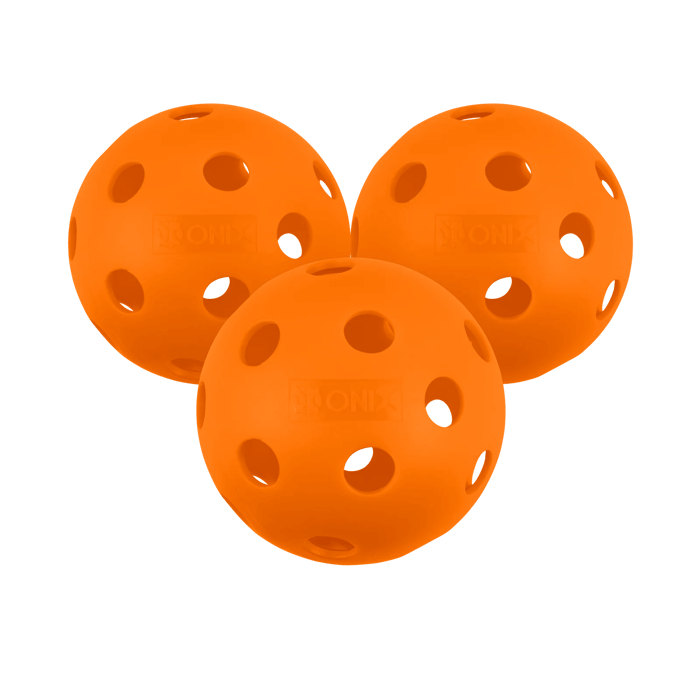
The Onix Fuse Indoor is another popular choice with similar specs to the Franklin X-40. Some players prefer the slightly softer feel and the seam construction. It plays slightly slower than the X-40, which makes it great for longer rallies and dink-heavy doubles games.
Best for: Doubles players, dink-focused play, players who want a slightly slower indoor ball.
Best Outdoor Pickleball Balls
For outdoor play in the indoor vs outdoor pickleball balls matchup, these are the top picks:
Onix Pure 2 Outdoor
The Onix Pure 2 Outdoor has been the gold standard for outdoor balls for years. Seamless construction, consistent bounce, and durable enough to survive concrete courts longer than most competitors. USA Pickleball-approved and tournament-tested.
Best for: Serious outdoor players, tournament play, anyone who wants the most consistent outdoor flight.
Franklin X-40 Outdoor
The Franklin X-40 Outdoor is the official ball of the USA Pickleball Tour and one of the most widely used outdoor balls in the country. The 40-hole pattern cuts through wind well, and the durable construction handles hard outdoor courts. It plays slightly harder than the Onix Pure 2.
Best for: Tournament players, league play, anyone who wants the most widely-recognized outdoor ball.
Selkirk Outdoor Pickleball
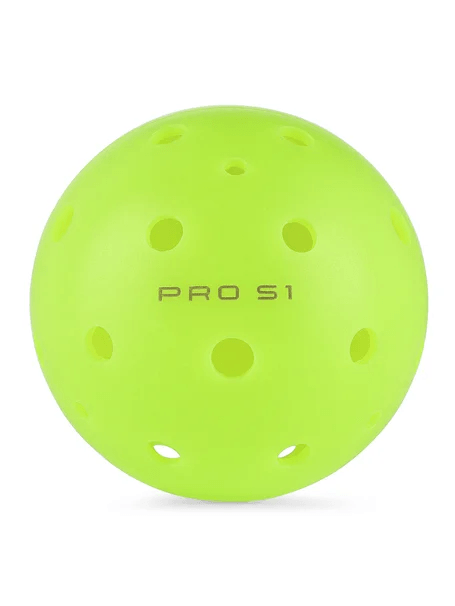
Selkirk's outdoor balls are a strong third option, especially for players who already use Selkirk paddles and want a consistent brand experience. They play similarly to the Franklin X-40 with strong durability and consistent flight.
Best for: Selkirk loyalists, players who want a slightly different feel than the Onix or Franklin standards.
Which Pickleball Ball Is Right for You?
The indoor vs outdoor pickleball balls decision usually comes down to where you actually play most often.
For Beginners
Most beginners should match the ball to their primary court. If your regular play is at an indoor rec center, get indoor balls. If you mostly play on outdoor courts at parks or tennis facilities, get outdoor balls. Don't overthink it.
If you play in both environments, buy a pack of each. They're affordable enough that having both on hand makes sense. Buying the wrong ball will frustrate you more than the cost of having two types.
For Competitive and Advanced Players
Competitive players should always train with the same ball they'll compete with. If your local tournaments use Franklin X-40 Outdoor, practice with the X-40 Outdoor. Different balls have different speeds, bounces, and seam patterns, and your timing is calibrated to whatever you play with most.
Most USA Pickleball-sanctioned tournaments use the Franklin X-40 (indoor or outdoor depending on venue). Most PPA Tour events use specific approved balls. Check your tournament's ball spec ahead of time and train with that exact ball for at least a few weeks before competing.
Related Spinwave Links
Want to dig deeper after this indoor vs outdoor pickleball balls guide?
- Shop all pickleballs
- Shop all pickleball paddles
- Shop pickleball accessories
- Shop pickleball grips & overgrips
- Shop pickleball shoes
- Get a free paddle consultation
- Read more pickleball buying guides
- Read The Overgrip Bible
- Read the pickleball edge guard tape guide
Final Thoughts
The indoor vs outdoor pickleball balls decision is one of the easiest gear questions to get right — match the ball to your court, buy a pack of each if you play both environments, and don't try to use the wrong ball just because you have it in your bag.
Indoor balls: softer, 26 holes, gym-floor friendly, lasts a long time. Outdoor balls: harder, 40 holes, wind-resistant, dies faster on concrete. Both are essential depending on where you play.
Need help picking the right ball or building a complete gear setup? Visit Spinwave Pickleball in Great Neck or Long Beach, or book a free paddle consultation — we'll make sure your paddle, ball, grip, and shoes all match the way you actually play.
FAQs
spinwave
spinwave