.jpg)
In pickleball, power and speed get a lot of attention, but control is what wins long points. For players who live at the kitchen line, value dinks, resets, touch, and spin, the right paddle can make a huge difference.
At Spinwave Pickleball, we look at control paddles through feel, dwell time, core construction, face material, shape, and how the paddle performs when the point slows down. This guide breaks down what soft game players should look for and highlights some of our top paddle recommendations for control-focused players.
Why Control Matters in the Kitchen
The kitchen, also called the non-volley zone, is where many pickleball points are won or lost. Dinks, resets, blocks, and soft counters all require a paddle that gives you confidence without launching the ball too high or too deep.
A good control paddle helps the ball stay on the face a fraction longer, giving you better command over placement, pace, and spin. That extra feel is especially important when you are trying to absorb pace, keep the ball low, or force your opponent into a mistake.
Understanding Dwell Time
Dwell time refers to how long the ball stays in contact with the paddle face during a shot. Power paddles tend to rebound the ball quickly, while control paddles usually give the player a softer, more connected feel.
For soft game players, more dwell time can help with dinks, drops, resets, and spin shots. It gives the feeling that the ball is sitting on the paddle just long enough for you to guide it instead of simply blocking it back.
How Paddle Materials Affect Control
Core and face materials have a major impact on how a paddle feels. Foam cores usually offer the softest feel and longest dwell time, making them popular for players who want touch and forgiveness. Polymer cores are often firmer and more responsive, giving players more pop while still offering control depending on the build. Hybrid cores combine different materials to create a balanced feel between softness, stability, and power.
The paddle face matters too. Carbon fiber faces are popular because they offer spin, feedback, and a crisp response. Fiberglass and composite faces can feel more flexible and plush, which some soft game players prefer for touch shots and resets.
| Paddle Type | Feel | Best For |
|---|---|---|
| Foam Core | Soft, plush, longer dwell time | Dinks, resets, soft touch, control-first players |
| Carbon Face | Crisp feedback with strong spin potential | Players who want control with spin and shot shaping |
| Hybrid Build | Balanced softness, stability, and response | All-court players who want control without feeling underpowered |
How Control Paddles Help Your Soft Game
For dinking, a control paddle helps you keep the ball low and place shots with more confidence. The softer feel gives you time to shape the ball and avoid popping it up.
For resets, control paddles help absorb pace when you are under pressure. This is especially important in the transition zone, where you need to slow the point down and drop the ball back into the kitchen.
For spin shots, carbon and hybrid paddles can help you add topspin, slice, and shape to your dinks and drops. This makes your shots harder to attack and keeps opponents from getting comfortable.
What to Look for in a Control Paddle
When choosing a control paddle, look at core feel, face material, weight, grip size, and shape. Softer cores usually give more touch, while carbon faces help with spin and feedback. Lighter paddles can improve hand speed, while slightly heavier paddles may feel more stable. A widebody shape usually gives a larger sweet spot, while elongated shapes offer more reach and leverage.
Top Paddle Recommendations for Control and Soft Game Play
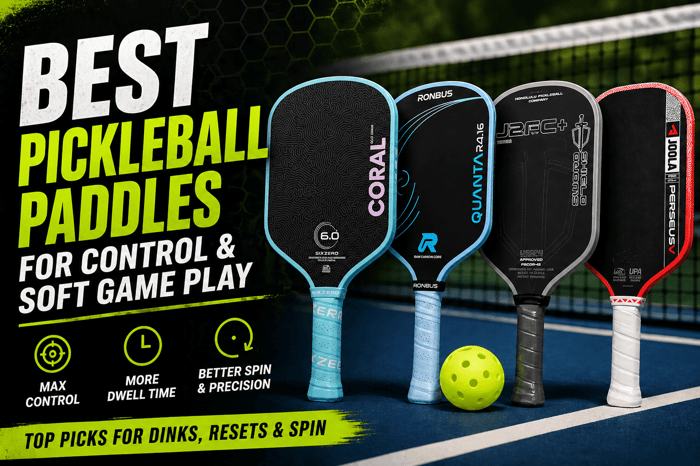
Here are some standout paddle models favored by soft game players who prioritize control, dwell time, and precision on dinks and spin shots.
Six Zero Coral Widebody
The Six Zero Coral Widebody is one of the most forgiving control paddles for players who want a larger sweet spot and a softer, more stable response. Its widebody shape helps with consistency during hands battles, dinks, blocks, and soft resets.
The paddle has a plush feel off the face without feeling dead. The ball pockets nicely, giving players the dwell time needed for controlled dinks, roll volleys, and spin-heavy drops. It is a great fit for players who tend to overhit and want a paddle that helps calm the game down.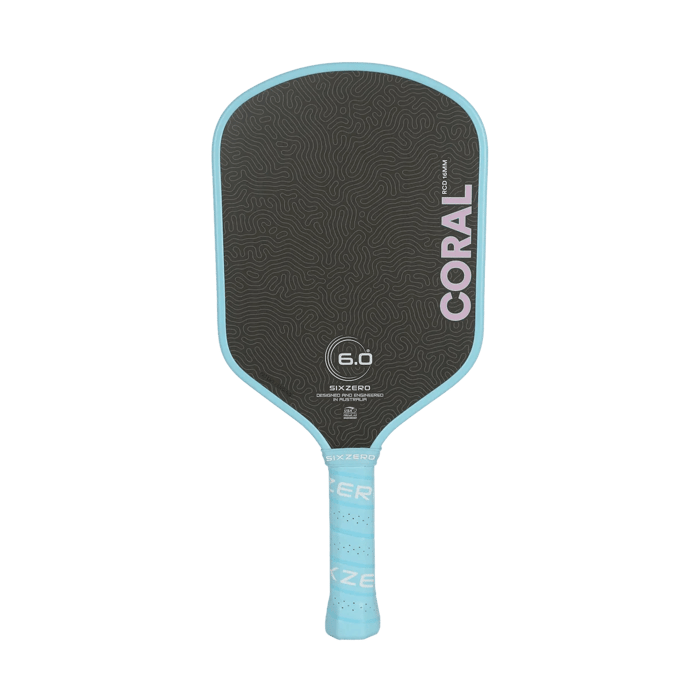
Six Zero Coral Widebody
Forgiving widebody control paddle with a plush feel, large sweet spot, and strong dwell time for dinks, resets, and soft control play.
View Paddle →Ronbus Quanta
The Ronbus Quanta series is built for players who want feel, precision, and control across different paddle shapes. The line gives players options depending on whether they prefer widebody, hybrid, or elongated shapes, while still keeping a controlled response.
Quanta paddles stand out for touch and feedback. You can feel the ball clearly on the paddle face, which helps with drops, resets, angles, and soft placement. The raw carbon face also gives strong spin potential without sacrificing control.
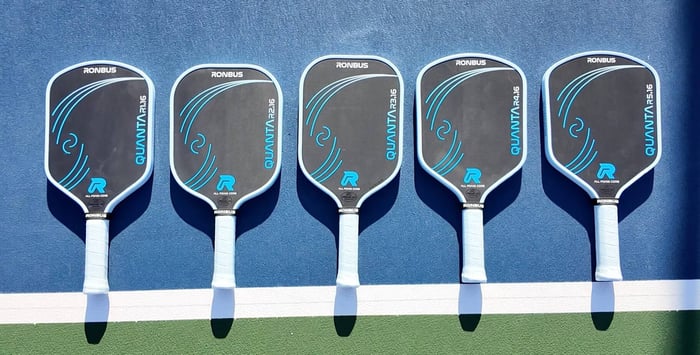
Ronbus Quanta Series
Control-focused paddle series with elite touch, clean feedback, and raw carbon spin for players who prioritize placement over power.
Shop Quanta →Read our Ronbus Quanta buying guide.
HONOLULU Pickleball Company Sword & Shield J2FC+
The HONOLULU Pickleball Company Sword & Shield J2FC+ is a strong option for players who want control, dwell time, and stability without giving up offensive upside. It has a controlled feel, but it still has enough structure behind it to hold up in faster exchanges.
This paddle is especially useful in the transition zone, where players need to absorb pace and reset the ball softly into the kitchen. It offers a predictable response on dinks, resets, and blocks, making it a strong fit for all-court players who lean control-first.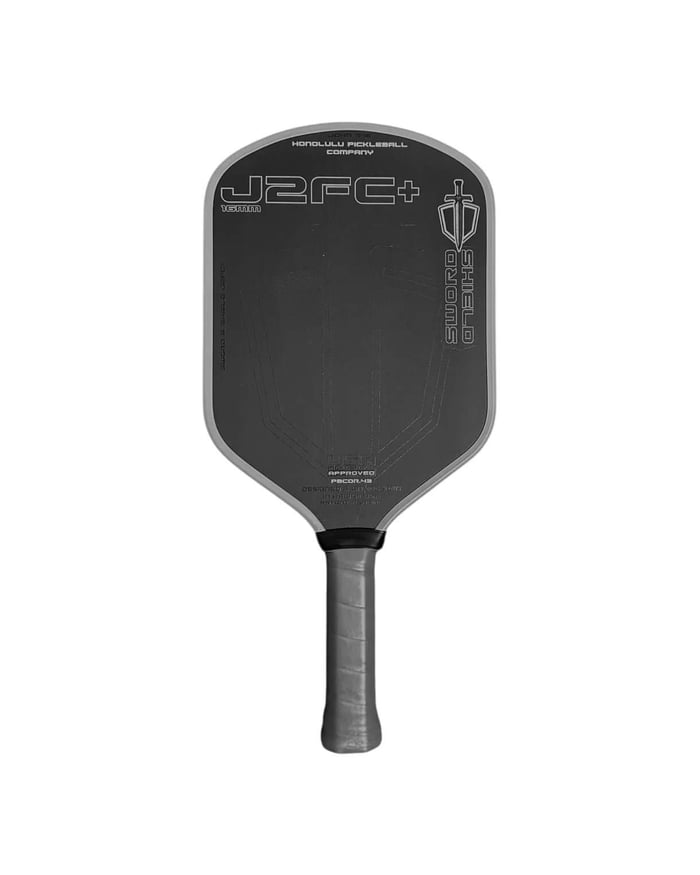
HONOLULU Sword & Shield J2FC+
Stable hybrid control paddle with excellent reset ability, predictable feel, and enough offensive upside for all-court players.
View Paddle →JOOLA Ben Johns Perseus Pro V
The JOOLA Ben Johns Perseus Pro V is often known for power, pop, and offensive ability, but it can also work well for higher-level players with a developed soft game. Its elongated shape gives extra reach, while the solid construction provides a stable feel on blocks and resets.
Compared to the softer paddles on this list, the Perseus Pro V requires better touch and cleaner hands. It is less forgiving, but in the right hands it offers excellent spin, control, and the ability to speed up the point quickly when an opening appears.
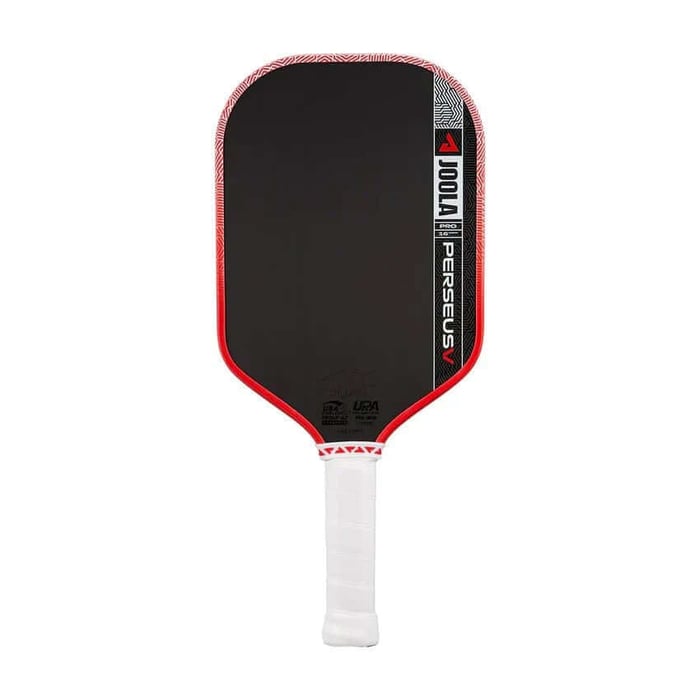
JOOLA Ben Johns Perseus Pro V
Elongated paddle with reach, spin, and stability for advanced players who want control with offensive upside.
View Paddle →Tips to Get More Control From Your Paddle
Even the best control paddle needs the right technique behind it. Keep your grip pressure relaxed, make contact in front of your body, and use the paddle angle to control height, speed, and spin. A softer paddle can help, but clean contact and good positioning are what make the soft game consistent.
Control paddles work best when paired with smart court positioning. Stay balanced at the kitchen line, avoid big swings on dinks, and use resets to slow the game down when opponents are attacking.
Final Thoughts
For players who care about the kitchen game, the right paddle is more than just a piece of equipment. It becomes an extension of your touch, timing, and shot selection. Foam cores can offer extra softness and dwell time, carbon faces can add spin and feedback, and hybrid builds can give players a balanced mix of control and stability.
If your game is built around dinks, resets, drops, and smart placement, choosing a control-focused paddle can help you play with more confidence and consistency. The best paddle is the one that matches your touch, your hand speed, and the way you want to win points.