
Table of Contents
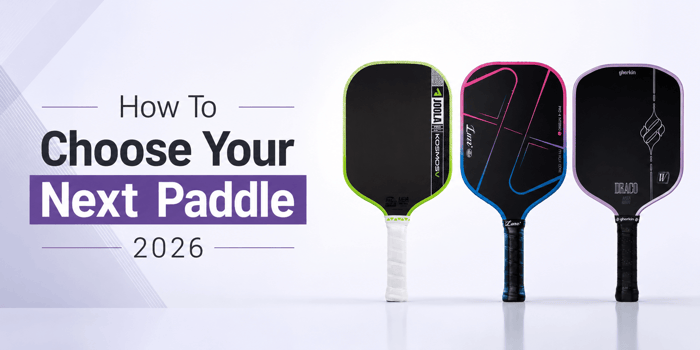
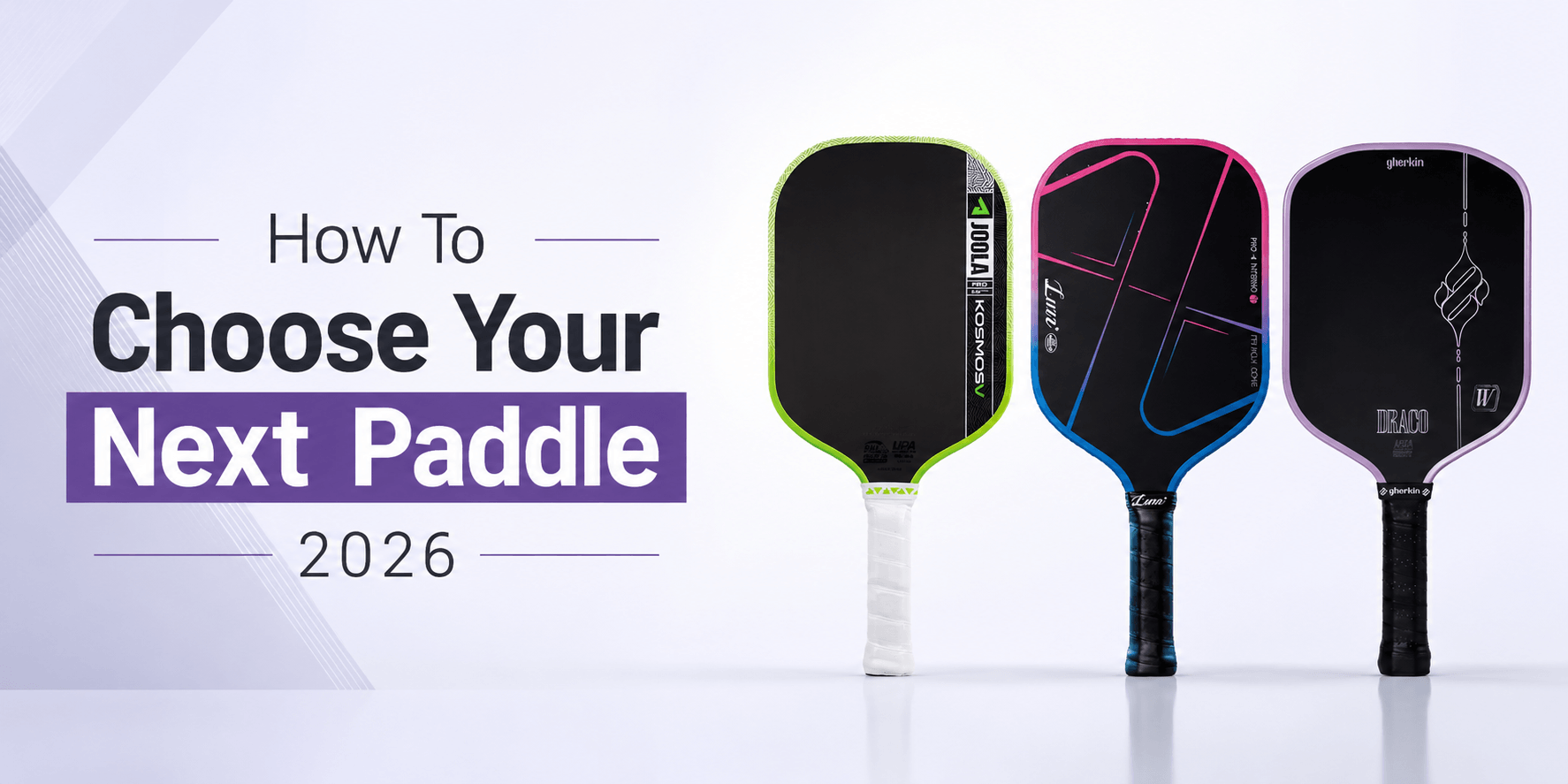
Figuring out how to choose your next pickleball paddle in May 2026 starts with one question I ask every player: what are you currently playing with? Everything else flows from there. This guide on how to choose your next pickleball paddle walks you through the exact consultation I give in person — no meta-chasing, no pro-copying, just finding what actually works for your game.
By Jan Dayleg | Spinwave Pickleball | @threefiveforever
If you're trying to figure out how to choose your next pickleball paddle, my first response is always a question right back at you: what are you currently playing with?
That one question tells me more than anything else. It tells me where you're coming from, what you're used to, and what we're working with. Everything else flows from there. The process is the same regardless of level, and a great paddle fit looks different for every single player.
Let's get into it.
First: Why Are You Shopping?
Before anything else, I need to know why you're in the market. Knowing how to choose your next pickleball paddle starts here, because the reason you're shopping changes the entire conversation.
There are two paths here.
Path 1 — Your paddle is intact and you're looking to upgrade or change: This is the most common situation and where most of this guide lives. We're going to ask the right questions to figure out exactly what you need.
Path 2 — Your paddle broke: Simple question: do you want the same paddle, or something different? If you want the same one, easy — let's get you a replacement. (Use code JDPB at Spinwave to save 10% off your entire purchase.) If you want something different, welcome to Path 1.
The 3 Primary Questions
Once we're on Path 1, I'm asking you three things — in this exact order. Hit all three and I can recommend you a paddle with confidence. These are the core of how to choose your next pickleball paddle in a way that actually fits your game.
1. What Shape Are You Playing?
Shape is the foundation when figuring out how to choose your next pickleball paddle. The three options are Widebody, Hybrid, and Elongated, and each plays differently.
Widebody — gives you the largest sweet spot and fastest swing weight. Best for players who prioritize kitchen play, fast hands, and forgiveness.
Hybrid — the best of both worlds — sitting between the Widebody and Elongated, giving you a balance of reach, maneuverability, and sweet spot size.
Elongated — gives you the most reach, highest raw power on full swings, and more leverage at the baseline. Slower in hand but a weapon from the back of the court.
My default recommendation: stick with the shape you know. Unless you're actively trying to make a change, switching shapes adds an unnecessary variable. If you love your widebody, we're finding you a better widebody — not experimenting with an elongated.
That said, if you want to try a new shape, tell me. That's also a valid reason to shop and we'll factor it in.
2. What's Your Power Profile?
This is where I put on my paddle nerd hat — because I'm not asking YOU to diagnose this. I'm diagnosing it based on what you tell me about your game and equipment.
Here's how it works in practice. If you tell me what paddle you're on and you're happy with how it performs, I probably already know its power profile and I'll recommend accordingly. But if you volunteer that something in your game isn't working, that tells me everything.
Struggling with pop-ups or controlling your soft game? That's a sign your paddle's power profile might be too high for where your game is right now. An all-court paddle generally gives you lowered pop and power and therefore more control and a friendlier foray into touch shots — without giving up too much of the top end firepower on full swings and counters necessary in today's game.
Struggling to put balls away or feeling like you're working too hard for your drives? That's a sign you might need more power in your setup. A higher power paddle lets you play aggressively without needing tons of effort on every swing.
Happy with your current power profile? Then we're staying in that lane and narrowing down from there.
Side note: I generally only recommend Power and All-Court paddles. Control paddles ARE still playable in today's game, but the market is moving away from them and I don't think they serve most players well anymore. Real talk: if you're struggling to control all-court paddles then hit the courts and drill or take a clinic or two.
3. What's Your Swing Weight?
This is the most misunderstood metric in pickleball paddle shopping — and getting it right will change how to choose your next pickleball paddle forever.
Here's the thing: static weight and swing weight are not the same thing, and most people use them interchangeably. That's a mistake.
Static weight is simply how heavy a paddle is on a scale. Swing weight is a completely different metric that tells you how fast or slow a paddle will feel when you're actually swinging it. And they don't always match.
Here's a real example: you can have an 8 oz paddle and an 8.5 oz paddle, and the 8.5 oz paddle can actually feel lighter to swing. Why? Because its swing weight is lower. The weight is distributed differently which makes it faster through the air despite being heavier on a scale.
Swing weight is what actually matters when you're playing.
Here's how I classify swing weights:
Below 112 — Light and fast. Quick hands, great for kitchen battles.
112-118 — Average. Balanced between speed and stability.
118+ — Slower through the air, but more plow-through on full swings and drives.
Our website lists most manufacturer swing weight ranges for every paddle we carry, and you can always reach out to us directly to double check before you buy.
My general rule when recommending: I look for paddles at or below your current swing weight. Here's why — you can always ADD weight to a paddle to bring swing weight up. You cannot bring it down. So starting at or below your current number gives you customization room to grow into the paddle rather than being stuck with something that's already too slow for your hands.
Secondary Concerns: Feel, Construction & Budget
At this point — shape locked in, power profile identified, swing weight range established — I can generally make you a solid recommendation. But if you want to narrow down how to choose your next pickleball paddle even further, or you have strong preferences about how a paddle feels in your hand, here's where we go next.
Feel Profile
Thanks to paddle engineer and reviewer John Kew's feel profile chart, we have a framework for understanding how paddles feel on contact.
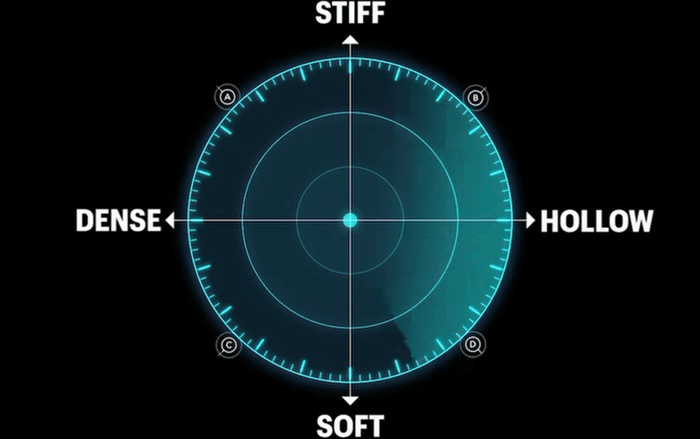
Though there are many feel profiles, the two dominant feels in today's market are:
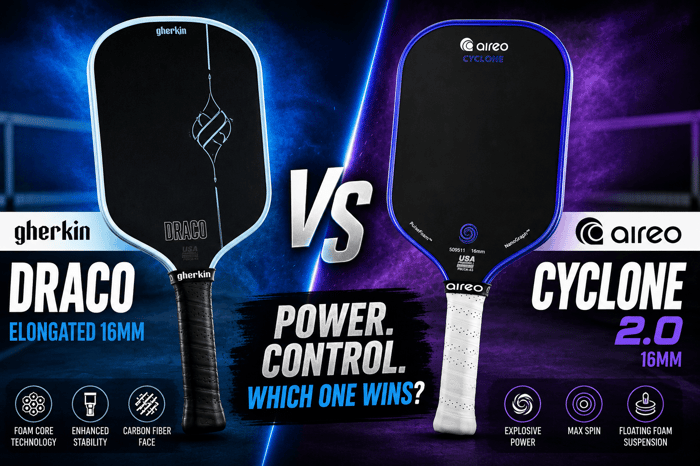
Stiff & Hollow — A firmer, more connected feel with a loud, distinct sound on contact. Think feedback-heavy and crisp. Example: Aireo Cyclone 2.0
AIREO Cyclone Cherry Blossom 2.0 16mm Pickleball Paddle

$199.00
AIREO Cyclone 2.0 16mm Pickleball Paddle Explosive power. Pro-level control. Built for serious players. The AIREO Cyclone 2.0 16mm is engineered for advanced players who want a powerful elongated paddle with a responsive foam core, long-lasting spin, and a clean,… read more
Soft & Dense — A muted, dampened feel with less feedback and a quieter contact. Think buttery and forgiving. Example: Six Zero Coral LW
Six Zero Coral Pickleball Paddle 16mm - Lightweight

$200.00
Six Zero Coral Lightweight Pickleball Paddle Built on the award-winning Next Gem™ platform, the Six Zero Coral Lightweight delivers the same balanced all-court performance players love with a quicker, more responsive feel. With a lighter base weight of 7.6–7.9 oz,… read more
Neither is better. It's personal preference, and some players don't care at all — they care about shot behavior, not how the paddle feels in their hand. If that's you, don't overthink this.
Construction: Gen 3 vs Gen 4
Construction is a real factor in how to choose your next pickleball paddle, especially if you've already played a few different builds.
Side Note: These days I tend to recommend Gen 3 and Gen 4 paddles, because there are recommendations in these constructions for all levels and I wouldn't want to steer someone towards something dated unless they are absolutely married to their current paddle and it happens to be Gen 1 or Gen 2 (sorry, Paddletek users.)
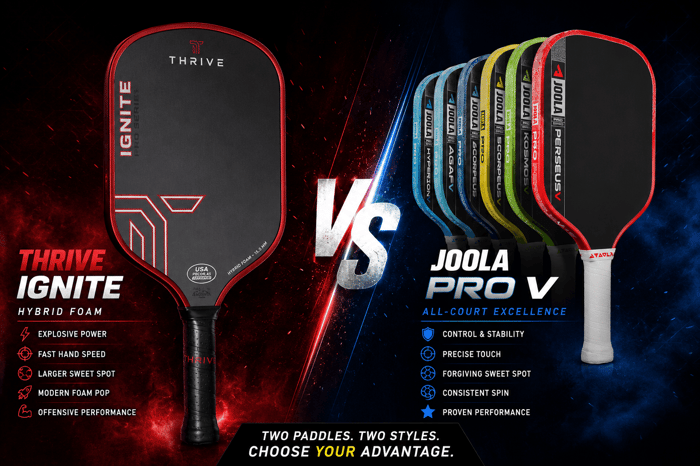
Gen 3 — these paddles use foam-enhanced polypropylene — typically foam creates a perimeter or floating core effect around a traditional honeycomb structure. Examples include the Joola Pro V line and the Franklin C45 line. Generally a livelier, more "traditional" feel.
Franklin C45º Hayden Paddle Series 16mm Pickleball Paddle

$229.99
The Hayden Patriquin C45° 16mm offers a thicker core for added stability and control while keeping the same elongated reach and high-spin carbon fiber surface. Ideal for players who want a softer feel in the kitchen without sacrificing power on… read more
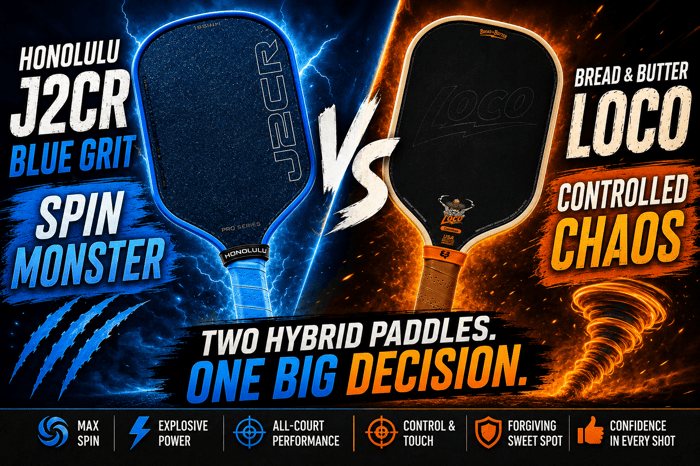
Gen 4 — these paddles use a full foam core throughout. Examples include the Bread and Butter Loco and the Six Zero Coral. The feedback is more muted and dense compared to Gen 3 — some players love that feel, some genuinely can't get used to it and always end up back on Gen 3. It is worth noting that some paddles like the Thrive Ignite and RPM Q2 occupy an interesting middle ground — full foam construction that plays more like a "foam-leaning Gen 3" in terms of feedback. If you're Gen 4 curious but hesitant, those are worth exploring.
The Loco 16mm Pickleball Paddle - Elongated

$199.00
Bread & Butter LOCO — Elongated Balanced. Bold. Elongated. Built for players who want more reach, more leverage, and more control—without losing touch. 🎯 Control Plush Touch + Calm Resets 📏 Reach Elongated Coverage & Angles ⚡ Leverage Whip On… read more
If you've played a Gen 4 paddle and hated how it felt, that's useful information. We're keeping you on Gen 3.
Budget
Here's my honest take on this when it comes to how to choose your next pickleball paddle:
Price does not equal performance. A $150 paddle can absolutely outperform a $300 paddle for YOUR game — it just depends on the fit.
The way I think about price tiers:
$100-150: Solid options that genuinely punch above their price. Don't sleep on this tier.
$150-250: Where most of the innovation is happening right now. This is where I find the best value in the market.
$250+: You're paying for the Gucci factor — brand prestige, signature player paddles, and exclusivity. Not necessarily better performance than mid-tier options.
Spinwave carries paddles at every price point, and I'll never steer you toward a higher price tag if a lower one gets the job done better for your game.
Durable Grit: Let's Talk About It
Durable grit is a welcome addition to the market — but before you make it a dealbreaker when figuring out how to choose your next pickleball paddle, let me give you some context.
If you're buying a paddle in 2026, chances are you'll be more than happy with the spin you get straight out of the box. It is actually difficult to find a bad spinning paddle made in 2026. The standard has gone up across the board. Paddles like the Six Zero Coral and the Joola Pro V line absolutely RIP spin with faces that are smooth to the touch. Grit level and spin performance don't always correlate the way people assume.
There's also a bigger truth here that nobody wants to hear: a lot of players simply aren't generating the type of spin they think they are. Chasing durable grit texture is much lower on the priority list than, say, drilling. Your technique is going to move the needle more than your surface finish.
That said, there is one consideration worth taking seriously when deciding how to choose your next pickleball paddle — tournament approval. At the moment, if your local tournaments are USAP sanctioned, UPA-A only paddles like the Honolulu J2CR Crystal Blue Endurance surface are technically not allowed. In that same breath, I've personally seen USAP sanctioned tournaments allow them anyway. It's inconsistent, and it's worth checking before you buy if you're a tournament player.
The bottom line: durable grit is real, it's a legitimate upgrade, and if you've tested both surfaces side by side and genuinely noticed a difference in your game — factor it in. Just don't let it be the first thing you optimize for. Fit your game first. Surface is secondary.
Jan's Current Recommendations
TLDR? Here are my personal recommendations for how to choose your next pickleball paddle, broken down by shape and power profile.
Widebody Gen 4 Power Paddle: Gherkin Draco W
Gherkin USA DRACO 16mm Pickleball Paddle - Widebody

$179.99
New to Gherkin's lineup? See how this paddle compares to every other Gherkin shape before you commit. Read the complete Gherkin Guide → Gherkin USA DRACO Wide-Body Pickleball Paddle The Gherkin USA DRACO Wide-Body is built for players who want… read more
Hybrid Gen 4 Power Paddle: Honolulu J2CR w/ Durable Grit
Elongated Gen 4 Power Paddle: Luzz Pro 4 Inferno
LUZZ Pro 4 Inferno MPP Pickleball Paddle

$229.00
LUZZ Pro 4 Inferno MPP Pickleball Paddle The LUZZ Pro 4 Inferno MPP is built for players who want a forgiving feel, a large, easy-to-hit sweet spot, and a durable core that stays consistent over time. It’s the kind of… read more
Widebody Gen 4 All Court Paddle: Six Zero Coral LW
Six Zero Coral Pickleball Paddle 16mm - Lightweight
$200.00
Six Zero Coral Lightweight Pickleball Paddle Built on the award-winning Next Gem™ platform, the Six Zero Coral Lightweight delivers the same balanced all-court performance players love with a quicker, more responsive feel. With a lighter base weight of 7.6–7.9 oz,… read more
Hybrid Gen 3 All Court Leaning Power Paddle: Joola Pro V Kosmos 16
JOOLA Kosmos Pro V Federico Staksrud Surge Green 16mm Pickleball Paddle

$299.95
Also Available Kosmos Pro V — 14mmQuicker response, more pop, and faster hand speed. Better for aggressive counters and speed-ups. View 14mm → JOOLA Kosmos Pro V – Federico Staksrud (Surge Green) 16mm Pickleball Paddle The Kosmos Pro V introduces… read more
Elongated Gen 3 All Court Paddle: Gearbox GBX Power
Gearbox GBX Power 16mm Pickleball Paddle

$179.99
GBX Power • Gen-3 Honeycomb Gearbox GBX Power Series Two shapes • Same Gen-3 suspended honeycomb platform GBX Power Hybrid Paddle Shape: Hybrid Gen-3 Honeycomb Gen-3 Honeycomb Performance, the Gearbox Way The GBX Power Hybrid delivers explosive Gen-3 honeycomb power… read more
Note that this list is not exhaustive in the slightest.
Related Spinwave Links
Still working through how to choose your next pickleball paddle? These Spinwave resources can help:
- Get a free paddle consultation
- Shop all pickleball paddles
- Shop power & competitive paddles
- Shop all-court balanced paddles
- Read the pickleball weight placement guide
- Read The Overgrip Bible
- Read the edge guard tape guide
Still Not Sure? Reach Out.
This is literally what I do when recommending paddles to players of all levels. If you've gone through these questions and you're still not sure how to choose your next pickleball paddle that fits your game, drop a comment below, shoot me an email at jan@spinwavepickleball.com, or find me at @threefiveforever on Instagram.
Tell me what you're playing with, what you like, what you don't, and I'll point you in the right direction. No upsell, no agenda — just the right paddle for your game.
See you on the courts.
— Jan
FAQs
dsffds
<details class="dib-toc fr-fil fr-dib fr-draggable dib-custom-block" contenteditable="false" draggable="true">
<summary>
<h2>Table of Contents</h2>
</summary>
<ul>
<li data-h2-heading="first-why-are-you-shopping-1"><a href="#first-why-are-you-shopping-1">First: Why Are You Shopping?</a></li>
<li data-h2-heading="the-3-primary-questions-2"><a href="#the-3-primary-questions-2">The 3 Primary Questions</a>
<ul>
<li data-h3-heading="what-shape-are-you-playing-3"><a href="#what-shape-are-you-playing-3">What Shape Are You Playing?</a></li>
<li data-h3-heading="whats-your-power-profile-4"><a href="#whats-your-power-profile-4">What's Your Power Profile?</a></li>
<li data-h3-heading="whats-your-swing-weight-5"><a href="#whats-your-swing-weight-5">What's Your Swing Weight?</a></li>
</ul>
</li>
<li data-h2-heading="secondary-concerns-feel-construction-budget-6"><a href="#secondary-concerns-feel-construction-budget-6">Secondary Concerns: Feel, Construction & Budget</a></li>
<li data-h2-heading="durable-grit-lets-talk-about-it-7"><a href="#durable-grit-lets-talk-about-it-7">Durable Grit: Let's Talk About It</a></li>
<li data-h2-heading="jans-current-recommendations-8"><a href="#jans-current-recommendations-8">Jan's Current Recommendations</a></li>
<li data-h2-heading="related-spinwave-links-9"><a href="#related-spinwave-links-9">Related Spinwave Links</a></li>
<li data-h2-heading="still-not-sure-reach-out-10"><a href="#still-not-sure-reach-out-10">Still Not Sure? Reach Out.</a></li>
<li data-h2-heading="faqs-11"><a href="#faqs-11">FAQs</a></li>
</ul>
</details>
<p><img src="https://dropinblog.net/34265420/files/how-to-choose-your-next-pickleball-paddle-may-2026-qtvfs.png" alt="How to choose your next pickleball paddle May 2026 — Spinwave guide hero" class="fr-fic fr-dib" width="700" height="350"></p>
<p>Figuring out <strong>how to choose your next pickleball paddle</strong> in May 2026 starts with one question I ask every player: what are you currently playing with? Everything else flows from there. This guide on <strong>how to choose your next pickleball paddle</strong> walks you through the exact consultation I give in person — no meta-chasing, no pro-copying, just finding what actually works for your game.</p>
<p><em>By Jan Dayleg | Spinwave Pickleball | @threefiveforever</em></p>
<p>If you're trying to figure out <strong>how to choose your next pickleball paddle</strong>, my first response is always a question right back at you: what are you currently playing with?</p>
<p>That one question tells me more than anything else. It tells me where you're coming from, what you're used to, and what we're working with. Everything else flows from there. The process is the same regardless of level, and a great paddle fit looks different for every single player.</p>
<p>Let's get into it.</p>
<h2 id="first-why-are-you-shopping-1">First: Why Are You Shopping?</h2>
<p>Before anything else, I need to know why you're in the market. Knowing <strong>how to choose your next pickleball paddle</strong> starts here, because the reason you're shopping changes the entire conversation.</p>
<p>There are two paths here.</p>
<p><strong>Path 1</strong> — Your paddle is intact and you're looking to upgrade or change: This is the most common situation and where most of this guide lives. We're going to ask the right questions to figure out exactly what you need.</p>
<p><strong>Path 2</strong> — Your paddle broke: Simple question: do you want the same paddle, or something different? If you want the same one, easy — let's get you a replacement. (Use code JDPB at Spinwave to save 10% off your entire purchase.) If you want something different, welcome to Path 1.</p>
<h2 id="the-3-primary-questions-2">The 3 Primary Questions</h2>
<p>Once we're on Path 1, I'm asking you three things — in this exact order. Hit all three and I can recommend you a paddle with confidence. These are the core of <strong>how to choose your next pickleball paddle</strong> in a way that actually fits your game.</p>
<h3 id="what-shape-are-you-playing-3">1. What Shape Are You Playing?</h3>
<p>Shape is the foundation when figuring out <strong>how to choose your next pickleball paddle</strong>. The three options are Widebody, Hybrid, and Elongated, and each plays differently.</p>
<p><strong>Widebody</strong> — gives you the largest sweet spot and fastest swing weight. Best for players who prioritize kitchen play, fast hands, and forgiveness.</p>
<p><strong>Hybrid</strong> — the best of both worlds — sitting between the Widebody and Elongated, giving you a balance of reach, maneuverability, and sweet spot size.</p>
<p><strong>Elongated</strong> — gives you the most reach, highest raw power on full swings, and more leverage at the baseline. Slower in hand but a weapon from the back of the court.</p>
<p>My default recommendation: <em>stick with the shape you know</em>. Unless you're actively trying to make a change, switching shapes adds an unnecessary variable. If you love your widebody, we're finding you a better widebody — not experimenting with an elongated.</p>
<p>That said, if you want to try a new shape, tell me. That's also a valid reason to shop and we'll factor it in.</p>
<h3 id="whats-your-power-profile-4">2. What's Your Power Profile?</h3>
<p>This is where I put on my paddle nerd hat — because I'm not asking YOU to diagnose this. I'm diagnosing it based on what you tell me about your game and equipment.</p>
<p>Here's how it works in practice. If you tell me what paddle you're on and you're happy with how it performs, I probably already know its power profile and I'll recommend accordingly. But if you volunteer that something in your game isn't working, that tells me everything.</p>
<p><strong>Struggling with pop-ups or controlling your soft game?</strong> That's a sign your paddle's power profile might be too high for where your game is right now. An all-court paddle generally gives you lowered pop and power and therefore more control and a friendlier foray into touch shots — without giving up too much of the top end firepower on full swings and counters necessary in today's game.</p>
<p><strong>Struggling to put balls away or feeling like you're working too hard for your drives?</strong> That's a sign you might need more power in your setup. A higher power paddle lets you play aggressively without needing tons of effort on every swing.</p>
<p><strong>Happy with your current power profile?</strong> Then we're staying in that lane and narrowing down from there.</p>
<p><em>Side note: I generally only recommend Power and All-Court paddles. Control paddles ARE still playable in today's game, but the market is moving away from them and I don't think they serve most players well anymore. Real talk: if you're struggling to control all-court paddles then hit the courts and drill or take a clinic or two.</em></p>
<h3 id="whats-your-swing-weight-5">3. What's Your Swing Weight?</h3>
<p>This is the most misunderstood metric in pickleball paddle shopping — and getting it right will change <strong>how to choose your next pickleball paddle</strong> forever.</p>
<p>Here's the thing: static weight and swing weight are not the same thing, and most people use them interchangeably. That's a mistake.</p>
<p><strong>Static weight</strong> is simply how heavy a paddle is on a scale. <strong>Swing weight</strong> is a completely different metric that tells you how fast or slow a paddle will feel when you're actually swinging it. And they don't always match.</p>
<p>Here's a real example: you can have an 8 oz paddle and an 8.5 oz paddle, and the 8.5 oz paddle can actually feel lighter to swing. Why? Because its swing weight is lower. The weight is distributed differently which makes it faster through the air despite being heavier on a scale.</p>
<p>Swing weight is what actually matters when you're playing.</p>
<p>Here's how I classify swing weights:</p>
<p><strong>Below 112</strong> — Light and fast. Quick hands, great for kitchen battles.</p>
<p><strong>112-118</strong> — Average. Balanced between speed and stability.</p>
<p><strong>118+</strong> — Slower through the air, but more plow-through on full swings and drives.</p>
<p>Our website lists most manufacturer swing weight ranges for every paddle we carry, and you can always reach out to us directly to double check before you buy.</p>
<p>My general rule when recommending: I look for paddles at or below your current swing weight. Here's why — you can always ADD weight to a paddle to bring swing weight up. You cannot bring it down. So starting at or below your current number gives you customization room to grow into the paddle rather than being stuck with something that's already too slow for your hands.</p>
<h2 id="secondary-concerns-feel-construction-budget-6">Secondary Concerns: Feel, Construction & Budget</h2>
<p>At this point — shape locked in, power profile identified, swing weight range established — I can generally make you a solid recommendation. But if you want to narrow down <strong>how to choose your next pickleball paddle</strong> even further, or you have strong preferences about how a paddle feels in your hand, here's where we go next.</p>
<p><strong>Feel Profile</strong></p>
<p>Thanks to paddle engineer and reviewer John Kew's feel profile chart, we have a framework for understanding how paddles feel on contact.</p>
<p><img src="https://dropinblog.net/34265420/files/how-to-choose-your-next-pickleball-paddle-may-2026-ftsg2.png" alt="How to choose your next pickleball paddle — John Kew feel profile chart for pickleball paddles" class="fr-fic fr-dib" width="700" height="439"></p>
<p>Though there are many feel profiles, the two dominant feels in today's market are:</p>
<p><strong>Stiff & Hollow</strong> — A firmer, more connected feel with a loud, distinct sound on contact. Think feedback-heavy and crisp. Example: <a href="https://spinwavepickleball.com/collections/aireo" target="_blank">Aireo Cyclone 2.0</a></p>
<div class="dib-product-embed fr-deletable fr-draggable dib-custom-block" contenteditable="false" draggable="true" data-replace-product-embed-id="10105503056170">
<h2 class="toc-skip">Product Embed | AIREO Cyclone Cherry Blossom 2.0 16mm Pickleball Paddle</h2>
</div>
<p><strong>Soft & Dense</strong> — A muted, dampened feel with less feedback and a quieter contact. Think buttery and forgiving. Example: <a href="https://spinwavepickleball.com/collections/six-zero/products/six-zero-coral-pickleball-paddle-16mm-lightweight" target="_blank">Six Zero Coral LW</a></p>
<div class="dib-product-embed fr-deletable fr-draggable dib-custom-block" contenteditable="false" draggable="true" data-replace-product-embed-id="10081937129770">
<h2 class="toc-skip">Product Embed | Six Zero Coral Pickleball Paddle 16mm - Lightweight</h2>
</div>
<p>Neither is better. It's personal preference, and some players don't care at all — they care about shot behavior, not how the paddle feels in their hand. If that's you, don't overthink this.</p>
<p><strong>Construction: Gen 3 vs Gen 4</strong></p>
<p>Construction is a real factor in <strong>how to choose your next pickleball paddle</strong>, especially if you've already played a few different builds.</p>
<p><em>Side Note: These days I tend to recommend Gen 3 and Gen 4 paddles, because there are recommendations in these constructions for all levels and I wouldn't want to steer someone towards something dated unless they are absolutely married to their current paddle and it happens to be Gen 1 or Gen 2 (sorry, Paddletek users.)</em></p>
<p><strong>Gen 3</strong> — these paddles use foam-enhanced polypropylene — typically foam creates a perimeter or floating core effect around a traditional honeycomb structure. Examples include the <a href="https://spinwavepickleball.com/collections/joola" target="_blank">Joola Pro V</a> line and the <a href="https://spinwavepickleball.com/collections/franklin" target="_blank">Franklin C45</a> line. Generally a livelier, more "traditional" feel.</p>
<div class="dib-product-embed fr-deletable fr-draggable dib-custom-block" contenteditable="false" draggable="true" data-replace-product-embed-id="9972412383530">
<h2 class="toc-skip">Product Embed | Franklin C45º Hayden Paddle Series 16mm Pickleball Paddle</h2>
</div>
<p><strong>Gen 4</strong> — these paddles use a full foam core throughout. Examples include the <a href="https://spinwavepickleball.com/collections/bread-and-butter" target="_blank">Bread and Butter</a> Loco and the <a href="https://spinwavepickleball.com/collections/six-zero/products/coral-hybrid" target="_blank">Six Zero Coral</a>. The feedback is more muted and dense compared to Gen 3 — some players love that feel, some genuinely can't get used to it and always end up back on Gen 3. It is worth noting that some paddles like the <a href="https://spinwavepickleball.com/collections/thrive/products/pre-order-thrive-ignite-hybrid-foam-pickleball-paddle" target="_blank">Thrive Ignite</a> and <a href="https://spinwavepickleball.com/collections/rpm" target="_blank">RPM Q2</a> occupy an interesting middle ground — full foam construction that plays more like a "foam-leaning Gen 3" in terms of feedback. If you're Gen 4 curious but hesitant, those are worth exploring.</p>
<div class="dib-product-embed fr-deletable fr-draggable dib-custom-block" contenteditable="false" draggable="true" data-replace-product-embed-id="9926548521258">
<h2 class="toc-skip">Product Embed | The Loco 16mm Pickleball Paddle - Elongated</h2>
</div>
<p>If you've played a Gen 4 paddle and hated how it felt, that's useful information. We're keeping you on Gen 3.</p>
<p><strong>Budget</strong></p>
<p>Here's my honest take on this when it comes to <strong>how to choose your next pickleball paddle</strong>:</p>
<p>Price does not equal performance. A $150 paddle can absolutely outperform a $300 paddle for YOUR game — it just depends on the fit.</p>
<p>The way I think about price tiers:</p>
<p><strong>$100-150:</strong> Solid options that genuinely punch above their price. Don't sleep on this tier.</p>
<p><strong>$150-250:</strong> Where most of the innovation is happening right now. This is where I find the best value in the market.</p>
<p><strong>$250+:</strong> You're paying for the Gucci factor — brand prestige, signature player paddles, and exclusivity. Not necessarily better performance than mid-tier options.</p>
<p>Spinwave carries paddles at every price point, and I'll never steer you toward a higher price tag if a lower one gets the job done better for your game.</p>
<h2 id="durable-grit-lets-talk-about-it-7">Durable Grit: Let's Talk About It</h2>
<p>Durable grit is a welcome addition to the market — but before you make it a dealbreaker when figuring out <strong>how to choose your next pickleball paddle</strong>, let me give you some context.</p>
<p>If you're buying a paddle in 2026, chances are you'll be more than happy with the spin you get straight out of the box. It is actually difficult to find a bad spinning paddle made in 2026. The standard has gone up across the board. Paddles like the Six Zero Coral and the Joola Pro V line absolutely RIP spin with faces that are smooth to the touch. Grit level and spin performance don't always correlate the way people assume.</p>
<p>There's also a bigger truth here that nobody wants to hear: a lot of players simply aren't generating the type of spin they think they are. Chasing durable grit texture is much lower on the priority list than, say, drilling. Your technique is going to move the needle more than your surface finish.</p>
<p>That said, there is one consideration worth taking seriously when deciding <strong>how to choose your next pickleball paddle</strong> — tournament approval. At the moment, if your local tournaments are USAP sanctioned, UPA-A only paddles like the <a href="https://spinwavepickleball.com/collections/honululu-pickleball-company/products/honolulu-pickleball-sword-shield-j2cr-crystal-blue-endurance-surface%E2%84%A2-long-handle-6" target="_blank">Honolulu J2CR Crystal Blue Endurance</a> surface are technically not allowed. In that same breath, I've personally seen USAP sanctioned tournaments allow them anyway. It's inconsistent, and it's worth checking before you buy if you're a tournament player.</p>
<p>The bottom line: durable grit is real, it's a legitimate upgrade, and if you've tested both surfaces side by side and genuinely noticed a difference in your game — factor it in. Just don't let it be the first thing you optimize for. Fit your game first. Surface is secondary.</p>
<h2 id="jans-current-recommendations-8">Jan's Current Recommendations</h2>
<p>TLDR? Here are my personal recommendations for <strong>how to choose your next pickleball paddle</strong>, broken down by shape and power profile.</p>
<p>Widebody Gen 4 Power Paddle: <a href="https://spinwavepickleball.com/collections/gherkin/products/gherkin-usa-draco-16mm-pickleball-paddle-widebody" target="_blank">Gherkin Draco W</a></p>
<div class="dib-product-embed fr-deletable fr-draggable dib-custom-block" contenteditable="false" draggable="true" data-replace-product-embed-id="10123136827690">
<h2 class="toc-skip">Product Embed | Gherkin USA DRACO 16mm Pickleball Paddle - Widebody</h2>
</div>
<p>Hybrid Gen 4 Power Paddle: <a href="https://spinwavepickleball.com/collections/honululu-pickleball-company/products/honolulu-pickleball-sword-shield-j2cr-crystal-blue-endurance-surface%E2%84%A2" target="_blank">Honolulu J2CR w/ Durable Grit</a></p>
<div class="dib-product-embed fr-deletable fr-draggable dib-custom-block" contenteditable="false" draggable="true" data-replace-product-embed-id="10095839150378">
<h2 class="toc-skip">Product Embed | Honolulu Pickleball Sword & Shield J2CR Crystal Blue Endurance Surface™</h2>
</div>
<p>Elongated Gen 4 Power Paddle: <a href="https://spinwavepickleball.com/collections/luzz/products/luzz-inferno" target="_blank">Luzz Pro 4 Inferno</a></p>
<div class="dib-product-embed fr-deletable fr-draggable dib-custom-block" contenteditable="false" draggable="true" data-replace-product-embed-id="9958357565738">
<h2 class="toc-skip">Product Embed | LUZZ Pro 4 Inferno MPP Pickleball Paddle</h2>
</div>
<p>Widebody Gen 4 All Court Paddle: <a href="https://spinwavepickleball.com/collections/six-zero/products/six-zero-coral-pickleball-paddle-16mm-lightweight" target="_blank">Six Zero Coral LW</a></p>
<div class="dib-product-embed fr-deletable fr-draggable dib-custom-block" contenteditable="false" draggable="true" data-replace-product-embed-id="10081937129770">
<h2 class="toc-skip">Product Embed | Six Zero Coral Pickleball Paddle 16mm - Lightweight</h2>
</div>
<p>Hybrid Gen 3 All Court Leaning Power Paddle: <a href="https://spinwavepickleball.com/collections/joola/products/joola-kosmos-pro-v-federico-staksrud-surge-green-16mm-pickleball-paddle" target="_blank">Joola Pro V Kosmos 16</a></p>
<div class="dib-product-embed fr-deletable fr-draggable dib-custom-block" contenteditable="false" draggable="true" data-replace-product-embed-id="10049423442218">
<h2 class="toc-skip">Product Embed | JOOLA Kosmos Pro V Federico Staksrud Surge Green 16mm Pickleball Paddle</h2>
</div>
<p>Elongated Gen 3 All Court Paddle: <a href="https://spinwavepickleball.com/collections/gearbox/products/gbx-power-hybrid-gen-3-honeycomb" target="_blank">Gearbox GBX Power</a></p>
<div class="dib-product-embed fr-deletable fr-draggable dib-custom-block" contenteditable="false" draggable="true" data-replace-product-embed-id="10085544952106">
<h2 class="toc-skip">Product Embed | Gearbox GBX Power 16mm Pickleball Paddle</h2>
</div>
<p><em>Note that this list is not exhaustive in the slightest.</em></p>
<h2 id="related-spinwave-links-9">Related Spinwave Links</h2>
<p>Still working through <strong>how to choose your next pickleball paddle</strong>? These Spinwave resources can help:</p>
<ul>
<li><a href="/products/free-paddle-consultation">Get a free paddle consultation</a></li>
<li><a href="/collections/paddles">Shop all pickleball paddles</a></li>
<li><a href="/collections/power-competitive-paddles">Shop power & competitive paddles</a></li>
<li><a href="/collections/all-court-balanced">Shop all-court balanced paddles</a></li>
<li><a href="/blogs/buying-guides/pickleball-weight-placement">Read the pickleball weight placement guide</a></li>
<li><a href="/blogs/buying-guides/the-overgrip-bible">Read The Overgrip Bible</a></li>
<li><a href="/blogs/buying-guides/pickleball-edge-guard-tape">Read the edge guard tape guide</a></li>
</ul>
<h2 id="still-not-sure-reach-out-10">Still Not Sure? Reach Out.</h2>
<p>This is <em>literally</em> what I do when recommending paddles to players of all levels. If you've gone through these questions and you're still not sure <strong>how to choose your next pickleball paddle</strong> that fits your game, drop a comment below, shoot me an email at <a href="mailto:jan@spinwavepickleball.com">jan@spinwavepickleball.com</a>, or find me at @threefiveforever on Instagram.</p>
<p>Tell me what you're playing with, what you like, what you don't, and I'll point you in the right direction. No upsell, no agenda — just the right paddle for your game.</p>
<p>See you on the courts.</p>
<p>— Jan</p>
<div class="dib-faq fr-fil fr-dib fr-draggable dib-custom-block" data-replace-faq="1" contenteditable="false" draggable="true">
<h2 id="faqs-11">FAQs</h2>
<div class="faq-item">
<h3>How to choose your next pickleball paddle in 2026?</h3>
<p>Start with three questions when figuring out how to choose your next pickleball paddle: what shape are you playing (Widebody, Hybrid, or Elongated), what power profile fits your game (Power or All-Court), and what swing weight are you currently on (Below 112, 112-118, or 118+). Nail those three and you've narrowed the field significantly. From there, feel profile, construction (Gen 3 vs Gen 4), and budget help you finalize the choice.</p>
</div>
<div class="faq-item">
<h3>What is swing weight and why does it matter more than static weight?</h3>
<p>Static weight is how heavy a paddle is on a scale. Swing weight measures how fast or slow it feels when you're actually swinging it — and the two don't always match. A heavier paddle can actually swing faster than a lighter one if its swing weight is lower. Swing weight is what you feel on the court, which is why it's the more important metric for how to choose your next pickleball paddle.</p>
</div>
<div class="faq-item">
<h3>What's the difference between a power paddle and an all-court paddle?</h3>
<p>A power paddle is built for aggressive, high-firepower play — more pop on short swings and more punch on full swings. An all-court paddle dials that back slightly, giving you lowered pop and more control on touch shots without completely sacrificing firepower. If you're struggling with pop-ups or your soft game, all-court is likely the move. If you're struggling to put balls away, power is calling.</p>
</div>
<div class="faq-item">
<h3>Should I change paddle shapes when deciding how to choose your next pickleball paddle?</h3>
<p>Generally, no — unless you're actively looking to try something different. Switching shapes adds an unnecessary variable to your game. If your widebody is working for you, we're finding you a better widebody, not sending you to an elongated. If you do want to experiment with a new shape, that's a valid reason to shop — just go in knowing there will be an adjustment period.</p>
</div>
<div class="faq-item">
<h3>Does a more expensive paddle mean better performance?</h3>
<p>Not necessarily. A $150 paddle can absolutely outperform a $300 paddle for your specific game — it all depends on the fit. The $250+ tier is largely the Gucci factor: brand prestige, signature player paddles, and exclusivity. Most of the real performance innovation right now is happening in the $150-$250 range. Price tier is one of the less important things to optimize for when figuring out how to choose your next pickleball paddle.</p>
</div>
<div class="faq-item">
<h3>What is the difference in Gen 3 vs Gen 4 paddle construction?</h3>
<p>Gen 3 paddles use foam-enhanced polypropylene with a floating or perimeter foam structure
What is swing weight and why does it matter more than static weight?
Static weight is how heavy a paddle is on a scale. Swing weight measures how fast or slow it feels when you're actually swinging it — and the two don't always match. A heavier paddle can actually swing faster than a lighter one if its swing weight is lower. Swing weight is what you feel on the court, which is why it's the more important metric for how to choose your next pickleball paddle.
What's the difference between a power paddle and an all-court paddle?
A power paddle is built for aggressive, high-firepower play — more pop on short swings and more punch on full swings. An all-court paddle dials that back slightly, giving you lowered pop and more control on touch shots without completely sacrificing firepower. If you're struggling with pop-ups or your soft game, all-court is likely the move. If you're struggling to put balls away, power is calling.
Should I change paddle shapes when deciding how to choose your next pickleball paddle?
Generally, no — unless you're actively looking to try something different. Switching shapes adds an unnecessary variable to your game. If your widebody is working for you, we're finding you a better widebody, not sending you to an elongated. If you do want to experiment with a new shape, that's a valid reason to shop — just go in knowing there will be an adjustment period.
Does a more expensive paddle mean better performance?
Not necessarily. A $150 paddle can absolutely outperform a $300 paddle for your specific game — it all depends on the fit. The $250+ tier is largely the Gucci factor: brand prestige, signature player paddles, and exclusivity. Most of the real performance innovation right now is happening in the $150-$250 range. Price tier is one of the less important things to optimize for when figuring out how to choose your next pickleball paddle.
What is the difference in Gen 3 vs Gen 4 paddle construction?
Gen 3 paddles use foam-enhanced polypropylene with a floating or perimeter foam structure around a traditional honeycomb core — generally livelier and more traditional in feel. Gen 4 paddles use a full foam core throughout, which produces a more muted, dense feedback. Some players love Gen 4, some genuinely can't get used to it. If you've tried Gen 4 and hated the feel, stick with Gen 3.
Is durable grit worth it in 2026?
It's a legitimate upgrade but it's being overestimated by most players. In 2026 it's actually hard to find a bad spinning paddle — even smooth-faced paddles like the Six Zero Coral and Joola Pro V line generate serious spin. Most players also overestimate how much spin they're generating to begin with. Focus on fit first, surface texture second. Also note: some durable grit paddles are UPA-A approved only and may not be allowed in USAP sanctioned tournaments.